Sunday, November 12, 2006

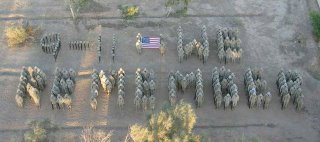
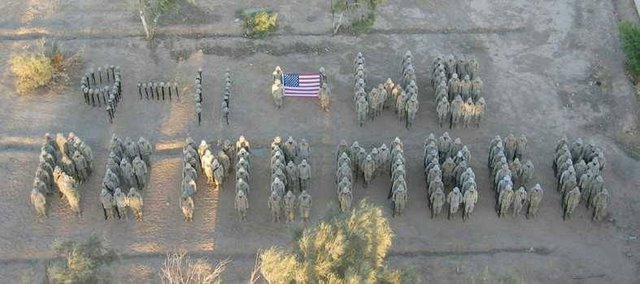
I had this picture forwarded to me from an attorney friend as we went to the polls last week; it seemed entirely appropriate.

Vote! This is a picture of our troops in Iraq. People have fought and died; and, people are putting their lives on the line for liberty. Let's not let them down.
Posted by Picasa

Wednesday, November 08, 2006

WH, Ch. 23, Sections 2-4

World History, Chapter 23
Section 2 Strengthening Germany

Guide for Reading (Questions)

Read intro

1. Lesson Plan Focus

The growth of German industry was based on ample resources and a highly skilled work force. To increase unity and devotion to the state, Bismarck applied the principles of Realpolitik toward socialists and Catholics. After asking Bismarck to resign, Kaiser William II limited democratic reform and increased the military power of Germany.

Answer Caption questions in your Notebook

2. Instruct, in-class

In two groups, the class is to imagine that they are newspaper editors who have been assigned to write an editorial on events in Germany between 1871 and 1890. One group will write editorials that generally support and praise German policies. The second group will write editorials that criticize those policies and express fears about the future. Both groups should include an appraisal of Bismarck’s style of leadership. Each group can discuss and then debate their points with the other group.

HW
Section 2 Review
#1-4
Extra Credit, #5-6

Chapter 23 Section 3 Unifying Italy

Vocabulary
Anarchist
Answer the Caption questions, Map questions, etc. in your Notebook.

1. Lesson Plan Focus

For centuries, Italy had been a collection of separate states ruled by foreign and local princes who competed with each other for power. In the 1800s, influential leaders such as Giuseppe Mazzini, Giuseppe Garibaldi, and Count Camillo Cavour helped to create a united Italy. However, Italy still faced regional differences, disputes between the Church and state, and opposition to a conservative government.

2. In-class Instruct
In small groups, each group should create a biographical profile of one of the following:
Mazzini
Victor Emmanuel II
Cavour
Garibaldi
Focus on how each of these contributed to Italy’s unification. Consider how the person rose to leadership, what the person’s ideals and goals were, what methods the person used, and the reasons for the person’s success or failure.
Each person in the group should assume responsibility for a different part of the profile. Each group can take a turn sharing their profile. As a game, one aspect of the Italian leaders can be profiled. Ask the other groups to identify the person being described.

3. Close
Play a game in which you describe some aspect of one or more of the Italian leaders who are profiled in this section. Ask the other students if they can identify the portrayed character.

HW
Section 3 Review
#1-5
Extra Credit #6-7

Chapter 23 Section 4 Nationalism Threatens Old Empires

Guide for Reading
Answer Captions, Map questions on your notebook.

1. Lesson Plan Focus
Desires for national independence threatened to break up the Austrian and Ottoman Empires. To appease Hungarian demands, Emperor Francis Joseph agreed to the creation of the Dual Monarchy of Austria and Hungary. As nationalism weakened the Ottoman Empire, the European powers competed for influence in the Balkan peninsula.
2. In-class Instruct
In two groups, one Austrian, and one Ottoman, assign each group to outline the conditions that existed in each empire during the mid-1800s. Compare the results between the two empires. Which of the two faced the greatest difficulty and why?

3. Close
Students should look for news articles about Eastern Europe and the Balkans.

HW
Section 4 Review #1-4Extra Credit, #5-6

AP Gov't, Safe, Anonymous

Safe, Anonymous, User name, created for pedagogical purposes

Your user name, in order to protect your safety and anonymity, must be totally random. The way you create an arbitrary user name is for me to assign a random number that I can identify you with. I will provide a number to be included in your user name and thereafter you must be vigilant to never identify yourself in any way, e.g., you must never hint or suggest your name, address, phone number, location, school, or anything that may possibly reveal your location or identity. No one outside our class should ever be able to identify you in any way.

User

Monday, November 06, 2006

WH, Subscribe to Dr. Smith's Podcast

What do I have to do?

Subscribe to Dr. Smith's Podcast at:

http://www.gcast.com/u/gmicksmith/

How do I do that?
Scroll down to Option 3 and enter your email address. You will be sent an alert when my Podcast is updated. Then you can

listen to relevant information based on your interests.

Podcasting 101

How do I listen and subscribe to podcasts?

There are many options. I am recommending that you first subscribe to my Podcast through email.

* Subscribe via email alerts
This is the simplest way to subscribe to a podcast. GCcast enables listeners to subscribe for email alerts and whenever

a podcast channel is updated, you'll automatically receive email with links to download the new audio file(s).

There are some other ways to subscribe though:

* Click & play on the web
If your web browser is enabled with Flash, you can listen to podcasts embedded in web pages (such as the one on the

Gcast home page). This is enabled by Gcast's embeddable player technology, which allows anybody to embed a podcast in any web

page.

* Download MP3 files
Many podcast channels are also available as individual MP3 files which you can download to your computer and listen on

your media player of choice.

* Subscribe via iTunes for automatic downloads
If you have iTunes (version 4.9 or later), you can use it to subscribe to any podcast channel, and all past, present,

and future audio files in that channel will be automatically downloaded to your computer (and to your iPod, when you connect

it). To do this, simply select the "Subscribe to Podcast" option from the "Advanced" menu in iTunes.

* Subscribe for automatic downloads if you don't have iTunes
If you don't have iTunes, there are plenty of other software products that will work with your media player of choice.

Each of these products allows you to subscribe to podcast channels, and audio files will be automatically downloaded and

added to your media library. The most popular software seems to be iPodder. Here's a list of other podcasting software.

* Subscribe via MyYahoo or MyMSN
If you have a MyYahoo or MyMSN account, you can easily add any podcast channel to that account. The podcast channel

will simply appear as a new module, and each new "post" will appear as a new "headline" on your personalized page.

AP Government, Subscribe to Dr. Smith's Podcast

What do I have to do?

Subscribe to Dr. Smith's Podcast at:

http://www.gcast.com/u/gmicksmith/

How do I do that?
Scroll down to Option 3 and enter your email address. You will be sent an alert when my Podcast is updated. Then you can

listen to relevant information based on your interests.

Podcasting 101

How do I listen and subscribe to podcasts?

There are many options. I am recommending that you first subscribe to my Podcast through email.

* Subscribe via email alerts
This is the simplest way to subscribe to a podcast. GCcast enables listeners to subscribe for email alerts and whenever

a podcast channel is updated, you'll automatically receive email with links to download the new audio file(s).

There are some other ways to subscribe though:

* Click & play on the web
If your web browser is enabled with Flash, you can listen to podcasts embedded in web pages (such as the one on the

Gcast home page). This is enabled by Gcast's embeddable player technology, which allows anybody to embed a podcast in any web

page.

* Download MP3 files
Many podcast channels are also available as individual MP3 files which you can download to your computer and listen on

your media player of choice.

* Subscribe via iTunes for automatic downloads
If you have iTunes (version 4.9 or later), you can use it to subscribe to any podcast channel, and all past, present,

and future audio files in that channel will be automatically downloaded to your computer (and to your iPod, when you connect

it). To do this, simply select the "Subscribe to Podcast" option from the "Advanced" menu in iTunes.

* Subscribe for automatic downloads if you don't have iTunes
If you don't have iTunes, there are plenty of other software products that will work with your media player of choice.

Each of these products allows you to subscribe to podcast channels, and audio files will be automatically downloaded and

added to your media library. The most popular software seems to be iPodder. Here's a list of other podcasting software.

* Subscribe via MyYahoo or MyMSN
If you have a MyYahoo or MyMSN account, you can easily add any podcast channel to that account. The podcast channel

will simply appear as a new module, and each new "post" will appear as a new "headline" on your personalized page.

Public Opinion Survey, 7 Nov. '07

Public Opinion Survey, 7 November 2006
You want to elicit answers that can not be answered by just "yes," or "no."
Assignment: You are to interview voters on election day. Identify yourself as a student in the CD AP Government class and that you are conducting
a research assignment.
Briefly, you will ask if they have time for a few questions including, but not limited to:
How often do you vote?
What is the biggest issue or issues in this campaign?
Do you vote according to party? The individual candidate? Whether you think the candidate will win or not? Based on issues that you feel strong about?
What party, if any, do you identify with?
Do you consider yourself politically a green? liberal? conservative, libertarian?
Thank them for their time and for helping you with your research.
Then, post your impressions of your interviewees, how many you interviewed, their demographics, their party and/or political affiliation, frequency of voting, etc., on
your "youthnoise" blog.

WH, Ch. 23 Nationalism Triumphs in Europe Sec. 1 Building a German Nation

World History Chapter 23 Nationalism Triumphs in Europe (1800-1914)
Section 1 Building a German Nation
Read Chapter Outline
Read and answer Captions, Maps, etc.
(In the old textbook, these were on: Caption, p. 583Caption, p. 585Map, p. 586Caption, p. 587)
1. Lesson Plan FocusDuring the early 1800s, the rise of German nationalism fueled desires for a strong united German state. As chancellor Prussia, Otto von
Bismarck led the drive for German unity. Following his ideas of realpolitik and “blood and iron,” Bismarck used a minor dispute to create war
between France and the German states. As a result of the Franco-Prussian War, France was defeated and a powerful German state, the Second
Reich, was born.
2. In-class InstructActivityThe Big PictureWriting a SpeechSelect three influential leaders (listed below) of three different nationalities. For each leader, students will write a six-minute speech that
summarizes the person’s goals and policies. Each speech should also attempt to justify and win support for the leader’s views. Students will
then deliver the speeches.
Leaders:BismarckMazziniFrancis Joseph
3. Close
Outline and QuestionEach group should outline the information on their assigned leader, then they can ask two questions of the other groups. The other group
members must be able to answer the questions.
HWSection 1 Review#1-4Extra Credit#5-6

Friday, November 03, 2006

Notes from presentation on United Streaming, 31 Oct. '06

The usefulness of United Streaming is demonstrated once you understand the "power" of using short video segments.
Using short segments:Create a video library
What reasons are there to use a video in class?survival, take up timefinish gradingprogress reports duetest in class yesterdayIt's Fridayi.e., these are the bad reasons
Why really is streaming video worthwhile?Enhances understanding and retentionEngages and motivates studentsSwitching from VHS, to digital increases the flexibility of using video clipsKey strategy for integrating video: short segments
What is Visual Literacy?According to Wikipedia:"Visual literary is the set of skills involved in the interpretation and criticism of images. The concept of visual literary is also the ability to create/use images to communicate. Visual literacy is a field of study in academia, drawing on art history, criticism, etc."
Website interfaceCosmeo is a homework helper for which parents can subscribe at $9.99 a month. This helper can be used by up to 4 students. Perhaps most importantly, this can be a fundraising activity by the feeder schools. Parents can get up to 25% of their money returned.
Learning Adds Up: is the site at cosmeo.com.90% of the content is not created by Discovery but is purchased. The video segments are divided into clips that are analogous to chapters and paragraphs as in a book.
Some of the videos are modifiable, thus, they can be incorporated and re-used for student editing. In fact, this adding to, and editing feature is a component of what analysts are now describing as a crucial to Web 2.0 (Cf. http://www.oreillynet.com/pub/a/oreilly/tim/news/2005/09/30/what-is-web-20.html).
There is closed captioning in the streaming for challenged students.
The BI on United is that science and health are United's strengths, their major competitor, PowerMediaPlus, is strongest in Language, Social Studies, and Business.
A person using the streaming makes links and saves to: “My Content.”
Webinars are available for participants.
From the Teaching area, a student can access the writing center to take online quizzes:www.unitedstreaming.com/studentcentercode: randomly generated according to the quiz that is built.The student enters: first and last name with a space.

Monday, October 30, 2006

Mock Trial Update

Attention!!!!! We have made the following corrections to the case materials: Stipulation, ¶ 10 (p. 17 of case materials). The stipulation has been corrected to reflect that the textbook depicted in Exhibit 8 was the Defendant's, not the Plaintiff's. This mistake of identification was repeated in the Table of Contents and Exhibit List (p. 36 of case materials). These pages have been corrected as well to identify the textbook as the Defendant’s, not Plaintiff Jamie Anderson’s. *There are no changes to Exhibit 8 (book cover scan) itself, only to how it is described in the Table of Contents and Exhibit list.
Exhibit 7: We have posted a new Exhibit 7 (school transcript) to correct an omission that occurred when we made changes to that Exhibit earlier this week. The newest version places back into Exhibit 7 the correct depiction of Jamie's class rank for sophomore and junior years. The updated version has Jamie ranked "T1/223" and "T1/224." The version posted earlier this week on October 24 omitted the "T" (indicating a tie in the rankings).
Please make sure to place these corrected pages in your case materials and dispose of the older versions. Please view the updated Case Materials at http://www.pabar.org/yldstatewidemock.shtml . If you have any questions please let me know.

WH, Ch. 22 Sections 2-4

World History, Chapter 22 Section 2 The World of Cities
Home Work Review
1. Lesson Plan Focus
Advances in medicine raised life expectancy in the 1800s. The population of cities oared as people flocked to urban centers for jobs. New
wealth enabled cities to provide improved living conditions and cultural opportunities. For the poor, however, life in urban slums remained
harsh. Conditions for workers gradually improved as the efforts of labor unions and government leaders brought reforms.
2. In-class Assignment
Students are divided into groups. Outlining the information in Section 2, students are to imagine that they are tour guides in a city of the
time. Their assignment is to plan a tour of a typical city of the late 1800s. Make the tour as realistic and interesting as possible. Note the
place to visit and an accompanying script (text) telling them what to say about each place visited. The tour should visit both rich and poor
areas.
3. CloseWrite two paragraphs describing life in a European city of the late 1800s. One paragraph should be from the perspective of a
middle-class/upper-class person, and the second paragraph from the perspective of a working-class person.
HWSection 2 Review#1-5Extra Credit#5-6
Chapter 22 Section 3 Changing Attitudes and Values
Vocabulary, p. 555Did You Know? p. 556Primary Source, p. 558Public Education, p. 559Geography and History, p. 560Comfort for the Poor, p. 561
1. Lesson Plan Focus
During the 1800s, wealthy industrialists and the old nobility comprised the upper class. The influential middle class consisted of
professionals, shop owners, and office workers. Peasants and industrial workers made up the lower class. A strict code of behavior guided
middle-class life. Women, meanwhile, struggled to gain political and economic rights. During this era, scientific advances challenged
traditional beliefs.
2. In-class Instruct
Students are to imagine that they are reporters for a newspaper or magazine of the 1800s that is devoting a special issue to the changing
attitudes and values in society. There will be four groups:a) Write advice columns telling readers how to act, dress, and speak in middle-class society;b) Write editorials defending or opposing women’s efforts at social reform;c) Write articles about the many changes taking place in education;d) Debate the issues between science and religion.
Each group may read their articles aloud to the class.
3. Close
Students should be able to discuss how the attitudes and values of the late 1800s have survived or changed in Western society.
HW
Section 3 Review, #1, 3-5, Extra Credit, #6-7.
Chapter 22 Section 4 A New Culture
Biography, p. 562Realism in Art, p. 563Impressionism, p. 564Connections to Today, p. 565
1. Lesson Plan Focus
In the 1800s, the arts were dominated by two very different movements. Reacting against the rationalism of the Enlightenment, the romantic
movement embraced vibrant emotions, heroism, and glorification of the past. Realism, meanwhile, emerged as an attempt to show the harsh
realities of the real world. In the visual arts, impressionists and post-impressionists presented their own views of the world.
2. In-class Instruct
Today’s group activities are for the purpose of creating a festival that celebrates the arts of the 1800s.Each group will assume responsibility for one art genre.Romantic literature, art, and/or musicRealistic literature or artWomen’s literatureImpressionismPost-Impressionism
Each group should write a general introduction for the genre that they will present. Also, each item in their collection should be preceded
with an oral introduction.
3. CloseStudents should write responses:Which of the artists, writers, and musicians presented in the festival affected me most? Why?
HWSection 4 Review#1, 3-5Extra Credit, #6-7

Sunday, October 29, 2006

Thursday, October 26, 2006

WH, Ch. 22 Sec. 1 The Industrial Revolution Spreads

WH, Unit 6, Industrialism and A New Global Age, Chapter 22
Life in the Industrial Age, Section 1, The Industrial Revolution Spreads

Unit 6 Industrialism and A New Global Age

Chapter 22 Life in the Industrial Age (1800-1910)

Section 1 The Industrial Revolution Spreads

Vocabulary, p. 544

Dynamo
Interchangeable parts
Assembly line
stock
Corporation
cartel

Map, p. 545
Connections to Today, p. 546
Comparing Viewpoints, p. 547
Caption, p. 548
Primary Source, p. 549
Caption, p. 550

Lesson Plan Focus

During the 1800s, the US, Japan, and several European countries joined Britain in the Industrial Revolution. New machines and scientific advances helped business grow. Large companies developed new ways to get the capital that they needed. The leaders of big business created monopolies and trusts that controlled entire industries.

2. In-class Instruct


In small groups students should imagine that they are living in the 1800s and are members of a commission that will decide the contents of a time capsule. The time capsule, scheduled to be opened by people of the twenty-first century, should reveal the changes that the industrialized world experienced in the 1800s. The time capsule should include about 15 items. It may include artifacts, maps, graphs, photographs, art works, and documents. Each commission should list the contents of its time capsule. They should also write a clear description of the nature and significance of each item. Then, each group can present their list to the larger group.


3. Write potential test questions based on the information included in this section.


HW
Section 1 Review

#1, 3-5
Extra Credit, #6-7

Tuesday, October 24, 2006

WH, Wednesday assignment

Chapter 22 Section 1
Answer all caption questions and answer the Assessment questions, #1, 3-5.

AP Gov't, Wednesday assignment

2nd Period Answer “blog” questions, group work is fine. Read Ch. 5, on Civil Liberties in the textbook and to the Woll text, on Civil Liberties and Civil Rights, be prepared to present and respond to the readings.

Mock Trial Sign up

MOCK TRIAL
Dr. Smith, Room #267

I am interested in mock trial:

Name (Please print) Grade Student #
1.______________________________________________________________________
2. _____________________________________________________________________
3. _____________________________________________________________________
4. _____________________________________________________________________
5. _____________________________________________________________________
6. _____________________________________________________________________
7. _____________________________________________________________________
8. _____________________________________________________________________
9. _____________________________________________________________________
10. ____________________________________________________________________
11. ____________________________________________________________________
12. ____________________________________________________________________
13. ____________________________________________________________________
14. ____________________________________________________________________
15. ____________________________________________________________________
16. ____________________________________________________________________
17. ____________________________________________________________________
18. ____________________________________________________________________
19. ____________________________________________________________________
20. ____________________________________________________________________
21. ____________________________________________________________________
22. ____________________________________________________________________
23. ____________________________________________________________________
24. ____________________________________________________________________
25. ____________________________________________________________________
26. ____________________________________________________________________
27. ____________________________________________________________________
28. ____________________________________________________________________
29. ____________________________________________________________________
30. ____________________________________________________________________
31. ____________________________________________________________________
32. ____________________________________________________________________
33. ____________________________________________________________________
34. ____________________________________________________________________
35. ____________________________________________________________________
36. ____________________________________________________________________
37. ____________________________________________________________________
38. ____________________________________________________________________
39. ____________________________________________________________________
40. ____________________________________________________________________

AP Gov't, Pending Supreme Court cases

How would you decide?
Review cases pending before the Supreme Court and select one for a moot court exercise. What are the strengths and weaknesses of each set of oral arguments? What are the implications for the Court's rulings?

http://www.supremecourtus.gov/oral_arguments/argument_transcripts.html

After "oral," there is an underscore ( _ ); and, after the singular word, argument, there is an underscore ( _ ) as well.

ARCHDIOCESE OF PHILADELPHIAINFORMATION TECHNOLOGY SERVICES

Access has been denied.

Access to the page:
http://www.supremecourtus.gov/oral_arguments/argument_transcripts.html
... has been denied for the following reason:
Banned Regular Expression URL found.

Monday, October 23, 2006

Mock Trial Boot Camp, Sat. 28 Oct. '06

The 2007 Mock Trial Case Materials, Rules of Competition, and Rules of Evidence have been posted to our website http://www.pabar.org/yldstatewidemock.shtml.

You can download the problem at. Click onto the Young Lawyers Section (left side) then click onto Mock Trial (at the top of page to the right). Go down to #1 Case Materials.

Students registered for the "Boot Camp" are to read the problem and be prepared to answer questions pertaining to it. The homework assignment will be posted on Monday by e-mail and the students will be responsible for turning it in at registration on Saturday the 28th.

MOCK TRIAL CAMP at Temple
Saturday, 28 October 2006, 7:30 am to 3:30 pm.

Friday, October 20, 2006

WH, Ch. 20 Sec. 2 up to Ch. 21 Sec. 3

Note: p. numbers may refer to the old text; the work, however, is basically the same.

World History, Ch. 20, Sec. 2 Britain Leads the Way

Ch. 20, Section 2 Britain Leads the Way

Vocabulary
Factory
Turnpike
Read intro, p. 510

1. Lesson Plan Focus
The Industrial Revolution began in Britain where there were favorable economic, political, and social conditions, a sufficient work force, and plentiful iron and coal. Iron was used to build the machines and coal was used to fuel them. As machinery took hold in the British textile industry, the factory system replaced the putting out system.

2. In-class Instruct
A museum exhibit is planned on the early years of the Industrial Revolution. The class is divided into groups and each group will detail a plan for part of the exhibit. Each group will be assigned one of the following topics:
Why the Industrial Revolution Began in Britain
The Importance of Iron and Coal
The Textile Industry
Changes in Transportation
Outside research can supplement the information in the text.
Students should list the objects, photographs, illustrations, diagrams, maps, and/or machines, etc., that they want to exhibit in their part of the exhibit.
Write a description of each item.
They should also create visual materials such as maps, graphs, charts, and posters for their exhibit.

3. Close
Consider how modern technology is used to facilitate transportation, communication, and education programs in museums of today.

Caption, p. 511 Art History
Answer to Caption. . .
Art and Literature
Possible Answer:
They seem proud of the forge’s power and their father’s work.

Caption, p. 512 Technology of the British Industrial Revolution
Answer to Caption. . .
Interpreting a Chart
All the inventions are complex machines that made human labor easier.

Background Historical Evidence
Britain’s Overseas Markets
The vast British Empire provided world-wide goods. In fact, during the 1700s, the overseas export market grew at a much faster rate than the domestic market. Between 1750 and 1770, for example, production for the export market increased by 80%, while production for the domestic market grew by only 7%. Although investing in new industries carried risks, the lucrative overseas trade made the gamble seem well worth taking.

Map, p. 514
Answers to. . .
Locations review together.
Possible answers: a) southern United States, India; b) British West Indies, Cape Colony.
Possible answer: Without this key source of cotton, development of the cotton industry might have been slowed. Britain would have had to seek other sources of raw cotton or pay more to the Indians for theirs. Britain might have even had to find a different product on which to concentrate its industry.

Graph, p. 515
Answer to Caption. . .
Interpreting a Graph
In 1750, it took about 48 hours to travel between London and Birmingham. In 1830, it took only about 12 hours. The invention of the steam-powered locomotive made this increased speed possible.

Section 2 Review, p. 515
#1, 3-5, Extra Credit #6-7.

World History, Ch. 20 Sec. 3 Hardships of Early Industrial Life

World History, Ch. 20 The Industrial Revolution Begins,
Section 3 Hardships of Early Industrial Life

Vocabulary, p. 516
Urbanization

1. Lesson Plan Focus
Factory work meant long hours, backbreaking jobs, unsafe conditions, and low pay. Many women worked both at home and in the factories. Child labor was a common practice. In the cities, working class families endured filthy and overcrowded living conditions. At the same time, however, the Industrial Revolution gradually brought more jobs, higher pay, and other material benefits.

2. In-class Instruct
Students are to imagine that they are living during the early years of the Industrial Revolution. Each student (and a partner) should assume one of the following roles:
a miner
a factory worker
a child laborer
a working class mother
a factory owner
a government inspector
a Luddite
a middle-class woman

Students are to write a diary entry in the role of their assumed character. Record the events of a complete day and include specific details of the person’s life. In your diary, include not only their activities and observations, but also your feelings and emotions. These diary entries will be shared with the class.

3. Close
List three or four ways that life today would be different for the person whose role you assumed.

Caption, p. 517
Caption, p. 518
Parallels Through Time, p. 519

HW
Section 3 Review
#1, 3-5, Extra Credit 6-7.

WH, Ch. 20 Sec. 4 New Ways of Thinking

World History, Ch. 20, Sec. 4, New Ways of Thinking

Ch. 20, Section 4, New Ways of Thinking

What economic ideas helped shape the industrial age?
What reforms did individual thinkers urge?
How was socialism linked to the Industrial Revolution?

Vocabulary, p. 530
Utilitarianism
Socialism
Communism
Proletariat

Read intro, p. 520

1. Lesson Plan Focus
The Industrial age gave rise to economic philosophies such as Utilitarianism, Socialism, and Communism. Individual thinkers offered a variety of opinions on what government should do to improve social and economic conditions. Socialists condemned the evils of industrial capitalism and urged radical changes in the way the economy operated.

2. In-class Instruct
Choose one of the following and write a position paper in which you explain that thinker’s point of view:
Adam Smith
Thomas Malthus
David Ricardo
Jeremy Bentham
John Stuart Mill
Robert Owen
Karl Marx

Students should use the text and library resources to set forth the philosophy of the person assigned. Be prepared to read your papers to the class and to answer any question that you or the other students might have.

3. Close
Illustrate the viewpoint of the chosen philosopher in a cartoon or a poster.

Caption, p. 521
Answer to Caption. . .
Political and Social Systems
Malthus believed in the unrestricted “laws of the free market.” He urged families to have fewer children. He also felt that war, disease, and famine would check population growth.

Caption, p. 523
Answer to Caption. . .
Global Interaction
Possible Answer: In London’s urban slums, Marx may have witnessed the poverty and hardships endured by the working class. In London’s better neighborhoods, he may have witnessed the wealth and luxuries of the bourgeoisie. The unequal conditions may have influenced his philosophy.

Activity
Cooperative Groups
Debating
In the United States today, people continue to debate the degree to which government should intervene to alleviate social and economic problems. The debate touches upon such specific issues as social security, welfare programs, environmental protection laws, affirmative action laws, school lunch programs, and the like.
One of these issues or one of your own choosing can be the focus for a debate on how much government should intervene to improve social and economic conditions. The class can be divided into two groups. One group will argue in favor of government intervention and the other group will argue against it. Time can be allotted to develop and organize arguments. Before the debate, the rules of debate will be covered.

Activity
Heterogeneous Groups
Writing a Letter
Imagine that you are an English textile worker who has just finished reading The Communist Manifesto. Write a letter to a co-worker in which you describe Marx’s ideas. In your letter, explain whether you agree or disagree with Marx’s theories.

Section 4 Review
1. a) Malthus, p. 520
b) “iron law of wages, p. 521
c) John Stuart Mill, p. 522
d) Utopians, p. 522
e) The Communist Manifesto, p. 522

3. a) Successful businesspeople of the middle and upper classes supported free market ideas; b) Since they were successful, they saw no need for government intervention in the economy.
4. Utopian socialist proposed the creation of self-sufficient communities in which all work was shared and all property was owned in common.
5. a) Marx believed that economics was the driving force in history and that history was a continuous struggle between the “haves” and the “have nots.” b) Marx underestimated the powerful influence of national loyalties on the working class. As the standard of living rose, class conflict lessened.

Extra Credit
6. Answers will vary. Student’s answers should reflect an understanding of the theory that they select.
7. Students’ work should reflect an ability to compare perspectives and to organize ideas in a concise format.

WH, Ch. 21 Revolutions in Europe and Latin America, Sec. 1 An Age of Ideologies, Sec. 2 To The Barricades!

World History, Ch. 21 Revolutions in Europe and Latin America, Sections 1-2

Ch. 21 Revolutions in Europe and Latin America
(1790-1848)

Caption, p. 527

Section 1 An Age of Ideologies
Vocabulary
Ideology
Universal manhood suffrage
Autonomy

1. Lesson Plan Focus

After 1815, conservatives called for a return to the political and social structure that existed before 1789. Liberals embraced the ideas of the Enlightenment and wanted to limit the power of monarchs. Nationalists, by urging national independence, threatened the powerful empires of Europe. Conflicts emerged as conservative leaders opposed liberal and nationalist demands.

Caption, p. 528
Caption, p. 530
2. In-class Instruct
Divide the class into three groups: conservatism, liberalism, and nationalism. Assign each group to outline its political movement by listing its attitudes, goals, policies, and actions. Each group should have an expert to summarize the main points of the assigned viewpoint.

3. Close
Describe any characteristic of liberalism, conservatism, or nationalism. Then, ask volunteers to name the political philosophy that included that characteristic.

HW
Section 1 Review
#1-4, Extra Credit #5-6.

Section 2 To the Barricades!
Guide for Reading
Why did revolts break out in France in 1830 and 1848?
How did revolutions in France affect other parts of Europe?
Why did the revolts of 1830 and 1848 generally fail to achieve their goals?

1. Lesson Plan Focus
Charles X’s attempt to restore absolutism in France resulted in the July revolution of 1830. An economic slump, coupled with discontent over social and political issues, sparked revolution again in 1848. These French uprising inspired revolts in other parts of Europe. Many of the revolutions failed because they were put down by military force and because they did not have mass support.

Caption, p. 532
Map, p. 533
Caption, p. 535

2. In-class Instruct
Construct a chart that profiles the revolutions that occurred in Europe between 1800 and 1848. There should be six columns for each:
1. Country;
2. Date;
3. Goals;
4. Opponent;
5. Outcome;
6. Reasons for Success or Failure

Use the info from Sections 1 and 2 of this chapter to fill in the chart. Students should fill in the chart under the appropriate headings.

3. Close
The students should use the chart to write generalizations about this period in Europe.

HW
Section 2 Review
#1-5
Extra Credit
#6-7

WH, Ch. 21 Sec. 3 Latin American Wars of Independence

World History, Ch. 21 Revolutions in Europe and Latin America, Section 3

Ch. 21 Revolutions in Europe and Latin America
(1790-1848)

Section 3 Latin American Wars of Independence

1. Lesson Plan Focus

Enlightenment ideas, revolutions in other lands, and dissatisfaction with European rule caused revolutions in Latin America. In Haiti, an army of former slaves ended French rule in a struggle that cost more lives than any other Latin American revolution. As a result of revolutions in Mexico, Central America, and South America, independent Latin American nations emerged.

Caption, p. 537
Caption, p. 538
Parallels Through Time, p. 540
Cause and Effect, p. 541
Map, p. 542

2. In-class Instruct
Students will work in groups to write a “how-to” manual for carrying out a successful revolution in Latin America. Each group’s manual should include the following information:
A profile of a successful leader;
Ways to gain followers;
The steps for carrying out a revolution;
Recommended actions for the post-revolutionary period;
The mistakes to avoid.

Students should write their manuals on their study of the revolutions that are
discussed in this section.

3. Close
A class discussion will examine how Latin American revolutions were both successful and unsuccessful.

HW Section 3 Review
#1-5
Extra Credit #6-7

Thursday, October 19, 2006

WH, Answers to Quiz, Ch. 20

Based on both your reading of the text and the film, answer the following questions.

1. Where did the French Royalty live?
a) Simon Bolivar b) Maria Theresa c) Versailles d) London e) Paris

c) Versailles

2. Who reigned in Austria?
a) Neckar b) George III c) Thomas Paine d) Maria Theresa e)Simon Bolivar
d) Maria Theresa

3. What country elected kings?
a) France b) Britain c) Poland d) England e) Brazil
c) Poland

4. What is the vocabulary word for giving up the throne?
a) deficit spending b) émigré c) divine right of kings d) Neckar e) abdicate
e) abdicate

5. Who trampled on the Magna Carta?
a) Neckar b) Napoleon c) Maria Theresa d) George III e) Marie Antoinette
d) George III

6. Who wrote Common Sense?
a) Thomas Paine b) Napoleon c) Maria Theresa d) George III e) Marie Antoinette
a) Thomas Paine

7. In what year did the French Revolution occur?
a) 1789 b) 1848 c) 1805 d) 1815 e) 1917
a) 1789

8. In what battle was the French Navy destroyed?
a) Waterloo b) Trafalgar c) Battleship Potemkin d) Austerlitz e) Paris
b) Trafalgar

9. In what year did the previous battle occur?
a) 1805 b) 1815 c) 1905 d) 1789 e) 1848
a) 1805

10. Who came to power by forcing his way to power, otherwise known as a coup d’etat?
a) Trafalgar b) Napoleon c) Marx d) Waterloo e) Simon Bolivar
b) Napoleon

11. In what year was Napoleon’s last battle?
a) 1805 b) 1815 c) 1905 d) 1789 e) 1848
b) 1815

12. Revolution occurred in which of the following South American countries?
a) France b) London c) Neckar d) Brazil e) Russia
d) Brazil

13. In what year did the Russian Revolution occur?
a) 1917 b) 1815 c) 1905 d) 1789 e) 1848
a) 1917

WH Ch. 20 Quiz on Revolution

Quiz “Revolution”
Ch. 20

Name: __________________________________________________ Period: ______

Based on both your reading of the text and the film, answer the following questions.

1. Where did the French Royalty live?
a) Simon Bolivar b) Maria Theresa c) Versailles d) London e) Paris

2. Who reigned in Austria?
a) Neckar b) George III c) Thomas Paine d) Maria Theresa e)Simon Bolivar

3. What country elected kings?
a) France b) Britain c) Poland d) England e) Brazil

4. What is the vocabulary word for giving up the throne?
a) deficit spending b) émigré c) divine right of kings d) Neckar e) abdicate

5. Who trampled on the Magna Carta?
a) Neckar b) Napoleon c) Maria Theresa d) George III e) Marie Antoinette

6. Who wrote Common Sense?
a) Thomas Paine b) Napoleon c) Maria Theresa d) George III e) Marie Antoinette

7. In what year did the French Revolution occur?
a) 1789 b) 1848 c) 1805 d) 1815 e) 1917

8. In what battle was the French Navy destroyed?
a) Waterloo b) Trafalgar c) Battleship Potemkin d) Austerlitz e) Paris

9. In what year did the previous battle occur?
a) 1805 b) 1815 c) 1905 d) 1789 e) 1848

10. Who came to power by forcing his way to power, otherwise known as a coup d’etat?
a) Trafalgar b) Napoleon c) Marx d) Waterloo e) Simon Bolivar

11. In what year was Napoleon’s last battle?
a) 1805 b) 1815 c) 1905 d) 1789 e) 1848

12. Revolution occurred in which of the following South American countries?
a) France b) London c) Neckar d) Brazil e) Russia

13. In what year did the Russian Revolution occur?
a) 1917 b) 1815 c) 1905 d) 1789 e) 1848