
G. Mick Smith, PhD, Senior Educational Technology Executive: https://www.linkedin.com/in/gmicksmith/
Sunday, August 07, 2016
PHI 210 Week 6 Summer 2016
The presentation may contain content that is deemed objectionable to a particular viewer because of the view expressed or the conduct depicted. The views expressed are provided for learning purposes only, and do not necessarily express the views, or opinions, of Strayer University, your professor, or those participating in videos or other media.
We will have two ten-minute breaks: at 7:30 and 9 pm. I will take roll early before the Discussion at 9:45 pm and Dismissal at 10:00 pm.
Review:
6.1 Qualities of Explanations
6.2 Practice: Qualities of Explanations
6.3 Scientific Explanations
6.4 Practice: Scientific Explanations
6.5 Statistics and Fallacies
6.6 Practice: Statistics and Fallacies
7.1 Problem Solving
Obama Administration Admits Lie About Iran Deal
Control
http://www.nytimes.com/2016/05/08/magazine/the-aspiring-novelist-who-became-obamas-foreign-policy-guru.html?_r=1
Ralph Peters Blasts Obama's 'Chief Propagandist' Ben Rhodes: Stalin Could Have Used This Guy, 3:37
https://youtu.be/pNOgOXwFkyk
Is the speaker deceptive?
http://lawnewz.com/columnists/fmr-cia-agent-obama-displayed-high-level-of-deception-when-questioned-on-400-million-iranian-payment/
Obama Spends 7 Minutes Dodging On Whether Iran Will Use $400 Million To Fund Terrorism, 7:40
https://youtu.be/xE6JHF_DoP8
WEEK 6
What five criteria are helpful to judge the quality of explanations?
Consistency
In classical deductive logic, a consistent theory is one that does not contain a contradiction. The lack of contradiction can be defined in either semantic or syntactic terms. The semantic definition states that a theory is consistent if and only if it has a model, i.e. there exists an interpretation under which all formulas in the theory are true. This is the sense used in traditional Aristotelian logic, although in contemporary mathematical logic the term satisfiable is used instead. The syntactic definition states that a theory is consistent if and only if there is no formula P such that both P and its negation are provable from the axioms of the theory under its associated deductive system.
Consistency is realized in human action. Likewise, in logic, consistency is demonstrated within the action of thought.
HOW TO SHOOT A BASKETBALL CONSISTENTLY! -- Shot Science Basketball, 1:46
https://youtu.be/OIatIdxKupU
Physically moving consistently will assist athletic performance?
Would your thinking improve if you applied consistency to your ideas?
How might your thinking improve?
Would your thinking improve if you applied consistency to your ideas?
How might your thinking improve?
Falsifiability
Falsifiability or refutability of a statement, hypothesis, or theory is an inherent possibility to prove it to be false. A statement is called falsifiable if it is possible to conceive an observation or an argument which proves the statement in question to be false. In this sense, falsify is synonymous with nullify, meaning not "to commit fraud" but "show to be false". Some philosophers argue that science must be falsifiable.
For example, by the problem of induction, no number of confirming observations can verify a universal generalization, such as All swans are white, yet it is logically possible to falsify it by observing a single black swan. Thus, the term falsifiability is sometimes synonymous to testability. Some statements, such as It will be raining here in one million years, are falsifiable in principle, but not in practice.
The concern with falsifiability gained attention by way of philosopher of science Karl Popper's scientific epistemology "falsificationism". Popper stresses the problem of demarcation—distinguishing the scientific from the unscientific—and makes falsifiability the demarcation criterion, such that what is unfalsifiable is classified as unscientific, and the practice of declaring an unfalsifiable theory to be scientifically true is pseudoscience. This is often epitomized in Wolfgang Pauli famously saying, of an argument that fails to be scientific because it cannot be falsified by experiment, "it is not only not right, it is not even wrong!"
An idea must be falsifiable in order to be scientific.
The falsifiability or refutability of a statement, hypothesis, or theory is an inherent possibility to prove it to be false. If it can be false it is more likely to be a scientifically credible idea.
Falsifiability and Scientific Thinking Explained, 3:50
How does this example explain falsifiability?
How can the witness find a shell that looks like something among so many random shells?
What does it looks like to you?
When you state a vague, unfalsifiable hypothesis, anything you find can be considered "significant."
Falsifiable (good) prediction: I'll find a face in a specific place that looks like Washington.
Do you grasp the difference between unfalsifiable and falsifiable?
A hypothesis that can come out false is good. It's falsifiable. That's good science.
From http://www.thepsychfiles.com Here's a unique way to demonstrate one of the most important principles of the scientific method: falsifiability. Having trouble understanding this term? I hope you find this helpful. Make sure to visit The Psych Files podcast for more unique ways of looking at science and psychology. www.ThePsychFiles.com
https://youtu.be/b6TNCbXxVyY
The takeaway here should help you understand falsifiability.
Karl Popper and Falsification.avi, 4:35, Sound
Sir Karl Raimund Popper CH FBA FRS[5] (28 July 1902 – 17 September 1994) was an Austrian-British philosopher and professor.[6][7][8] He is generally regarded as one of the greatest philosophers of science of the 20th century.[9][10][11]
Popper is known for his rejection of the classical inductivist views on the scientific method, in favour of empirical falsification: A theory in the empirical sciences can never be proven, but it can be falsified, meaning that it can and should be scrutinized by decisive experiments. He used the black swan fallacy to discuss falsification. If the outcome of an experiment contradicts the theory, one should refrain from ad hoc manoeuvres that evade the contradiction merely by making it less falsifiable. Popper is also known for his opposition to the classical justificationist account of knowledge, which he replaced with critical rationalism, namely "the first non-justificational philosophy of criticism in the history of philosophy."[12]
In political discourse, he is known for his vigorous defence of liberal democracy and the principles of social criticism that he came to believe made a flourishing "open society" possible. His political philosophy embraces ideas from all major democratic political ideologies and attempts to reconcile them: socialism/social democracy, libertarianism/classical liberalism and conservatism.[13]
What is this thing called Science? Chapter 5 - Falsification A Review of Karl Popper and
Falsification. Part II: http://www.youtube.com/watch?v=n0bTUg...
http://youtu.be/oVPYTHxZ-4U
4:35
An advocate of "falsification" (an alternative to inductivism).
Popper did not believe that what makes science special is the facts.
Scientific theories are falsifiable.
If a theory has a fault, it is falsified, and must be eliminated.
Sometimes, simple observation can falsify a statement.
To be a scientific hypothesis it must be falsifiable: examples.
The only thing that makes a law or a theory informative is if logically possible observations can be ruled out.
What makes one theory better than another?
We learn from our mistakes.
Scientific theories are falsifiable.
If a theory is more falsifiable than it is a superior theory.
The more the theory claims the more that it can be shown to be false.
Vigorous testing of a theory makes it superior.
Theories should be clearly stated and precise.
Scope
Explanations have broad predictive power--they explain a great deal. More is explained with compelling evidence even if the nature of knowledge is somewhat incomplete and tentative.
Simplicity
Simplicity is the state or quality of being simple. It usually relates to the burden which a thing puts on someone trying to explain or understand it. Something which is easy to understand or explain is simple, in contrast to something complicated. Alternatively, as Herbert A. Simon suggested, something is simple or complex depending on the way we choose to describe it... In some uses, simplicity can be used to imply beauty, purity, or clarity. Simplicity may also be used in a negative connotation to denote a deficit or insufficiency of nuance or complexity of a thing, relative to what is supposed to be required.
The concept of simplicity has been related to in the field of epistemology. According to Occam's razor, all other things being equal, the simplest theory is the most likely to be true. In the context of human lifestyle, simplicity can denote freedom from hardship, effort or confusion. Specifically, it can refer to a simple living style.
Occam's razor (also written as Ockham's razor, and lex parsimoniae in Latin, which means law of parsimony) is a problem-solving principle attributed to William of Ockham (c. 1287–1347), who was an English Franciscan friar and scholastic philosopher and theologian. The principle can be interpreted as stating Among competing hypotheses, the one with the fewest assumptions should be selected.
In science, Occam's razor is used as a heuristic technique (discovery tool) to guide scientists in the development of theoretical models, rather than as an arbiter between published models.[1][2] In the scientific method, Occam's razor is not considered an irrefutable principle of logic or a scientific result; the preference for simplicity in the scientific method is based on the falsifiability criterion. For each accepted explanation of a phenomenon, there may be an extremely large, perhaps even incomprehensible, number of possible and more complex alternatives, because one can always burden failing explanations with ad hoc hypotheses to prevent them from being falsified; therefore, simpler theories are preferable to more complex ones because they are more testable.[3][4][5]
Contact: Occam's Razor, 2:34
In your own words, what is Occam's razor?
https://youtu.be/oAp3jT8n6Qs
The takeaway here should be an understanding of Occam's razor.
Simplicity is a theme in the Christian religion. According to St. Thomas Aquinas, God is infinitely simple. The Roman Catholic and Anglican religious orders of Franciscans also strive after simplicity. Members of the Religious Society of Friends (Quakers) practice the Testimony of Simplicity, which is the simplifying of one's life in order to focus on things that are most important and disregard or avoid things that are least important.
In the philosophy of science, simplicity is a meta-scientific criterion by which to evaluate competing theories. In this field, a distinction is often made between two senses of simplicity: syntactic simplicity (the number and complexity of hypotheses), and ontological simplicity (the number and complexity of things postulated). These two aspects of simplicity are often referred to as elegance and parsimony respectively.
the science of simplicity, 2:24
In business and promotions simplicity is helpful.
Complex technology must be simple to use to help people.
How does the science of simplicity help people?
Do you understand the technology behind all the products you use? Consider iPhones, computers, and other electronic devises. Do you understand them all?
https://youtu.be/KxlPMRODaDg
The takeaway is to understand the science of simplicity and how it applies to business products.
Complex technology must be simple to use in order to help people.
Causality
Causality (also referred to as causation is the relation between an event (the cause) and a second event (the effect), where the second event is understood as a physical consequence of the first.
In common usage, causality is also the relation between a set of factors (causes) and a phenomenon (the effect). Anything that affects an effect is a factor of that effect. A direct factor is a factor that affects an effect directly, that is, without any intervening factors. (Intervening factors are sometimes called "intermediate factors".) The connection between a cause(s) and an effect in this way can also be referred to as a causal nexus.
Causes and effects are typically related to changes, events, or processes; such causes are Aristotle's moving causes. The word 'cause' is also used to mean 'explanation' or 'answer to a why question', including Aristotle's material, final, and formal causes; then the 'cause' is the explanans while the 'effect' is the explanandum. In this case, there are various recognizable kinds of 'cause'; candidates include objects, processes, properties, variables, facts, and states of affairs; failure to recognize that different kinds of 'cause' are being considered can lead to debate.
The philosophical treatment on the subject of causality extends over millennia. In the Western philosophical tradition, discussion stretches back at least to Aristotle, and the topic remains a staple in contemporary philosophy.
Causality (also referred to as 'causation',[1] or 'cause and effect') is the agency or efficacy that connects one process (the cause) with another (the effect), where the first is understood to be partly responsible for the second, and the second is dependent on the first. In general, a process has many causes, which are said to be causal factors for it, and all lie in its past. An effect can in turn be a cause of many other effects, which all lie in its future.
Causality is an abstraction that indicates how the world progresses, so basic a concept that it is more apt as an explanation of other concepts of progression than as something to be explained by others more basic. The concept is like those of agency and efficacy. For this reason, a leap of intuition may be needed to grasp it.[2] Accordingly, causality is built into the conceptual structure of ordinary language.[3]
In Aristotelian philosophy, the word 'cause' is also used to mean 'explanation' or 'answer to a why question', including Aristotle's material, formal, efficient, and final "causes"; then the "cause" is the explanans for the explanandum. In this case, failure to recognize that different kinds of "cause" are being considered can lead to futile debate. Of Aristotle's four explanatory modes, the one nearest to the concerns of the present article is the "efficient" one.
The topic remains a staple in contemporary philosophy.
David Hume's view on cause and effect, 2:06
According to Hume, can we identify causes?
Bryan Magee is the host,who in this video explains Hume's observation that A causes B cannot be verified in principle.The man listening to the exposition is John Passmore. Both are philosophers.
http://youtu.be/-tZ6L7QNFws
The takeaway is that according to Hume the statement that action "A" causes "B" can not be verified.
The problem is the danger of mixing up causality with correlation.
The danger of mixing up causality and correlation: Ionica Smeets at TEDxDelft, 5:57
Ionica Smeets (@ionicasmeets) is joining TEDxDelft Never Grow Up: A mathematician and science journalist with plenty of media experience. Using her vast knowledge and enthusiasm, she can explain everything about her favorite topics in science and statistics. She does it well on paper and face-to-face: She writes blogs, columns and books and is also asked to appear as a speaker, live, on television and on radio shows.
Since 2006, Ionica has taken on the Internet with interesting and fun mathematics together with PhD Partner in Crime Jeanine Daems on the website wiskundemeisjes.nl. She and Jeanine now write a bi-weekly column in the Volkskrant about mathematics and the website also resulted in a book titled 'I Was Never Good At Math' (Ik was altijd heel slecht in wiskunde) in 2011. Ionica appears on De Wereld Draait Door to talk about mathematics; trying to explain the most complicated things and developments in the field of mathematics to the host Matthijs van Nieuwkerk and the audience. Even for the most mathematically challenged, it's educative and entertaining to listen to. In 2012 she became a reporter for KRO in a series called 'De Rekenkamer' investigating the financial aspects of giving blood and illegal minor immigrants.
Together with Bas Haring she wrote 'Vallende Kwartjes' which are essays in which scientific processes and concepts are explained with straight-forward, easy-to-get examples and stories. The science journalist has an eye for this sort of thing; defying and destroying the idea that science is boring and/or cannot be explained well. In collaboration with Govert Schilling (amongst others) she also makes YouTube videos for the channel Science 101 (Wetenschap 101) where scientific and mathematic concepts are explained clearly in under 101 seconds!
She's charming, adds good natured comments and jokes to her writing and her live appearances (when Matthijs van Nieuwkerk asked her how she celebrated Pi Day, she answered 'by drinking Pina Colada's). What more could be asked for in a TEDxDelft performer? In the spirit of ideas worth spreading, TEDx is a program of local, self-organized events that bring people together to share a TED-like experience. At a TEDx event, TEDTalks video and live speakers combine to spark deep discussion and connection in a small group. These local, self-organized events are branded TEDx, where x = independently organized TED event. The TED Conference provides general guidance for the TEDx program, but individual TEDx events are self-organized.* (*Subject to certain rules and regulations).
How does ice cream cause drownings? Should we ban ice cream?
What role does weather play in drownings?
Why do married men live longer than unmarried men?
Men who are better prepared for life live longer.
What effect does leaving a light on have?
Short sightedness is genetic.
Is there a link between academic achievement and self-esteem?
High achievement causes good self-esteem.
Why and how must be determined to find causation.
https://youtu.be/8B271L3NtAw
Correlation is not causation.
The why and the how of events must be determined to find causation.
Has Science Refuted Aristotelian Causality? (#AskFrBarron), 3:00
Every day I welcome questions through Facebook and Twitter (using the #AskFrBarron hashtag) and through our blog at WordOnFire.org. Stay tuned for new answers each week!
Has science refuted Aristotelian Causality?
Can the church use rational arguments, such as Aristotle, to find causality?
This is a classic argument about the existence of God in philosophy:
whatever begins to exist has a cause.
https://youtu.be/Mf79IoG0lE8
Any thought or theology can be tested for its truthfulness.
Science is Impossible without Causality - Frank Turek, PhD, 1:28
Whatever begins to exist has a cause.
The very foundation of science relies on the causal principle (that whatever begins to exist has a cause).
It is impossible to do science without the laws of causality. Sadly, many atheists think it makes sense that something can pop into existence uncaused out of nothing.
If an atheist makes this outrageous claim then they have no reason but to believe that it's possible a lion can suddenly pop into existence uncaused out of nothing. This is quite simply irrational and unscientific.
Does the universe seem to work rationally?
Will a hippopotamus appear out of nowhere and defecate?
https://youtu.be/rUvKTlU1JV0
All things, such as the universe, have a cause.
Junk Science Episode 10: Correlation / Causation, 2:26
How do you link data?
Why do we hear so many odd pairings between things?
What is the difference between science and junk science?
When two data points sync up, it’s seems intuitive that they might be related, but in science that is far from the case.
https://youtu.be/Cl8zetzDBfM
What examples can you provide to show correlation is not causation?
6.1 Practice: Qualities of Explanations
Explaining an Epidemic
In the news recently has been the Zika virus but in the past how have epidemics been identified and explained?
The Strange Case of the Broad Street Pump: John Snow and the Mystery of Cholera by Sandra Hempel University of California Press (2007), Hardcover, 331 pages
https://www.librarything.com/work/2567626/summary/15514106
In 1831, an unknown, horrifying, and deadly disease from Asia swept across continental Europe and North America, killing millions and throwing the medical profession into confusion. A killer with little respect for class or wealth, cholera ravaged the squalid streets of Soho and rocked the great centers of Victorian power. In this gripping book,
Sandra Hempel tells the story of John Snow, a reclusive doctor without money or social position, who--alone and unrecognized--had the genius to look beyond the conventional wisdom of his day and uncover the truth behind the pandemic.
She describes how Snow discovered that cholera was spread through drinking water and how this subsequently laid the foundations for the modern, scientific investigation of today's fatal plagues.
A dramatic account with a colorful cast of characters, The Strange Case of the Broad Street Pump features diversions into fascinating facets of medical and social history, such as Snow's tending of Queen Victoria in childbirth, Dutch microbiologist Leeuwenhoek's deliberate breeding of lice in his socks, Dickensian children's farms, and riotous nineteenth-century anesthesia parties. An afterword discusses the new threat of infectious diseases--including malaria, yellow fever, and cholera--with today's Ebola.
Nonetheless, in society we have difficulty wading through the glut of information to find reliable information.
What role does the media play in misinformation?
Who owns the media? What biases, as a result of ownership, will the media have?
http://www.businessinsider.com/these-6-corporations-control-90-of-the-media-in-america-2012-6

As a review, what type of news stories should we expect about Ebola? About Zika? What biases will the news have?
The news has two huge biases: pro-corporation and pro-government, generally the party in power.
Will Ebola Outbreak Reach The U.S.? 2:36
http://youtu.be/JrV2IHHKRDQ
Will actual, truthful information about the extent of Ebola be widely available on standard news shows? Where would you find accurate information?
Instead of through the news reliable information about Ebola could be found from a leaked intelligence source.
It shows that despite assurances from medical and government sources, because of their biases, the threat was greater than easily and publicly available.
Ebola Tested Across the Nation; Government Suppresses Info
http://www.breitbart.com/Big-Peace/2014/08/05/Ebola-Across-America
A leaked intelligence analysis from the Customs and Border Protection (CBP) reveals the exact numbers of illegal immigrants entering and attempting to enter the U.S. from more than 75 different countries.
Among the significant revelations are that individuals from nations currently suffering from the world’s largest Ebola outbreak have been caught attempting to sneak across the porous U.S. border into the interior of the United States. At least 71 individuals from the three nations affected by the current Ebola outbreak have either turned themselves in or been caught attempting to illegally enter the U.S. by U.S. authorities between January 2014 and July 2014.
6.2 Scientific Explanations
Historically, what was the great leap forward towards explaining and understanding reliable explanations?


Early Christian leaders such as Clement of Alexandria (150–215) and Basil of Caesarea (330–379) encouraged future generations to view the Greek wisdom as "handmaidens to theology" and science was considered a means to more accurate understanding of the Bible and of God.
Augustine of Hippo (354–430) who contributed great philosophical wealth to the Latin Middle Ages, advocated the study of science and was wary of philosophies that disagreed with the Bible, such as astrology and the Greek belief that the world had no beginning.
This Christian accommodation with Greek science "laid a foundation for the later widespread, intensive study of natural philosophy during the Late Middle Ages." However, the division of Latin-speaking Western Europe from the Greek-speaking East, followed by barbarian invasions, the Plague of Justinian, and the Islamic invasion, resulted in the West largely losing access to Greek wisdom.
The West has been characterized by advances in science and medicine that has far outstripped the remainder of the world. The historical reasons for this are examined below.
Science Basics
Turning Points in History - Scientific Revolution, 3:56
After thousands of years of attributing all cause and effect to "magic" scientists decide to try a different method.
http://youtu.be/9hodYUDDfsY
As a result of scientific advance in the West what other transforming events have resulted?
Revolution and Enlightenment, 1550–1800
The Scientific Revolution gave rise to a intellectual movement—the Enlightenment. Enlightenment thought provided the philosophical foundations for the American Revolution. Britain lost its colonies in North America to the newly formed United States, while Spain and Portugal held onto their profitable Latin American colonies.
The Scientific Revolution
Sixteenth-century Europeans began to question the scientific assumptions of the ancient authorities and to develop new theories about the universe. Nicholas Copernicus, Johannes Kepler, and Galileo Galilei revolutionized astronomy.
 Kepler
 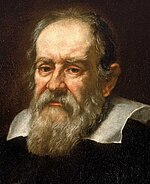 Galileo
Copernicus claimed that the sun, not the earth, was at the center of the universe—an idea considered heresy by the Catholic Church.
Equally revolutionary were Isaac Newton's explanations of gravity and the movement of the planets.
There were breakthroughs in medicine and chemistry, and numerous women contributed to the body of scientific research. The new view of the universe affected Western philosophy.
The Frenchman Rene Descartes, the first rationalist, declared that matter could be independently investigated by reason.
Francis Bacon, an English philosopher, developed the scientific method—a system for collecting and analyzing evidence.
 Bacon
BaconThe Enlightenment
The Scientific Revolution gave rise to the Enlightenment, an eighteenth-century movement that stressed the role of philosophy and reason in improving society. Enlightenment intellectuals, known as philosophes, were chiefly social reformers from the nobility and the middle class. They often met in the salons of the upper classes to discuss the ideas of such giants as Montesquieu, Voltaire, and Diderot. In the economic sphere, Adam Smith put forth the doctrine of laissez-faire economics. The later Enlightenment produced social thinkers such as Jean-Jacques Rousseau and an early advocate of women's rights, Mary Wollstonecraft. Salon gatherings, along with the growth of book and magazine publishing, helped spread Enlightenment ideas among a broad audience. Most Europeans were still Christians. However, the desire for a more spiritual experience inspired new religious movements, such as the Methodism of John Wesley.
The Impact of the Enlightenment
The Enlightenment influenced both art and politics. The baroque and neoclassical styles of art endured, while a more delicate style, called rococo, emerged. The works of Bach, Handel, Haydn, and Mozart represented one of the greatest periods in European music. Novels attracted a middle-class audience. The Enlightenment interested the absolutist rulers of Europe. However, only one, Joseph II of Austria, attempted far-reaching reforms based on Enlightenment ideas; they were largely a failure. The reforms of Catherine the Great of Russia and Frederick the Great of Prussia were far more limited. Territorial disputes in Europe and in the colonial empires of Britain and France produced the War of Austrian Succession, followed by the Seven Years' War. In the end, France lost India and most of North America, and Britain emerged as the world's greatest colonial power.
Colonial Empires and the American Revolution
In the sixteenth century, Portugal came to control Brazil, while Spain established an empire in the Western Hemisphere that included parts of North America and most of Latin America. Portugal and Spain held onto their Latin American colonies for over 300 years. During that time, they profited richly by exporting Latin American gold, silver, and other natural resources and farm products. Spanish and Portuguese officials and Christian missionaries played important roles in Latin American societies. In North America, British control over its colonies began to unravel over issues of taxation. Multiple crises led the Americans to declare their independence in 1776 and to fight Britain until its defeat in 1783. The Articles of Confederation that formed the United States were soon replaced with a Constitution, which created a stronger central government. The Bill of Rights added important freedoms derived from the natural rights expressed by the philosophes.
The Scientific Revolution and the Enlightenment Compared, 7:50
What are the similarities and differences between the Scientific Revolution and the Enlightenment?
The Scientific Revolution and the Enlightenment were similar in so many ways that it's easy to confound the two movements. In this lecture, I use a graphic organizer to go over the similarities and differences between the Scientific Revolution and the Enlightenment, noting how the Scientific Revolution influenced the Enlightenment and how the Enlightenment expanded the scope by applying scientific principles to the organization of society.
https://youtu.be/drgsZc8Gjb8
Takeaways are that the Scientific Revolution influenced the Enlightenment. Also, the Enlightenment expanded the scope of inquiry by applying scientific principles to the organization of society.
Judeo-Christian society led to greater toleration, liberal, constitutional governments protecting individual liberty and restrictions placed on government power.
Christian leaders promoted liberty, science, medical advances, and investigation.
The division of Latin-speaking Western Europe from the Greek-speaking East, followed by barbarian invasions, the Plague of Justinian, and the Islamic invasion, resulted in the West largely losing access to Greek wisdom.
Does Science Argue for or against God? 5:43
Today, a critical question to ask, now that we live in a post-Christian society, is to wonder if science argues for or against God?
Is God dead?
What criteria does Sagan provide to consider the existence of extraterrestrial life?
What has S.E.T.I. concluded?
How many parameters are needed for a planet to support life?
What can account for life on planet Earth?
Are we the result of random forces?
What are the four fundamental forces?
What have scientists and atheists said about the existence of life on Earth?
Why are we here? Literally. The latest science says we shouldn’t be. It says that the chance life exists at all is less than zero. So, is science the greatest threat to the idea of Intelligent Design or is science its greatest advocate? Best-selling author and lecturer, Eric Metaxas, poses this intriguing question and comes up with a very unexpected and challenging answer. The text of this course was adapted from a Wall Street Journal piece written by Eric Metaxas on December 25, 2014. http://www.wsj.com/articles/eric-meta... You can support PragerU by clicking https://www.classy.org/checkout/donat... Free videos are great, but to continue producing high-quality content, contributions -- even small ones -- are greater. Do you shop on Amazon? Now you can feel even better about it! Click http://smile.amazon.com/ch/27-1763901 and a percentage of every Amazon purchase will be donated to PragerU. Same great products. Same low price. Charity made simple.
https://youtu.be/UjGPHF5A6Po
Science can provide reasons for the existence of God. Odds against life on earth are astonishing and yet here we are.
In the remainder of the world what might happen if Islamists conquered most of Europe?
What happened in the non-Christian West?
Renown Astrophysicist Dr. Neil Degrasse Tyson explains what went wrong with Islam, 5:55
https://youtu.be/WZCuF733p88
What will happen in "Christian" Europe as backward looking people migrate there?
Historian Bernard Lewis - The Islamisation of Europe, 4:50
Bernard Lewis is a British-American historian specializing in oriental studies. He is also known as a public intellectual and political commentator. Lewis is the Cleveland E. Dodge Professor Emeritus of Near Eastern Studies at Princeton University. Lewis' expertise is in the history of Islam and the interaction between Islam and the West.
https://youtu.be/TCmTQOFqs9w
In What Went Wrong?, Bernard Lewis writes of the key role of the Middle East in the rise of science in the Middle Ages, before things went wrong: And then, approximately from the end of the Middle Ages, there was a dramatic change. In Europe, the scientific movement advanced enormously in the era of the Renaissance, the Discoveries, the technological revolution, and the vast changes, both intellectual and material, that preceded, accompanied, and followed them.
In the Muslim world, independent inquiry virtually came to an end, and science was for the most part reduced to the veneration of a corpus of approved knowledge. There were some practical innovations — thus, for example, incubators were invented in Egypt, vaccination against smallpox in Turkey. These were, however, not seen as belonging to the realm of science, but as practical devices, and we know of them primarily from Western travelers.
Another example of the widening gap may be seen in the fate of the great observatory built in Galata, in Istanbul, in 1577. This was due to the initiative of Taqi al-Din (ca. 1526-1585), a major figure in Muslim scientific history and the author of several books on astronomy, optics, and mechanical clocks. Born in Syria or Egypt (the sources differ), he studied in Cairo, and after a career as jurist and theologian he went to Istanbul, where in 1571 he was appointed munejjim-bash, astronomer (and astrologer) in chief to the Sultan Selim II. A few years later her persuaded the Sultan Murad III to allow him to build an observatory, comparable in its technical equipment and its specialist personnel with that of his celebrated contemporary, the Danish astronomer Tycho Brahe. But there the comparison ends.
Tycho Brahe's observatory and the work accomplished in it opened the way to a vast new development of astronomical science. Taqi al-Din's observatory was razed to the ground by a squad of Janissaries, by order of the sultan, on the recommendation of Chief Mufti. This observatory had many predecessors in the lands of Islam; it had no successors until the age of modernization.
The relationship between Christendom and Islam in the sciences was now reversed. Those who had been disciples now became teachers; those who had been masters became pupils, often reluctant and resentful pupils. They were willing enough to accept the products of infidel science in warfare and medicine, where they could make the difference between victory and defeat, between life and death. But the underlying philosophy and the sociopolitical context of these scientific achievements proved more difficult to accept or even recognize.
Niall Ferguson - How the West was lost, 5:37
Is the era of Western domination and progress over?
Are the peripheral countries dragging down the world?
How can the West measure up?
What limits non-Western nations?
What does Ferguson mean by the six killer apps?
What do we need in Washington?
Is the present leadership, leading?
https://youtu.be/VCq17xvo2CE
The real problem is that the West under performs; we need new leadership, an application of the six killer apps, and perform as the Judeo-Christian West formerly did.
Just why, beginning around 1500, did a few small polities on the western end of the Eurasian landmass come to dominate the rest of the world?” One of the most intriguing questions is why the West suddenly dominated the World after the 1500s which is the crucial question Niall Ferguson addresses in his work, Civilization. He artfully dissects reasons why the West dramatically increased its power and strength over the rest of the world. At present, he says, we are experiencing “the end of 500 years of Western predominance,” and he foresees the possibility of a clash between the declining and rising forces. He wonders “whether the weaker will tip over from weakness to outright collapse.”
For his work here, there are six civilizations: Chinese, Japanese, Indian, Islamic, Jewish, and Western (following Melko and Eisenstadt, p. 3). These entities are remarkably resilient despite outside influences and extensive interactions between cultures.
Yet, beginning around 1500, something remarkable happened that has not occurred like anything before or since. The West exploded. In 1500, the West accounted for only 10 percent of the land and 16 percent of the world's population. By 1913, Western nations controlled nearly three fifths of all territory and population and a staggering 79 percent of global economic output (p. 5). "The rise of the United States saw the gap between West and East widen still further. By 1990 the average American was seventy-three times richer than the average Chinese" (p. 5). Both the models of governance and economics were Western, whether the civilization was Eastern or Western.
Imperialism does not explain Western dominance. The Ottoman, Safavid, and Ming dynasties existed at the same time while the West and non-Western empires practiced various forms of imperialism thus this does not account for the West's dominance. An important factor to consider are institutions: consider the test cases of Germany, China, and Korea. In each case, if you impose communist institutions on a culture, people suffer; on the other hand, if Western capitalism flourishes, the very same culture flourishes and prospers.
According to Jared Diamond, the monolithic Chinese empire stifled competition whereas in Europe competition bred excellence and advances. According to Ferguson, this is an "appealing" but not a "sufficient" explanation (p. 12).
According to Ferguson, there are six "mainsprings of global power": 1) competition; 2) science; 3) property rights; 4) medicine; 5) the consumer society; and 6) the work ethic. He calls these the "killer apps" (p. 12) of Western dominance.
Property Rights
Property rights are key. Locke argues that if even seven people are gathered together and their beliefs coincide; they constitute a church. Therefore, all beliefs should be tolerated and through the reasonableness of Christianity some may see the truth (p. 113). In the tolerant example provided, in North America, the United States grew in liberty and expanded. In South America though, the area was characterized by "division, instability, and underdevelopment. . . . " (p. 115) "conflict, poverty, and inequality (p. 119). Ferguson addresses the issue of difference. At root is the issue of land. In his early career as a South American Washington, the Liberator Simon Bolivar failed to appeal to non-whites and they rallied to the royalist cause. It was only after two unsuccessful attempts at forming a Republic that Bolivar developed a strategy to unite all people of color. In his efforts he found unlikely supporters among Irish and British freedom fighters. 7,000 U.K. supporters were attracted with promises of freedom and land (p. 121).
Three difficulties plagued Bolivar even after he successfully repulsed royalist forces. South Americans had had no practical experience running their own affairs as the American colonists had enjoyed for decades before their Revolution. Peninsulares had so controlled governance that the creoles had little experience (p. 123). At one point, Bolivar is quoted by Ferguson as stating that the American experiment could never work in Latin America. He states that there is little in common between the English American and the Spanish American (p. 124). Bolivar's vision was not a land-owning Republic with the rule of law but a life-long dictatorship of Bolivar.
The second problem was the unequal distribution of land. A creole elite, merely 10,000 people, 1.1% of the people, owned nearly all the land (p. 124). In 1910, on the eve of the Mexican revolution, only 2.4% of the rural population owned any land (p. 124). In contrast, in 1900, the rural population in the United States owned 75% of the land. Throughout the British Empire the same general statistic of land ownership remains consistent. Up the present, it continues to be one of the primary distinctions between British-influenced areas and Latin America.
Finally, racial antagonism and division doomed Latin America from unity (p. 125). Creoles resented former slaves and vice versa. The indigenous peoples made up a larger component of Latin America than in North America and they were not integrated, or displaced as in North America, into Latin American governance.
Bolivar's grand vision disintegrated into factional disputations and the unity achieved by the United States never occurred. Bolivar depressingly but accurately described the future of Latin America and it was bleak. "The newly independent states began their lives without a tradition of representative government, with a profoundly unequal distribution of land and with racial cleavages that closely approximated to that economic inequality" (p. 127). Unfortunately, when Hugo Chavez celebrates his connection to Bolivar, the dictatorial, sham democracy, and his nationalizing pursuits, Chavez is on sound historical grounds. Bolivar did not create a republic and he was no Washington.
Medicine
Those contemplating the evils of imperialism might consider the advance in medicine assisting the world's people's to live longer. For example, in 1800 the average life expectancy was 28.5 years, and in 2001, Western medicine lengthened life expectancy globally to 66.6 (p. 146). During the colonialist period life expectancy increased during occupation and has declined in the post-colonial period (p. 147).
One of the most dangerous books ever was Rousseau's insistence in The Social Contract that the Noble Savage should not be restrained and he advocated for the General Will. Edmund Burke had early on seen the danger in the French Revolution and consequently wrote against it. "Revolutions devour their own children" (p. 153). Tocqueville pointed out how France was not America: "in sum, they chose Rousseau over Locke" (p. 154).
Work
One of the most intriguing aspects of China's rise according to Ferguson is the simultaneous popularity of Christianity (pp. 277-88). The Chinese authorities have long been wary of religious movements but Christianity is making significant inroads among the population. According to one scholar, the Communists looked into why the West was pre-eminent, and various reasons were advanced: guns, politics, economics, "but in the past twenty years, we have realized that the heart of your culture is your religion: Christianity. That is why the West has been so powerful" (p. 287). Christianity and transcendence leads society to understand tolerance, equality, environmental protection, among the leading ideas advanced by the West. "The XIVth Central Committee of the Chinese Communist Part was presented with a report specifying three requirements for sustainable economic growth: property rights as a foundation, the law as a safeguard and morality as a support" (p. 288). It is the West that has lost faith in itself.
To illustrate his points in the conclusion, Ferguson invokes "The Course of Empire" which is a five-part series of paintings created by Thomas Cole in 1833-36 (http://en.wikipedia.org/wiki/The_Course_of_Empire). Paul Kennedy (The Rise and Fall of the Great Powers: Economic Change and Military Conflict from 1500 to 2000 by Paul M. Kennedy, http://www.librarything.com/work/12599/27116122) develops this American concern, that the Republic is at an end and Ferguson deals with current ideas about the decline and fall of civilization. Kennedy identified "imperial overstretch" as the issue to contend with (p. 298). Then there is Green theorist Jared Diamond's Collapse to consider as well (Collapse: How Societies Choose to Fail or Succeed by Jared Diamond: http://www.librarything.com/work/1070881/27115644). Ferguson disagrees with Diamond's long-term, catastrophic Green collapse; in contrast, Ferguson states civilizations can collapse over night.
This is the most alarming aspect of Ferguson's work: civilizations, as in nature, are complex systems which can collapse quickly and virtually overnight. He illustrates this point with numerous examples from the Roman Empire to the fall of Great Britain. Civilizations collapse.
Contra Diamond, Ferguson maintains that "The civilizational supercycle of birth, growth, and eventual death is a misrepresentation of the historical process (p. 299)." Civilizations are complex systems (p. 299) and "to understand complexity, it is helpful to examine how natural scientists use the concept" (p. 300). Ferguson employs a useful analogy, "To use the jargon of modern physics, a forest before a fire is in a state of `self-organized criticality'" (p. 300). It is teetering on the edge of disaster but no one knows the size nor distribution the fires. Consider how a smallish event, the subprime mortgage crisis in the U.S. led to a worldwide economic phenomenon (p. 301; or, in the case of a large conflict-ridden Empire, the Soviet Union, persisted for decades but then with no warning or insight by any pundits collapsed in six months (p. 303). Supporting Ferguson's point, the Ottoman Empire likewise flourished for centuries but then collapsed quickly with the beginning of the Turkish Republic.
Most importantly, the story of the West and the rest is explained by Ferguson's six killer apps: "mainsprings of global power" (pp. 305-306). Once the killer apps are downloaded, as in the case of Japan, other economies took off as well. India, once its abysmal socialist experiment ended, invoked free-market principles and benefited tremendously as a result.
According to Ferguson, "the financial crisis that began in the summer of 2007 should therefore be understood as an accelerator of an already well-established trend of relative Western decline" (p. 308). The financial situation of the United States is blinking red and according to Ferguson a relatively minor impetus could plunge the entire system into an immediate tailspin. Our debt is held in foreign hands, primarily China, and other nations such as Japan could pull themselves out of a crisis since they have held onto their own liabilities.
China will consume more, import more, invest more abroad, and innovate more (p. 316). Just as crucial is what could go wrong for China and there are four hypotheses. China could decline as Japan did although before the last two decades Japan was predicted by some to surpass the U.S. Second, China may be plagued with social unrest. A third possibility is that the middle class may demand a bigger piece of the political pie. And finally, China's aggression may drive neighbors into the hands of the U.S.
As Ferguson pointed out earlier, civilizations collapse quickly and although the West no long maintains a monopoly on advantageous cultural developments there is an endurable package of Western ways of being.
"This Western package still seems to offer human societies the best available set of economic, social and political institutions--the ones most likely to unleash the individual human creativity capable of solving the problems the twenty-first century world faces" (p. 324). It is this package that has done the best job of finding and highlighting talent. "The big question is whether or not we are still able to recognize the superiority of that package" (p. 324).
The Western texts that should be most instructive and promoted in the schools are:
The King James Bible
Shakespeare
Adam Smith, Wealth of Nations and Moral Sentiments
John Locke, Two Treatises of Government
Edmund Burke, Reflections on the Revolution in France
Isaac Newton, Principia
Charles Darwin, Origin of Species
Abraham Lincoln
Winston Churchill
“The biggest threat to Western civilization is posed not by other civilizations, but by our own pusillanimity — and by the historical ignorance that feeds it” (p. 325). Ferguson calls for a return to traditional education, since “at its core, a civilization is the texts that are taught in its schools, learned by its students and recollected in times of tribulation” (p. 324) — by which he means Great Books, and especially Shakespeare. The greatest dangers facing us are probably not “the rise of China, Islam or CO2 emissions,” he writes, but “our own loss of faith in the civilization we inherited from our ancestors” (p. 325).
"Can the West endure any democracy achieved by enemies who in no way resemble them?"
Orhan Pamuk
http://en.wikipedia.org/wiki/Orhan_Pamuk
Niall Ferguson holds in own in a BBC debate, 8:11
Who is more convincing: Ferguson or Sardar? What evidence does each present?
NewsStoryOfTheDay http://www.facebook.com/NSOTD http://www.twitter.com/NSOTD Niall Ferguson, author of Civilization, will help us examine the role of the West in the revolution in the Arab world - and explain what history can tell us about why certain cultures appear to dominate the world at certain times.
https://youtu.be/wJcHbaNNIM4
Secularization, Religious Resurgence, and Multiple Modernities, 2:10
As modernity has advanced across the world, some people are surprised that in most societies faith not been relegated to the private sphere or altogether abandoned. Investigate the manner in which cultures modernize in unique ways, many of which accommodate or even promote religious belief and practice.
What is secularization?
Secularization or secularisation is the transformation of a society from close identification with religious values and institutions toward nonreligious (or irreligious) values and secular institutions. The secularization thesis refers to the belief that as societies progress, particularly through modernization and rationalization, religion loses its authority in all aspects of social life and governance
Are religions everywhere in decline, or are they resurging?
In Europe, does modernization and secularization go hand in hand?
Modernization theory is a theory used to explain the process of modernization within societies. Modernization refers to a model of a progressive transition from a 'pre-modern' or 'traditional' to a 'modern' society. The theory looks at the internal factors of a country while assuming that, with assistance, "traditional" countries can be brought to development in the same manner more developed countries have. Modernization theory attempts to identify the social variables that contribute to social progress and development of societies, and seeks to explain the process of social evolution.
Is the same true for the United States?
Food for thought: has modernization led to secularization in the Middle East?
http://youtu.be/oKCT-4lZHKc
The Scientific Method
The scientific method is a body of techniques for investigating phenomena, acquiring new knowledge, or correcting and integrating previous knowledge. To be termed scientific, a method of inquiry must be based on empirical and measurable evidence subject to specific principles of reasoning. The Oxford English Dictionary defines the scientific method as "a method or procedure that has characterized natural science since the 17th century, consisting in systematic observation, measurement, and experiment, and the formulation, testing, and modification of hypotheses."
Four essential elements of the scientific method are iterations, recursions, interleavings, or orderings of the following:
- Characterizations (observations, definitions, and measurements of the subject of inquiry)
- Hypotheses (theoretical, hypothetical explanations of observations and measurements of the subject)
- Predictions (reasoning including logical deduction from the hypothesis or theory)
- Experiments (tests of all of the above)
- Define a question
- Gather information and resources (observe)
- Form an explanatory hypothesis
- Test the hypothesis by performing an experiment and collecting data in a reproducible manner
- Analyze the data
- Interpret the data and draw conclusions that serve as a starting point for new hypothesis
- Publish results
- Retest (frequently done by other scientists)
Limits of Science, 2:38
What are the limits of science? What is going on at the frontiers? Two astrophysicists discuss these questions.
Includes Dr. Jennifer Wiseman
http://youtu.be/1wCgku9bgfw
Limits of Science, 2:53
Discovered on an archaeological dig near Stonehenge, it is the world's oldest educational film and it is called The Limits of Science. Enjoy!
http://youtu.be/IQJ4VBq4n3U
Bias
Metaphysics
Metaphysics is a traditional branch of philosophy concerned with explaining the fundamental nature of being and the world that encompasses it, although the term is not easily defined. Traditionally, metaphysics attempts to answer two basic questions in the broadest possible terms:
- What is ultimately there?
- What is it like?
Prior to the modern history of science, scientific questions were addressed as a part of metaphysics known as natural philosophy. Originally, the term "science" (Latin scientia) simply meant "knowledge". The scientific method, however, transformed natural philosophy into an empirical activity deriving from experiment unlike the rest of philosophy. By the end of the 18th century, it had begun to be called "science" to distinguish it from philosophy. Thereafter, metaphysics denoted philosophical enquiry of a non-empirical character into the nature of existence. Some philosophers of science, such as the neo-positivists, say that natural science rejects the study of metaphysics, while other philosophers of science strongly disagree.
Science vs. Pseudoscience
inFact: 5 Ways to Tell Science from Pseudoscience, 3:30
Here are 5 quick ways for you to tell good science from bad science. http://infactvideo.com
http://youtu.be/e3SLiQFdKnA
6.2 Practice: Scientific Explanations
Full Moon, Weird Things
Michael Shermer, editor in chief of Skeptic magazine
Full moons are traditionally associated with temporal insomnia, insanity (hence the terms lunacy and lunatic) and various "magical phenomena" such as lycanthropy. Psychologists, however, have found that there is no strong evidence for effects on human behavior around the time of a full moon.[6] They find that studies are generally not consistent, with some showing a positive effect and others showing a negative effect. In one instance, 23 December 2000 issue of the British Medical Journal published two studies on dog bite admission to hospitals in England and Australia. The study of the Bradford Royal Infirmary found that dog bites were twice as common during a full moon, whereas the study conducted by the public hospitals in Australia found that they were less likely.
Full moon names
Some full moons have developed new names in modern times, e.g. the blue moon, and the names "harvest moon" and "hunter's moon" for the full moons of autumn.
A Video Introduction to Skeptic magazine by Michael Shermer, 5:59
Dr. Michael Shermer, the Founding Publisher of Skeptic magazine and the Executive Director of the Skeptics Society, introduces Skeptic magazine.
http://youtu.be/hSsS30LyP-8
Urban Legends Debunked
6.3 Statistics and Fallacies
Small Sample Size
Biased Sample
"Sample Response Bias" | Statistics with Educator.com, 4:28
"Sample Response Bias" | Statistics with Educator.com ►Watch more at http://www.educator.com/mathematics/s... Understand your Statistics homework and ace the test with Educator.com's awesome hand-picked instructors. More features you'll see on Educator.com: -Full lessons complete with extra examples, downloads, and quizzes -Searchable and jumpable topics to save you time -Ability to ask questions to instructor and other students
http://youtu.be/XZ6W6jf7_RQ
Manipulative Survey Questions
10 Step Guide to Questionnaire Design by RCU, 5:44
Gordon Aitken, Managing Director at RCU Ltd, gives a 10 step guide to Questionnaire Design.
http://youtu.be/53mASVzGRF4
Statistics Based on Guesswork
Missing Background Information
6.3 Practice: Statistics and Fallacies
Is a Law Degree a Ticket to Wealth?
Founders' Forum, Part 1 - Is Going to Law School Worth It?
http://LSATFreedom.com - In this Founders' Forum video, LSAT Freedom founders Rob Tauler, Rob Fojo, and Congressman Ron D. DeSantis (before he ran for office) address the question, "Is Going To Law School Worth It?" Having been faced with that decision themselves years ago, and in light of today's economy and circumstances, they provide their insights on an important question for many students about going to law school.http://youtu.be/7LCSIjukeaQ
Week 6 Objectives
Upon completion of this lesson, you will be able to:
- Develop skills for overcoming barriers which limit objective and productive critical thinking.
- Identify the informal fallacies, assumptions, and biases involved in manipulative appeals and abuses of language.
- Distinguish between good and bad science
- Interpret scientific information
- Scientific Method (observation, hypothesis formulation, experimentation, and verification)
- Usefulness of science
- Empirical nature of science
- Operational definitions
- Determinism
- Controlled experiments
- Quasi-experimental design
- Non-experimental designs
-
- Ex post facto
- Correlational
- Survey method: Four criteria
- Case study
- Role of chance
- Experimental bias
- Placebo effect
- Pseudoscience
Pre-Built Course Content
Resources
LECTURE 2
Pre-Built Course Content
REFERENCES
In the 6th Summer of Obama, Let the ______s Do It, 7:49
The southern border is collapsing. Ebola is spreading. Russia is on the rise. U.S. infrastructure is crumbling. The electrical grid is in jeopardy. Can the republic suffer another year of the Obama Administration without help?
http://youtu.be/fJV00yDwMH8
Baloney Detection Kit, (Dr. Michael Shermer), 14:40
Richard Dawkins foundation Video by Dr.Michael Shermer (Founding Publisher of Skeptic magazine) Discussing a 'Baloney Detection Kit' inspired by Carl Sagan. The video reproduced here in the battle against superstition.
http://youtu.be/hJmRbSX8Rqo
Ebola Panic at the Mexican Border, 13:01
–Ted Broer, biochemist, scientist, author and consumer health advocate, joins David to discuss his concerns about Ebola entering the U.S. through Mexico, and more
http://youtu.be/Ldu9KPYu78M
Ben Shapiro Blasts CNN for Anti-Israel Bias, 6:52
http://youtu.be/WozIa1r_Vkk
Indian TV Crew Captures Islamist Hamas Operatives Planting Rocket in Civilian Area, 4:24
http://youtu.be/A_fP6mlNSK8
http://www.theblaze.com/stories/2014/08/05/video-indian-tv-appears-to-catch-hamas-building-red-handed-outside-its-hotel/
http://youtu.be/A_fP6mlNSK8
Israel Dennis Prager, 5:40
http://youtu.be/0I7AKDom6Es
http://www.theblaze.com/stories/2014/08/04/some-are-calling-this-the-most-important-video-about-israel-ever-made-and-its-taking-the-internet-by-storm/
Pamela Geller Speaks at MTA Board Meeting to Ban Free Speech, 2:20
https://youtu.be/PFJEkgLIq44
Why Won't Pamela Geller Shut Up?
Bill Maher
http://youtu.be/9pntZQN-rLw
SNL: Draw Mo
http://www.theblaze.com/stories/2015/05/10/mocking-gop-candidates-and-draw-the-prophet-muhammad-snl-tackles-two-of-the-biggest-news-stories-of-the-week/
Geller vs. Juan Williams
http://www.theblaze.com/stories/2015/05/08/she-is-like-a-pyromaniac-juan-williams-clashes-with-pamela-geller-and-sean-hannity-over-free-speech-and-the-muhammad-cartoon-contest/
Dead Islamists Tell No Tales
http://www.theblaze.com/blog/2015/05/08/buck-sexton-breaks-down-what-incitement-really-is-after-texas-shooting/
One Brave Texan Cop Results in Two Dead Islamists
http://bearingarms.com/pushed-forward-brave-garland-police-officer-advanced-brought-garland-terrorists/
Suspected IED Near Texas Border
http://www.breitbart.com/texas/2015/05/07/texas-bomb-squad-responds-to-possible-ied-near-border/
Islamist Describes Weapon of Mosque
http://youtu.be/KY2zW_GdRFQ
Megyn Kelly and 1st Amendment Expert
http://youtu.be/7JRyXSKXfIA
British Islamist Advocates Death Under Sharia for Geller
http://youtu.be/m3xuj-aJyaE
Geller: No Government Protection After Islamist Attack
http://youtu.be/ICxF51McA94
Megyn Kelly vs. Richard Fowler
http://youtu.be/5m6XszYmk-s
Anti-free speech mosque to hold Islamist's funeral.
http://pjmedia.com/tatler/2015/05/06/kansas-city-mosque-that-wanted-to-ban-free-speech-will-hold-funeral-for-texas-jihadist-shooter-nadir-soofi/
An unidentified “senior law enforcement official” tells the New York Times that, while the FBI had been aware of Garland, Texas jihadist attacker Elton Simpson for nearly a decade, they did not follow his violent, pro-jihad tweets as closely as they could have because “there are so many like him” that the agency is overwhelmed.
http://www.breitbart.com/national-security/2015/05/06/official-fbi-overlooked-texas-shooters-violent-tweets-because-there-are-so-many-like-him/
http://www.breitbart.com/national-security/2015/05/06/official-fbi-overlooked-texas-shooters-violent-tweets-because-there-are-so-many-like-him/More anti-jihad conferences and a selection of anti-jihad cartoons.
http://www.breitbart.com/national-security/2015/05/05/exclusive-pamela-geller-cowardly-conservatives-accommodate-the-leftist-media-by-attacking-draw-muhammad-contest/
Geller on Fox and Friends
http://youtu.be/cnasUS8s0j4
Geller and Imam on Hannity
http://youtu.be/D8BXOXybS8M
Geller and the First Amendment
http://pamelageller.com/2015/05/wall-street-journal-pamela-geller-and-the-first-amendment.html/
Fox News Seeks to Restrict Free Speech
http://www.theblaze.com/stories/2015/05/05/muhammad-cartoon-contest-organizer-pamela-geller-has-tense-exchange-with-fox-news-host-youre-looking-to-restrict-my-speech/
Dershowitz vs. Islamists
http://youtu.be/2EhLH-ZuLSQ
Islamic State threatens Pamela Geller.
http://www.thegatewaypundit.com/2015/05/isis-posts-warning-we-have-71-trained-soldiers-in-15-states-names-5-targets/
CNN promotes Sharia over Garland, Geller event.
http://youtu.be/xKGB3lgAZx0
Islamists
http://www.wfaa.com/story/news/crime/2015/05/04/ominous-tweets-about-attack-sent-before-garland-shooting/26855835/
Killing Free Speech
http://www.dailymail.co.uk/news/article-3066779/Police-officer-suspect-said-injured-shooting-outside-art-anti-Muslim-exhibition-art-depicting-prophet-Muhammad.html
Second shooter finally identified. Both Islamists have been identified for years by the FBI.
"Good" Islamist Shooter
Short Trento vid
http://youtu.be/23uElG6UJBU


Tuesday, August 02, 2016
PHI 210 Week 5 Summer 2016
The presentation may contain content that is deemed objectionable to a particular viewer because of the view expressed or the conduct depicted. The views expressed are provided for learning purposes only, and do not necessarily express the views, or opinions, of Strayer University, your professor, or those participating in videos or other media.
We will have two ten-minute breaks: at 7:30 and 9 pm. Discussion, 9:30 pm, before you are dismissed at 10:00 pm.
REVIEW of FALLACIES
Discussion Wk 4 Ch 4 Fallacies(1).ppt
5.1 Credibility
Credibility refers to the objective and subjective components of the believability of a source or message.
Traditionally, modern credibility and reliability has two key components: trustworthiness and expertise, which both have objective and subjective components. Trustworthiness is based more on subjective factors, but can include objective measurements such as established reliability. Expertise can be similarly subjectively perceived, but also includes relatively objective characteristics of the source or message (e.g., credentials, certification or information quality).[1] Secondary components of credibility include source dynamism (charisma) and physical attractiveness.
Credibility online has become an important topic since the mid-1990s. This is because the web has increasingly become an information resource. The Credibility and Digital Media Project @ UCSB[2] highlights recent and ongoing work in this area, including recent consideration of digital media, youth, and credibility. In addition, the Persuasive Technology Lab[3] at Stanford University has studied web credibility and proposed the principal components of online credibility and a general theory called Prominence-Interpretation Theory.[4]
Credibility, 6:07
Credibility book summary by Kouzes & Posner.
https://youtu.be/uYK5mnj--kg
History
Why did Americans question the credibility of an individual Senator resulting in McCarthyism?
The Army–McCarthy hearings were a series of hearings held by the United States Senate's Subcommittee on Investigations between April 1954 and June 1954. The hearings were held for the purpose of investigating conflicting accusations between the United States Army and Senator Joseph McCarthy. The Army accused chief committee counsel Roy Cohn of pressuring the Army to give preferential treatment to G. David Schine, a former McCarthy aide and a friend of Cohn's. McCarthy counter-charged that this accusation was made in bad faith and in retaliation for his recent aggressive investigations of suspected Communists and security risks in the Army.
Chaired by Senator Karl Mundt, the hearings convened on March 16, 1954, and received considerable press attention, including gavel-to-gavel live television coverage on ABC and DuMont from April 22 to June 17. The media coverage, particularly television, greatly contributed to McCarthy's decline in popularity and his eventual censure by the Senate the following December.
In what played out to be the most dramatic exchange of the hearings, McCarthy responded to aggressive questioning from Army counsel Joseph Welch. On June 9, 1954, day 30 of the hearings, Welch challenged Cohn to give McCarthy's list of 130 subversives in defense plants to the office of the FBI and the Department of Defense "before the sun goes down".[24] In response to Welch's challenge, McCarthy suggested that Welch should check on Fred Fisher, a young lawyer in Welch's own Boston law firm whom Welch planned to have on his staff for the hearings.[25] McCarthy then mentioned that Fisher had once belonged to the National Lawyers Guild (NLG), a group which Attorney General Brownell had called "the legal bulwark of the Communist Party".[26]
Welch revealed he had confirmed Fisher's former membership in the National Lawyers' Guild approximately six weeks before the hearings started.[27] After Fisher admitted his membership in the National Lawyers' Guild, Welch decided to send Fisher back to Boston.[28] His replacement by another colleague on Welch's staff was also covered by The New York Times.[29][30] Welch then reprimanded McCarthy for his needless attack on Fisher, saying that "Until this moment, Senator, I think I never really gauged your cruelty or your recklessness."[31] McCarthy, accusing Welch of filibustering the hearing and baiting Cohn, dismissed Welch's dissertation and casually resumed his attack on Fisher, at which point Welch angrily cut him short:[25]
"Have you no sense of Decency Sir?" - Welch-McCarthy, 4:49
https://youtu.be/K1eA5bUzVjA
For many Americans, McCarthyism was a wake-up call that their leaders, in this case an individual Senator making false accusations, was not credible.
The term "credibility gap" came against a background of the use of the term "missile gap", which the Oxford English Dictionary lists as first being used by then-Senator John F. Kennedy on 14 August 1958, when he stated: "
Our Nation could have afforded, and can afford now, the steps necessary to close the missile gap."[3] “Doomsday gap” and “mineshaft gap” were the imagined post-apocalyptic continuations of this paranoia.[4]
The missile gap was the Cold War term used in the US for the perceived superiority of the number and power of the USSR's missiles in comparison with its own.
This gap in the ballistic missile arsenals only existed in exaggerated estimates made by the Gaither Committee in 1957 and in United States Air Force (USAF) figures. Even the contradictory CIA figures for the USSR's weaponry, which showed a clear advantage for the US, were far above the actual count. Like the bomber gap of only a few years earlier, it was soon demonstrated that the gap was entirely fictional.
John F. Kennedy is credited with inventing the term in 1958 as part of the ongoing election campaign, in which a primary plank of his rhetoric was that the Eisenhower administration was weak on defense.
It was later learned that Kennedy was apprised of the actual situation during the campaign, which has led scholars to question what the (future) president knew and when he knew it. There has been some speculation that he was aware of the illusory nature of the missile gap from the start, and was using it solely as a political tool, an example of policy by press release.
In contrast to McCarthy does Kennedy appear credible?
PPP:64 (excerpt) The U.S. Senator John F. Kennedy Story, 2:51
PPP:64 (excerpt) A 1958 political profile of John F. Kennedy when he was the junior senator of Massachusetts. Copyright Status: This film is in the public domain. If you use it, we kindly ask that you credit the John F. Kennedy Presidential Library and Museum, Boston.
https://youtu.be/AsDcLuNXePY
Why, or why not, does Kennedy appear credible in this clip?
Does he appear to be trustworthy?
Does he appear to have expertise?
Background
The Soviet launch of Sputnik 1 on 4 October 1957 highlighted the technological achievements of the Soviets and sparked some worrying questions for the politicians and general public of the USA. Although US military and civilian agencies were well aware of Soviet satellite plans, as they were publicly announced as part of the International Geophysical Year, Eisenhower's announcements that the event was unsurprising found little support among a US public still struggling with McCarthyism.
1957 - First Satellite in Space (Sputnik), 3:24
Sputnik 1 launched on October 4, 1957. The satellite was 58 cm (about 23 in) in diameter and weighed approximately 83.6 kg (about 183 lb). Each of its elliptical orbits around the Earth took about 96 minutes. Monitoring of the satellite was done by many amateur radio operators and the Jodrell Bank Observatory. Sputnik's R-7 booster had previously proven itself more than one month earlier as the world's first ICBM in the successful long-range test flight of August 21 (with the accomplishment published in Aviation Week). Sputnik 1 was not visible from Earth but the casing of the R-7 booster, traveling behind it, was.
https://youtu.be/Xw57VErRjA8
Political opponents seized on the event, and Eisenhower's ineffectual response, as further proof that the US was "fiddling as Rome burned." John F. Kennedy stated "the nation was losing the satellite-missile race with the Soviet Union because of … complacent miscalculations, penny-pinching, budget cutbacks, incredibly confused mismanagement, and wasteful rivalries and jealousies."[1]
The Soviets capitalized on their strengthened position with false claims of Soviet missile capabilities, claiming on December 4, 1958, that "Soviet ICBMs are at present in mass production." Five days later on December 9th, Soviet Premier Nikita Khruschev boasted the successful testing of an ICBM with an impressive 8,000 mile range. [2] Coupled with the United States' failed launch of the Titan ICBM that month, a prevailing sense of Soviet superiority in missile technology became prevalent.
Eisenhower Denies US Lag In Missiles 1957/10/10, 1:39
1) Ike speaks, that Vanguard is being developed, has never been a race, but part of IGY scientific work 2) Ike decorates Secretary Wilson with Medal of Freedom, replaced by Neil McElroy (partial newsreel)
https://youtu.be/JcP6yXkUN0U
In comparison to Kennedy and McCarthy does Eisenhower appear credible?
Does Eisenhower appear trustworthy? Does he have expertise?
Inaccuracy of intelligence
The National Intelligence Estimate (NIE) 11-10-57, issued in December 1957, predicted that the Soviets would "probably have a first operational capability with up to 10 prototype ICBMs" at "some time during the period from mid-1958 to mid-1959." The numbers started to inflate. A similar report gathered only a few months later, NIE 11-5-58 released in August 1958, concluded that the USSR had "the technical and industrial capability ... to have an operational capability with 100 ICBMs" some time in 1960, and perhaps 500 ICBMs "some time in 1961, or at the latest in 1962."[1]
Beginning with the collection of photo-intelligence by U-2 overflights of the Soviet Union in 1956, the Eisenhower administration had increasing hard evidence that claims of any strategic weapons favoring the Soviet Union were false. Based on this evidence, the CIA placed the number of ICBMs closer to a dozen. Continued sporadic flights failed to turn up any evidence of additional missiles. Curtis LeMay argued that the large stocks of missiles were in the areas not photographed by the U-2s, and arguments broke out over the Soviet factory capability in an effort to estimate their production rate.
In a widely syndicated article in 1959, Joseph Alsop even went so far as to describe "classified intelligence" as placing the Soviet missile count as high as 1,500 by 1963, while the US would have only 130 at that time.[3]
It is known today that even the CIA's estimate was too high; the actual number of ICBMs, even including interim-use prototypes, was 4.[4]
Playing for the public
In 1958 Kennedy was gearing up for his Senate re-election campaign and seized the issue.
The Oxford English Dictionary lists the first use of the term "missile gap" on 14 August 1958 when he stated: "Our Nation could have afforded, and can afford now, the steps necessary to close the missile gap."[1]
According to Robert McNamara, Kennedy was leaked the inflated USAF estimates by Senator Stuart Symington, the former Secretary of the Air Force. Unaware that the report was misleading, Kennedy used the numbers in the document and based some of his 1960 election campaign platform on the Republicans being "weak on defense".[5] The missile gap was a common theme.
Eisenhower refused to publicly refute the claims, fearing that public disclosure of this evidence would jeopardize the secret U-2 flights. Consequently, Eisenhower was frustrated by what he conclusively knew to be Kennedy's erroneous claims that the United States was behind the Soviet Union in number of missiles.[6] in an attempt to defuse the situation, Eisenhower arranged for Kennedy and Lyndon B. Johnson to be appraised of the information, first with a meeting by the Joint Chiefs of Staff, then Strategic Air Command, and finally with the Director of the CIA, Allen Dulles, in July 1960.[4]
In spite of these meetings, Kennedy continued to use the same rhetoric, which modern historians have debated as likely being so useful to the campaign that he was willing to ignore the truth.[7]
The issue of who is credible is complicated by the 1960 U-2 incident.
The 1960 U-2 incident occurred during the Cold War on 1 May 1960, during the presidency of Dwight D. Eisenhower and the premiership of Nikita Khrushchev, when a United States U-2 spy plane was shot down while in Soviet airspace.
The aircraft, flown by Central Intelligence Agency pilot Francis Gary Powers, was performing photographic aerial reconnaissance when it was hit by an S-75 Dvina (SA-2 Guideline) surface-to-air missile and crashed in Sverdlovsk. Powers parachuted safely and was captured.
Initially the United States government tried to cover up the plane's purpose and mission, but was forced to admit its military nature when the Soviet government came forward with the captured pilot and remains of the U-2 including spying technology that had survived the crash as well as photos of military bases in Russia taken by the aircraft.
Coming roughly two weeks before the scheduled opening of an east–west summit in Paris, the incident was a great embarrassment to the United States[2] and prompted a marked deterioration in its relations with the Soviet Union. Powers was convicted of espionage and sentenced to three years of imprisonment plus seven years of hard labor but would be released two years later on 10 February 1962 during a prisoner exchange for Soviet officer Rudolf Abel.[3]
The U2 Incident, 1:06
Soviet leader Nikita Khrushchev raises incident of captured U2 spy plane and pilot over Soviet Union at the Paris Summit and UN
Soviet leader Nikita Khrushchev raises the incident of United States spying Soviet positions. An American U2 Jet takes off for reconnaissance over the Soviet Union. Parts from downed U2 plane, including pilot's uniform, on display in the Soviet Union. Pilot Francis Gary Powers tried in Moscow. Power's family during the trial in court. Soviet leader Nikita Khrushchev speaks about the incident at the Paris Summit. The historic UN session on September 23, 1960 of the General Assembly in New York. Nikita Khrushchev targets British Prime Minister MacMillan at the meeting. In the UN chamber, Khrushchev pounds his fists on his desk along with the entire Soviet delegation. General Secretary Dag Hammerskjold defies Khrushchev's threats. Location: United States. Date: September 23, 1960.
Visit us at www.CriticalPast.com: 57,000+ broadcast-quality historic clips for immediate download. Fully digitized and searchable, the CriticalPast collection is one of the largest archival footage collections in the world. All clips are licensed royalty-free, worldwide, in perpetuity. CriticalPast offers immediate downloads of full-resolution HD and SD masters and full-resolution time-coded screeners, 24 hours a day, to serve the needs of broadcast news, TV, film, and publishing professionals worldwide. Still photo images extracted from the vintage footage are also available for immediate download. CriticalPast is your source for imagery of worldwide events, people, and B-roll spanning the 20th century.
https://youtu.be/yARkyHM_pc0
Francis Gary Powers & The U-2 Incident, 2:06
https://youtu.be/vc50FsXib48
The issues of credibility and expertise as a result came to a head in the hotly contested 1960 political campaign.
The campaign, the first televised debates, featured the Democratic challenger Senator Kennedy against the Republican Vice President Nixon.
Who is more credible? Who appears to be an expert?
JFK vs. Nixon - 2nd 1960 debate, 8:33
Among the issues discussed was the U-2 incident involving Francis Gary Powers that occurred in May 1960, in the midst of the Cold War.
The 1960 U-2 incident occurred during the Cold War on 1 May 1960, during the presidency of Dwight D. Eisenhower and the premiership of Nikita Khrushchev, when a United States U-2 spy plane was shot down while in Soviet airspace. The aircraft, flown by Central Intelligence Agency pilot Francis Gary Powers, was performing photographic aerial reconnaissance when it was hit by an S-75 Dvina (SA-2 Guideline) surface-to-air missile and crashed in Sverdlovsk. Powers parachuted safely and was captured.
Initially the United States government tried to cover up the plane's purpose and mission, but was forced to admit its military nature when the Soviet government came forward with the captured pilot and remains of the U-2 including spying technology that had survived the crash as well as photos of military bases in Russia taken by the aircraft. Coming roughly two weeks before the scheduled opening of an east–west summit in Paris, the incident was a great embarrassment to the United States[2] and prompted a marked deterioration in its relations with the Soviet Union. Powers was convicted of espionage and sentenced to three years of imprisonment plus seven years of hard labor but would be released two years later on 10 February 1962 during a prisoner exchange for Soviet officer Rudolf Abel.[3]
https://youtu.be/30kDGU2vmx8
For people watching the debate Kennedy appeared to win although radio listeners generally thought Nixon was more persuasive.
In any case, in a close race Kennedy won.
In January 1961 McNamara, the new secretary of defense, and Roswell Gilpatric, a new deputy secretary who strongly believed in the existence of a missile gap, personally examined photographs taken by Corona satellites. Although the Soviet R-7 missile launchers were large and would be easy to spot in Corona photographs, they did not appear in any of them. In February McNamara stated that there was no evidence of a large-scale Soviet effort to build ICBMs. More satellite overflights continued to find no evidence, and by September 1961 a National Intelligence Estimate concluded that the USSR possessed no more than 25 ICBMs and would not possess more in the near future.[8]
There was a missile gap, but it was greatly in the United States' favour, as it had already deployed substantial numbers of several varieties of land- and sea-based missiles.
Kennedy was embarrassed by the whole issue. Kennedy had already admitted as much publicly, The Listener, 19 April 1962 noted "The passages on the 'missile gap' are a little dated, since Mr Kennedy has now told us that it scarcely ever existed."[9]
Effects
Warnings and calls to address imbalances between the fighting capabilities of two forces were not new, as a "bomber gap" had exercised political concerns a few years previously. What was different about the missile gap was the fear that a distant country could strike without warning from far away with little damage to themselves. Concerns about missile gaps and similar fears, such as nuclear proliferation, continue.
Promotion of the missile gap had several unintended consequences. The R-7 requires as much as 20 hours to be readied for launch, meaning that they could be easily attacked by bombers before they could strike. This demanded that they be based in secret locations to prevent a pre-emptive strike on them. As Corona could find these sites no matter where they were located, the Soviets decided not to build large numbers of R-7s, in favour of more advanced missiles that could be launched more quickly.[8]
Later evidence has emerged that one consequence of J.F Kennedy pushing the false idea that America was behind the Soviets in a missile gap was that Soviet premier Nikita Khrushchev and senior Soviet military figures began to believe that Kennedy was a dangerous extremist who, with the American military, was seeking to plant the idea of a Soviet first-strike capability to justify a pre-emptive American attack.
This belief about Kennedy as a militarist was reinforced in Soviet minds by the Bay of Pigs invasion of 1961 and led to the Soviets placing nuclear missiles in Cuba in 1962. (Kennedy was informed the missile gap was "a fiction" in January 1961.)[10]
Bay of Pigs Invasion of Cuba - Newsreel, 1961, 2:08
Newsreel from April 19, 1961. The Bay of Pigs invasion of Cuba. Footage of rebels and invaders with statements issues by Fidel Castro amidst US denials.
https://youtu.be/neks5_5LZp4
Popular culture
The whole idea of a missile gap was parodied in the 1964 film Dr. Strangelove or: How I Learned to Stop Worrying and Love the Bomb in which a Doomsday device is built by the Soviets because they had read in The New York Times that the U.S. was working along similar lines and wanted to avoid a "Doomsday Gap". As the weapon is set up to go off automatically if the USSR is attacked, which is occurring as the movie progresses, the president is informed that all life on the surface will be killed off for a period of years. The only hope for survival is to select important people and place them deep underground in mine shafts until the radiation clears. The generals almost immediately begin to worry about a "mine shaft gap" between the US and Soviets. In reference to the alleged "missile gap" itself, General Turgidson mentions off-hand at one point that the United States actually has a five to one rate of missile superiority against the Soviet Union. The Russian ambassador himself also explains that one of the major reasons that the Soviets began work on the doomsday machine is that, ultimately, they realized that they simply could never match the rate of American military production (let alone outproduce American missile construction). The doomsday machine only cost a small fraction of what they normally spent on defense in a single year.
First, an review of the classic, yet challenging for most viewers, Dr. Strangelove, and then a specific reference to the mine shaft gap.
"mine shaft gap", 4:15
Mineshaft gap - Dr. Strangelove, 4:15
https://youtu.be/ybSzoLCCX-Y
Missile Gap is also the title of a science fiction book by Charles Stross, which depicts an alternative resolution to the missile gap situation and subsequent Cuban Missile Crisis.
Dr. Strangelove or: How I Learned to Stop Worrying and Love the Bomb, more commonly known as Dr. Strangelove, is a 1964 political satire black comedy film that satirizes the Cold War fears of a nuclear conflict between the USSR and the US. The film was directed, produced, and co-written by Stanley Kubrick, stars Peter Sellers and George C. Scott, and features Sterling Hayden, Keenan Wynn, and Slim Pickens. Production took place in the United Kingdom. The film is loosely based on Peter George's thriller novel Red Alert.
The story concerns an unhinged United States Air Force general who orders a first strike nuclear attack on the Soviet Union. It follows the President of the United States, his advisers, the Joint Chiefs of Staff, and a Royal Air Force (RAF) officer as they try to recall the bombers to prevent a nuclear apocalypse. It separately follows the crew of one B-52 bomber as they try to deliver their payload.
In 1989, the United States Library of Congress included it in the first group of films selected for preservation in the National Film Registry. It was listed as number three on AFI's 100 Years...100 Laughs list.
Stanley Kubrick (/ˈkuːbrɪk/; July 26, 1928 – March 7, 1999) was an American film director, screenwriter, producer, cinematographer, editor, and photographer. Part of the New Hollywood film-making wave, Kubrick's films are considered by film historian Michel Ciment to be "among the most important contributions to world cinema in the twentieth century", and he is frequently cited as one of the greatest and most influential directors in cinematic history. His films, which are typically adaptations of novels or short stories, cover a wide range of genres, and are noted for their realism, dark humor, unique cinematography, extensive set designs, and evocative use of music.
Kubrick grew up in the Bronx in New York City, and attended William Howard Taft High School from 1941 to 1945. Although he only received average grades, Kubrick displayed a keen interest in literature, photography, and film from a young age, and taught himself all aspects of film production and directing after graduating from high school. After working as a photographer for Look magazine in the late 1940s and early 1950s, he began making short films on a shoestring budget, and made his first major Hollywood film, The Killing, for United Artists in 1956. This was followed by two collaborations with Kirk Douglas, the war picture Paths of Glory (1957) and the historical epic Spartacus (1960). His reputation as a filmmaker in Hollywood grew, and he was approached by Marlon Brando to film what would become One-Eyed Jacks (1961), though Brando eventually decided to direct it himself. Creative differences arising from his work with Douglas and the film studios, a dislike of Hollywood, and a growing concern about crime in America prompted Kubrick to move to the United Kingdom in 1961, where he spent most of the remainder of his life and career. His home at Childwickbury Manor in Hertfordshire, which he shared with his wife Christiane, became his workplace, where he did his writing, research, editing, and management of production details. This allowed him to have almost complete artistic control over his films, but with the rare advantage of having financial support from major Hollywood studios. His first British productions were two films with Peter Sellers, Lolita (1962) and Dr. Strangelove (1964).
Kubrick is noted for his attention to detail and skillful use of music. A demanding perfectionist, he assumed control over most aspects of the film making process, from direction and writing to editing, and took painstaking care with researching his films and staging scenes, working in close coordination with his actors and other collaborators. He often asked for several dozen retakes of the same scene in a movie, which resulted in many conflicts with his casts. Despite the resulting notoriety among actors, many of Kubrick's films broke new ground in cinematography. The scientific realism and innovative special effects of 2001: A Space Odyssey (1968) were without precedent in the history of cinema, and the film earned him his only personal Oscar, for Best Visual Effects. Steven Spielberg has referred to the film as his generation's "big bang", and it is often included in polls of the greatest films ever made. For the 18th-century period film Barry Lyndon (1975), Kubrick obtained lenses developed by Zeiss for NASA, to film scenes under natural candlelight. With The Shining (1980), he became one of the first directors to make use of a Steadicam for stabilized and fluid tracking shots. While many of Kubrick's films were controversial and initially received mixed reviews upon release—particularly A Clockwork Orange (1971), which Kubrick pulled from circulation in the UK following a mass media frenzy—most of his films were nominated for Oscars, Golden Globes, or BAFTA Awards. His last film, Eyes Wide Shut, was completed shortly before his death in 1999.
As a result of the non-existence of any gap--and a lapse of credibility and expertise--some Americans questioned their government.
During the 1970s more data emerged that the government was less credible and lacked more expertise than Americans believed previously.
A second claim of a missile gap appeared in 1974. Albert Wohlstetter, a professor at the University of Chicago, accused the CIA of systematically underestimating Soviet missile deployment, in his 1974 foreign policy article entitled "Is There a Strategic Arms Race?" Wohlstetter concluded that the United States was allowing the Soviet Union to achieve military superiority by not closing a perceived missile gap. Many conservatives then began a concerted attack on the CIA's annual assessment of the Soviet threat.[11]
http://albertwohlstetter.com/writings/20081200-Nuclear%20Heuristics.pdf
This led to an exercise in competitive analysis, with a group called Team B being created with the production of a highly controversial report.
According to then-Secretary of State Henry Kissinger, by 1976 the USA had a 6-to-1 advantage in the number of nuclear warheads over the Soviet Union.[12]
A 1979 briefing note on the National Intelligence Estimate (NIE) of the missile gap concluded that the NIE's record on estimating the Soviet missile force in the 1970s was mixed. The NIE estimates for initial operational capability (IOC) date for MIRVed ICBMs and SLBMs were generally accurate, as were the NIE predictions on the development of Soviet strategic air defenses. However, the NIE predictions also overestimated the scope of infrastructure upgrades in the Soviet system and underestimated the speed of Soviet improvement in accuracy and proliferation of re-entry vehicles. NIE results were regarded as improving but still vague, showing broad fluctuations and having little long-term validity.[13]
Credibility gap is a term that came into wide use with journalism, political and public discourse in the United States during the 1960s and 1970s. At the time, it was most frequently used to describe public skepticism about the Lyndon B. Johnson administration's statements and policies on the Vietnam War.[1] It was used in journalism as a euphemism for recognized lies told to the public by politicians. Today, it is used more generally to describe almost any "gap" between the alleged reality of a situation and what politicians and government agencies say about it.[2]
The Gulf of Tonkin situation exacerbated the credibility gap tremendously.
August 1964
The Gulf of Tonkin incident (Vietnamese: Sự kiện Vịnh Bắc Bộ), also known as the USS Maddox incident, involved what were originally claimed to be two separate confrontations involving North Vietnam and the United States in the waters of the Gulf of Tonkin. The original American report blamed North Vietnam for both incidents, but eventually became very controversial with widespread claims that either one or both incidents were false, and possibly purposefully so. On August 2, 1964, the destroyer USS Maddox, while performing a signals intelligence patrol as part of DESOTO operations, was pursued by three North Vietnamese Navy torpedo boats of the 135th Torpedo Squadron.[1][2] The Maddox fired 3 warning shots and the North Vietnamese boats then attacked with torpedoes and machine gun fire.[2] The Maddox expended over 280 3-inch and 5-inch shells in what was claimed to be a sea battle. One US aircraft was damaged, three North Vietnamese torpedo boats were allegedly damaged, and four North Vietnamese sailors were said to have been killed, with six more wounded. There were no U.S. casualties.[3] The Maddox "was unscathed except for a single bullet hole from a Vietnamese machine gun round."[2]
It was originally claimed by the National Security Agency that a Second Gulf of Tonkin incident occurred on August 4, 1964, as another sea battle, but instead evidence was found of "Tonkin ghosts"[4] (false radar images) and not actual North Vietnamese torpedo boats. In the 2003 documentary The Fog of War, the former Secretary of Defense Robert S. McNamara admitted that the August 2 USS Maddox attack happened with no Defense Department response, but the August 4 Gulf of Tonkin attack never happened.[5]
Gulf of Tonkin: McNamara admits It didn't happen. 3:34
An extract From "The Fog of War". An interview with Robert S McNamara who was Secretary of Defense during the Vietnam war.
https://youtu.be/HODxnUrFX6k
The outcome of these two incidents was the passage by Congress of the Gulf of Tonkin Resolution, which granted President Lyndon B. Johnson the authority to assist any Southeast Asian country whose government was considered to be jeopardized by "communist aggression". The resolution served as Johnson's legal justification for deploying US conventional forces and the commencement of open warfare against North Vietnam.
In 1995, former U.S. Secretary of Defense Robert McNamara met with former Vietnam People's Army General Võ Nguyên Giáp to ask what happened on 4 August 1964 in the second Gulf of Tonkin Incident. "Absolutely nothing", Giáp replied.[6] Giáp claimed that the attack had been imaginary.[7]
In 2005, an internal National Security Agency historical study was declassified; it concluded that Maddox had engaged the North Vietnamese Navy on August 2, but that there were no North Vietnamese naval vessels present during the incident of August 4. The report stated regarding the first incident on August 2 that "at 1500G,[note 1] Captain Herrick ordered Ogier's gun crews to open fire if the boats approached within ten thousand yards. At about 1505G,[note 1] the Maddox fired three rounds to warn off the communist boats. This initial action was never reported by the Johnson administration, which insisted that the Vietnamese boats fired first."[2]
Gulf of Tonkin Controversy from 60 Minutes -- LBJ, Fulbright, Morse, 3:29
Excerpts from a program on the Gulf of Tonkin incident and controversy. Includes interviews with LBJ, Senator William Fulbright, Senator Wayne Morse. Back when there was real journalism on television.
https://youtu.be/NOEH-xAMHRk
If LBJ suffered from a credibility gap why was he so persuasive?
LBJ regularly applied "The Johnson Treatment" as persuasion.
Is he convincing on the basis of evidence, logic, or facts to back up his position?
Lyndon Johnson delivers "the Johnson Treatment", 1:11
President Lyndon Johnson was famous for using what's called "the Johnson Treatment," or a set of irresistible persuasion tactics. In this phone call on December 20, 1963, he talks with Representative Albert Thomas (D-Texas) about a clause forcing the President to publicly report to Congress on wheat sales to the Soviet Union and argues that it would resonate poorly with the American public. Listen in as he uses "the Johnson Treatment" to do so. (K6312.11)
https://youtu.be/G7KZogmtlRU
One of LBJ's most important spokespersons was Secretary of Defense Robert McNamara.
Robert Strange McNamara (June 9, 1916 – July 6, 2009) was an American business executive and the eighth Secretary of Defense, serving from 1961 to 1968 under Presidents John F. Kennedy and Lyndon B. Johnson, during which time he played a major role in escalating the United States involvement in the Vietnam War.[1] Following that, he served as President of the World Bank from 1968 to 1981. McNamara was responsible for the institution of systems analysis in public policy, which developed into the discipline known today as policy analysis.[2] McNamara consolidated intelligence and logistics functions of the Pentagon into two centralized agencies: the Defense Intelligence Agency and the Defense Supply Agency.
Prior to his public service, McNamara was one of the "Whiz Kids" who helped rebuild Ford Motor Company after World War II and briefly served as Ford's President before becoming Secretary of Defense. A group of advisors he brought to the Pentagon inherited the "Whiz Kids" moniker.
McNamara remains the longest serving Secretary of Defense, having remained in office over seven years.
US Defense Secretary Robert McNamara addresses a news conference and reports on V...HD Stock Footage, 1:57
http://www.criticalpast.com/video/656... Historic Stock Footage Archival and Vintage Video Clips in HD.
US Defense Secretary Robert McNamara addresses a news conference and reports on Vietnam in the United States.
US Defense Secretary McNamara addresses a news conference in the United States. United States Secretary of Defense Robert McNamara addresses a news conference and reports on Vietnam. He points at the bombed out supply routes from the North Vietnam. He shows the Chinese machine gun. He points at the charts showing the air raid damaged bridges. Reporters note down the points. The Defense Secretary states presence of the regular North Vietnamese troops in the South. Location: United States. Date: April 26, 1965.
Visit us at www.CriticalPast.com: 57,000+ broadcast-quality historic clips for immediate download. Fully digitized and searchable, the CriticalPast collection is one of the largest archival footage collections in the world. All clips are licensed royalty-free, worldwide, in perpetuity. CriticalPast offers immediate downloads of full-resolution HD and SD masters and full-resolution time-coded screeners, 24 hours a day, to serve the needs of broadcast news, TV, film, and publishing professionals worldwide. Still photo images extracted from the vintage footage are also available for immediate download. CriticalPast is your source for imagery of worldwide events, people, and B-roll spanning the 20th century.
https://youtu.be/9-I6wcRwnfE
Robert McNamara, Westmoreland, The Credibility Gap, 4:20
https://youtu.be/c76hfFfiJX8
The term "credibility gap" was widely in use as early as 1963, according to "Timetables of History".[5] It was popularized in 1966 by J. William Fulbright, a Democratic Senator from Arkansas, when he could not get a straight answer from President Johnson's Administration regarding the war in Vietnam.[6]
"Credibility gap" was first used in association with the Vietnam War in the New York Herald Tribune in March 1965, to describe then-president Lyndon Johnson's handling of the escalation of American involvement in the war. A number of events—particularly the surprise Tet Offensive, and later the 1971 release of the Pentagon Papers—helped to confirm public suspicion that there was a significant "gap" between the administration's declarations of controlled military and political resolution, and the reality. These were viewed as examples of Johnson's and later Richard Nixon's duplicity.
The Pentagon Papers, 4:51
On June 13, 1971, The New York Times began publishing stories based on the Pentagon Papers, a classified document about the controversial Vietnam War that had been leaked to the Times by Daniel Ellsberg, a military analyst.
https://youtu.be/F4kQG1bPf2k
Throughout the war, Johnson worked with his officials to ensure that his public addresses would only disclose bare details of the war to the American public. During the war the country grew more and more aware of the credibility gap especially after Johnson's speech at Johns Hopkins University in April 1965.[7] An example of public opinion appeared in the New York Times concerning the war. "The time has come to call a spade a bloody shovel. This country is in an undeclared and unexplained war in Vietnam. Our masters have a lot of long and fancy names for it, like escalation and retaliation, but it is a war just the same." - James Reston.
The advent of the presence of television journalists allowed by the military to report and photograph events of the war within hours or days of their actual occurrence in an uncensored manner drove the discrepancy widely referred to as "the credibility gap."
However, the term had actually been used prior to its association with the Vietnam War. In December 1962, at the annual meeting of the U.S. Inter-American Council, Senator Kenneth B. Keating (R-N.Y.) praised President John F. Kennedy's prompt action in the Cuban Missile Crisis. But he said there was an urgent need for the United States to plug what he termed the "Credibility Gap" in U.S. policy on Cuba.[8]
Hearts and Minds Documentary: Westmoreland, 2:18
This clip from the movie "Hearts and Minds" (directed by Peter Davis) has been criticized for juxtaposing General Westmoreland's comments such as, "the Oriental doesn't put the same high price on life as the Westerner," with a scene of a Vietnamese funeral. The juxtaposition has been called "cheap" and "manipulative" and critics have said that it does nothing but make viewers dislike Westmoreland. However, Peter Davis has argued that in no context would these words be acceptable or accurate and that Westmoreland in fact made this statement three times. Davis allows Westmoreland's own words destroy his credibility and compels viewers to question Washington's justification for the Vietnam War.
From Westmoreland’s arrival in South Vietnam in January 1964, his brief was to achieve outright victory over the Northern-backed Viet Cong, with minimal US casualties, without provoking the Chinese by attacks on the North. Even some of his critics acknowledged that these demands were contradictory, and when casualties inevitably mounted, he was accused of pursuing a war of attrition. During his period of command, both the Battle of Ia Drang (Nov. 1965) and the Tet Offensive (Jan. 1968) were technically US victories, but public discord with the war was sowed by media broadcasting and college students (who had deferred their draft status) were putting pressure through protesting on the government to end the war. By the time he left to become Army chief of staff, US manpower in Vietnam had reached a peak of 535,000. Westmoreland’s strategy, based on artillery and air power, was tactically successful but politically allowed the enemy to destroy the American public's support for the war.
Analytical Papers: http://www.trinity.edu/adelwich/docum...
Viewing Guides: http://www.trinity.edu/adelwich/docum...
https://youtu.be/huFh760p-MA
Later usage
After the Vietnam War, the term "credibility gap" came to be used by political opponents in cases where an actual, perceived or implied discrepancy existed between a politician's public pronouncements and the actual, perceived or implied reality. For example, in the 1970s the term was applied to Nixon's own handling of the Vietnam War[9] and subsequently to the discrepancy between evidence of Richard Nixon's complicity in the Watergate break-in and his repeated claims of innocence.
Watergate was a major political scandal that occurred in the United States in the 1970s, following a break-in at the Democratic National Committee (DNC) headquarters at the Watergate office complex in Washington, D.C. and President Richard Nixon's administration's attempted cover-up of its involvement. When the conspiracy was discovered and investigated by the U.S. Congress, the Nixon administration's resistance to its probes led to a constitutional crisis.[1]
WATERGATE in a Minute, 1:30
Notes on the Watergate scandal of 1973.
https://youtu.be/jXCxZE0hZ40
The term Watergate has come to encompass an array of clandestine and often illegal activities undertaken by members of the Nixon administration. Those activities included such "dirty tricks" as bugging the offices of political opponents and people of whom Nixon or his officials were suspicious. Nixon and his close aides ordered harassment of activist groups and political figures, using the Federal Bureau of Investigation (FBI), the Central Intelligence Agency (CIA), and the Internal Revenue Service (IRS).
The scandal led to the discovery of multiple abuses of power by the Nixon administration, articles of impeachment,[2] and the resignation of Nixon as President of the United States in August 1974. The scandal also resulted in the indictment of 69 people, with trials or pleas resulting in 25 being found guilty and incarcerated, many of whom were Nixon's top administration officials.[3]
The affair began with the arrest of five men for breaking and entering into the DNC headquarters at the Watergate complex on Saturday, June 17, 1972. The FBI investigated and discovered a connection between cash found on the burglars and a slush fund used by the Committee for the Re-Election of the President (CRP), the official organization of Nixon's campaign.[4][5] In July 1973, evidence mounted against the President's staff, including testimony provided by former staff members in an investigation conducted by the Senate Watergate Committee. The investigation revealed that President Nixon had a tape-recording system in his offices and that he had recorded many conversations.[6][7]
After a protracted series of bitter court battles, the U.S. Supreme Court unanimously ruled that the president was obligated to release the tapes to government investigators, and he eventually complied. These audio recordings implicated the president, revealing he had attempted to cover up activities that took place after the break-in and to use federal officials to deflect the investigation.[5][8] Facing near-certain impeachment in the House of Representatives and equally certain conviction by the Senate, Nixon resigned the presidency on August 9, 1974.[9][10] On September 8, 1974, his successor, Gerald Ford, pardoned him.
The name "Watergate" and the suffix "-gate" have since become synonymous with political scandals in the United States and elsewhere.[11][12][13][14][15]
Nixon: raw watergate tape: 'smoking gun' section, 5:41
Actual audio recording taken of President Richard Nixon and H.R. Haldeman at the White House. It was recorded June 23, 1972. This is part of the so-called 'Smoking Gun' tape. Source: Nixon Library. Watergate Tapes. You'll notice a reference to Mark Felt who later was revealed to be "Deep Throat".
https://youtu.be/_oe3OgU8W0s
Credibility Gap Today
BENGHAZI HILLARY CLINTON FACES OFF AGAINST SENATOR JOHNSON, 6:11
"What difference at this point does it make?"
In the aftermath of the 9/11/12 attacks in Benghazi, Libya, Secretary of State, Hillary Clinton answers to Senator Ron Johnson (R-Wis) fully expecting scrutiny from Republicans during her testimony before the Senate Foreign Relations Committee.
Clinton appeared to take exception to Johnson's pointed inquiry into the State Department's initial report that the attack had been mounted spontaneously as a reaction to an anti-Islam YouTube video. After the hearing, Senator Johnson went on record stating he was not trying to be rude to Secretary Clinton, however, he was acutely aware that (then) Secretary Clinton was attempting to evade answering direct questions as to what happened on September 11, 2012, and instead of answering, Sec. Clinton used "theatrics" to filibuster the 5 minute inquiry by the Senator.
Up through today, 9/11/14, Americans STILL do not have a clear accounting of what caused the attacks on US Ambassador Christopher Stevens and several other US officials by "militant attackers." What is clear, is that there was never a protest outside the compound that was attacked, and the purported video that caused the uprising was called into question, possibly as a false motive / narrative to distract away from the actual reasons behind the attack.
https://youtu.be/7ftvGegV7cQ
Credibility Today
Documents from the Department of State containing the telephone transcripts from the evening of September 11, 2012, in which then-Secretary of State Hillary Clinton informs then-Egyptian Prime Minister Hisham Kandil that the deadly terrorist attack on the U.S. compound in Benghazi “had nothing to do with the film.” The documents include previously unreleased telephone transcripts with world leaders about the Benghazi attack. Clinton’s admission to Kandil was first produced to the Select Committee on Benghazi on October 13, 2015 and publicized on the day of Mrs. Clinton’s testimony, October 22, but court filings in Judicial Watch litigation show that the record was only produced after two federal court judges ordered the State Department to produce more Benghazi-related records to Judicial Watch.
Similarly, Judicial Watch litigation also forced the release of the September 11, 2012 email in which Secretary of State Hillary Clinton informed her daughter by email that the attack had been staged by an “Al Qaeda-like group,” rather than as the result of “inflammatory material posted on the Internet,” as Mrs. Clinton had claimed in her official public statement one hour earlier. The State Department previously told a federal court that the Kandil document wasn’t responsive to Judicial Watch’s request and resulting lawsuit (Judicial Watch v. U.S. Department of State (No. 1:14-cv-01511)) seeking: Any and all records concerning, regarding, or related to notes, updates, or reports created in response to the September 11, 2012 attack on the U.S. Consulate in Benghazi, Libya.
This request includes, but is not limited to, notes taken by then Secretary of State Hillary Rodham Clinton or employees of the Office of the Secretary of State during the attack and its immediate aftermath.
But the State Department then produced this information to Judicial Watch. The records, the State Department told the Court, were found among thousands of new Clinton State Department records supposedly only discovered in December, 2015 – again, two months after the key Kandil document was first produced to the Benghazi Committee. Under court order, the State Department released 11 documents responsive to the Judicial Watch request with large blocks of information redacted. The documents also include phone conversations between Clinton and other foreign dignitaries and heads of state during the period of the deadly terrorist attack on the Benghazi consulate.
At 10:08 p.m. on September 11, Mrs. Clinton issued an official State Department press statement, approved by the White House, placing the blame for the attack on an Internet video: Some have sought to justify this behavior as a response to inflammatory material posted on the Internet. The United States deplores any intentional effort to denigrate the religious beliefs of others. Our commitment to religious tolerance goes back to the very beginning of our nation. But let me be clear: There is never any justification for violent acts of this kind.
Yet the next day, in her 7:49 PM September 12 conversation with Kandil, Clinton said, “We know the attack in Libya had nothing to do with the film. It was a planned attack – not a protest.” Kandil responded, “You’re not kidding. Based on the information we saw today we believe that group that claimed responsibility for this is affiliated with al-Qaeda.”
On September 15, in a telephone call with then-Egyptian Foreign Minister Mohamed Amr, Clinton emphatically portrayed the “stupid, very offensive film” as the root cause of the Benghazi violence. Clinton told Amr, “I have repeatedly, as has the President and other officials in our government, deplored not only the content of this stupid, very offensive film… But we have to exercise more self-discipline… otherwise we’ll be in a vicious downward circle against everyone who has ever felt offended, particularly on the internet….”
Clinton’s telephone call with Amr also contained a curious reference to what the former secretary referred to as a “very successful investment visit led by my deputy Tom Nides, and on the very day they left this series of incidents began to unfold.” According to the Washington Post, Nides, who was deputy secretary for management and resources at the State Department, was at the same time responsible for “communications with donors” to the Clinton Foundation. Nides was also involved in the scandal involving Clinton’s efforts to provide special access to State Department officials for hedge fund clients of her son-in-law, Marc Mezinsky.
In a September 12 call with the Afghan President Hamid Kharzi, Clinton says at some point they need to talk about “about religious feelings and insults and defamation.” Islamists seeks to criminalize criticism (“defamation”) of Islam.
The Obama administration worked closely with advocates for restrictions on free speech as part of their Benghazi video PR campaign. The documents also show that Clinton referenced the “actions of a mob” to Tunisian Prime Minister Jebali on September 14. Jebali responded that he condemned “these terrorist actions.” “There are two scandals here. The first is Hillary Clinton was telling different stories to different foreign leaders about the Benghazi attack – including an admission that it was a terrorist attack,” said Judicial Watch President Tom Fitton.
“The second is the State Department’s cover-up of these documents. The State Department is forcing Judicial Watch to play ‘whack-a-mole’ with Clinton and Benghazi documents. It is no wonder that two frustrated federal court judges granted Judicial Watch discovery into the Clinton FOIA issues.”
As a result, it is not surprising that as students we need to find credible sources for academic work.
Religious Institutions
Fox News Reporting: Losing Faith In America? Church Attendance On The Decline, 4:16
Church attendance on the decline; Fox News finds unique sources of inspiration throughout the country. Bill Hemmer. Fox News Reporting
https://youtu.be/pKCCpjr7-tA
Academe
5.1 Credibility
Visitors and Residents: Credibility, 10:40
David White (@daveowhite, http://twitter.com/daveowhite) of the University of Oxford explains how the Web is changing academic practice and challenging traditional notions of credibility and authority. In part 2 of this series, he considers how the Visitors and Residents model helps understand what this means for individuals and institutions.
Part 1: Visitors and Residents http://youtu.be/sPOG3iThmRI
Find out more about Visitors and Residents at: http://www.netskills.ac.uk/vandr
http://www.jiscinfonet.ac.uk/infokits... http://tallblog.conted.ox.ac.uk/index... http://firstmonday.org/article/view/3...
http://youtu.be/kO569eknM6U
Can we trust the government?
How Much Do We Waste?
REAL or FAKE: Can you tell which of these government spending projects are real or fake?, 3:18
http://youtu.be/9Gp0JuBp8xA
Real or Fake 2: Can you tell which of these spending examples are true? 2:26
http://youtu.be/pShicKqreGI
News
News is packaged information about current events happening somewhere else; or, alternatively, news is that which the news industry sells. News moves through many different media, based on word of mouth, printing, postal systems, broadcasting, and electronic communication.
Common topics for news reports include war, politics, and business, as well as athletic contests, quirky or unusual events, and the doings of celebrities. Government proclamations, concerning royal ceremonies, laws, taxes, public health, and criminals, have been dubbed news since ancient times.
Humans exhibit a nearly universal desire to learn and share news from elsewhere, which they satisfy by traveling and talking to each other. Technological and social developments, often driven by government communication and espionage networks, have increased the speed with which news can spread, as well as influenced its content. The genre of news as we know it today is closely associated with the newspaper, which originated in China as a court bulletin and spread, with paper and printing press, to Europe.
Americans lose faith in mainstream media, 3:08
When it comes to Americans having trust in the mainstream media, the numbers don't lie. According to a recent Gallup poll, only 21 percent of Americans have confidence in television News. The decrease in viewership has become an alarming trend, and RT's Liz Wahl has more.
https://youtu.be/evCvHSZEz0o
These 6 Corporations Control 90% Of The Media In America
http://www.businessinsider.com/these-6-corporations-control-90-of-the-media-in-america-2012-6
What news alternatives are there?
A news aggregator, instead of a news producer, may provide alternative and options to the controlled media, e.g., The Drudge Report.
http://drudgereport.com/
Evaluating Sources for Credibility, 3:14
What does it mean for a source to be credible?
Why is it important to use these sources?
How can you tell if a source is credible?
This video is licensed under a Creative Commons Attribution-NonCommercial-ShareAlike 3.0 United States license.
https://youtu.be/PLTOVoHbH5c
5.1 Practice: Credibility
How Much Do We Waste?
5.2 Experts
An expert (About this sound pronunciation (US) (help·info)) is "somebody who obtains results that are vastly superior to those obtained by the majority of the population".[1] Alternatively, an expert is someone widely recognized as a reliable source of technique or skill whose faculty for judging or deciding rightly, justly, or wisely is accorded authority and status by peers or the public in a specific well-distinguished domain. An expert, more generally, is a person with extensive knowledge or ability based on research, experience, or occupation and in a particular area of study. Experts are called in for advice on their respective subject, but they do not always agree on the particulars of a field of study. An expert can be believed, by virtue of credential, training, education, profession, publication or experience, to have special knowledge of a subject beyond that of the average person, sufficient that others may officially (and legally) rely upon the individual's opinion. Historically, an expert was referred to as a sage (Sophos). The individual was usually a profound thinker distinguished for wisdom and sound judgment.
Experts have a prolonged or intense experience through practice and education in a particular field. In specific fields, the definition of expert is well established by consensus and therefore it is not always necessary for individuals to have a professional or academic qualification for them to be accepted as an expert. In this respect, a shepherd with 50 years of experience tending flocks would be widely recognized as having complete expertise in the use and training of sheep dogs and the care of sheep. Another example from computer science is that an expert system may be taught by a human and thereafter considered an expert, often outperforming human beings at particular tasks. In law, an expert witness must be recognized by argument and authority.
Research in this area attempts to understand the relation between expert knowledge, skills and personal characteristics and exceptional performance. Some researchers have investigated the cognitive structures and processes of experts. The fundamental aim of this research is to describe what it is that experts know and how they use their knowledge to achieve performance that most people assume requires extreme or extraordinary ability. Studies have investigated the factors that enable experts to be fast and accurate.[2]
The Expert (Short Comedy Sketch), 7:34
Funny business meeting illustrating how hard it is for an engineer to fit into the corporate world! Starring: Orion Lee, James Marlowe, Abdiel LeRoy, Ewa Wojcik, Tatjana Sendzimir. Subtitles available in 39 languages (enable them using the "Captions" button). A big thank-you to everyone who translated! Written & Directed by Lauris Beinerts Based on a short story "The Meeting" by Alexey Berezin Produced by Connor Snedecor & Lauris Beinerts Director of Photography: Matthew Riley Sound Recordist: Simon Oldham Production Designer: Karina Beinerte 1st Assistant Director: James Hanline Make-up Artist: Emily Russell Editor: Connor Snedecor Sound Designer: James Bryant Colourist: Janis Stals Animator: Benjamin Charles The original short story "The Meeting" (in Russian): http://alex-aka-jj.livejournal.com/66... We made this video using: - Canon 7D camera: http://amzn.to/1FuXXVv - Final Cut Pro 7: http://amzn.to/1Lt7UrZ - Web-based Cyrillic converter: http://2cyr.com/ - The Hospital Club premises for a stage test (only partially recorded...): http://thehospitalclub.com/ - Libre Office Calc to make sense of the shot list... - 7 different markers and an empty juice pack to get the right sound - A bottle of single malt whiskey Funny short comedy films / sketches / skits & any other videos / movies made by Lauris Beinerts. If you like to laugh, subscribe for new (albeit irregular) videos! Семь красных линий Гуманитарий и инженер Дизайнер и заказчик 工程师心里的痛只有工程师能懂 史上最悲催工程师 如何用透明笔画出红色线条
https://youtu.be/BKorP55Aqvg
Expertise
Bill Gates on Expertise: 10,000 Hours and a Lifetime of Fanaticism, 3:08
Complete Premium video at: http://fora.tv/series/92y_politics
Bill Gates responds to Malcolm Gladwell's theory that it takes 10,000 hours of deliberate practice to master a skill. Apart from acknowledging luck, timing and an open mind, Gates suggests that a successful person survives many cycles of attrition to make it to 10,000 hours of experience. "You do have to be lucky enough, but also fanatical enough to keep going," explains Gates.
----- Microsoft founder Bill Gates leads a conversation with his father Bill Gates Senior, titled "A Conversation with My Father," in which the pair talk about parenting, philanthropy, commerce and citizenship.
Bill Gates Sr. was an attorney who co-founded his own firm and was on the board of Planned Parenthood. Since retiring from law in 1998, he has served as the co-chair of the Bill and Melinda Gates Foundation and as director for Costco Wholesale. He's also the author of Showing Up for Life: Thoughts on the Gifts of a Lifetime as well as Wealth and Commonwealth: Why America Should Tax Accumulated Fortunes.
Bill Gates III is chairman of Microsoft Corporation, the worldwide leader in software, services and solutions that help people and businesses realize their full potential. In July 2008, Gates transitioned out of a day-to-day role in the company to spend more time on his global health and education work at the Bill and Melinda Gates Foundation. Gates continues to serve as Microsoft's chairman and an advisor on key development projects.
https://youtu.be/CsGihiSE6sM
Limits of Expertise
Peer Review
Peer review is the evaluation of work by one or more people of similar competence to the producers of the work (peers). It constitutes a form of self-regulation by qualified members of a profession within the relevant field. Peer review methods are employed to maintain standards of quality, improve performance, and provide credibility. In academia, scholarly peer review is often used to determine an academic paper's suitability for publication. Peer review can be categorized by the type of activity and by the field or profession in which the activity occurs, e.g., medical peer review.
Peer Review in 3 Minutes, 3:15
How do articles get peer reviewed? What role does peer review play in scholarly research and publication? This video will explain.
https://youtu.be/rOCQZ7QnoN0
5.2 Practice: Experts
Hasty Reporting, Regrettable Mistake
5.3 Everyone Else
Types of Internet sites
Credible Websites? 3:52
Learn about evaluating websites. (Hartness Library CCV/Vermont Tech)
https://youtu.be/AFEwwG7rq0E
5.3 Practice: Everyone Else
How Good Is Milk for you?
5.1 Credibility
5.1 Practice: Credibility
How Much Do We Waste?
5.2 Experts
Do You Think? 4:03
With increased societal polarization, especially political, where people are bombarded with "facts" and opinions by pundits and experts, too many people choose to blindly follow their pundit of choice like rats following the Pied Pipers, without really thinking and questioning. I've felt that if more people were exposed to critical thinking principles, they might at least be able to identify when statements, opinions and actions aren't completely rational. This video is about teaching some very basic critical thinking standards with the intent to intrigue the viewer enough about critical thinking to learn more about the subject.
http://youtu.be/-85-j7Nr9i4
Week 5 Lecture 1
Pre-Built Course Content
Week 5 Lecture 2
Pre-Built Course Content
Week 5 Lecture 2
Pre-Built Course Content
Voter reaction to Donald Trump and Hillary Clinton, 6:10
https://youtu.be/Gx6mzqNjsyk
REFERENCES
Charles Moerdler, United Federation of Teachers,7:31
https://youtu.be/Kyrkeer8Nu0
Charles Moerdler, 11:30
https://youtu.be/x9K6roM2ag0
Pamela Geller Speaks at MTA Board Meeting to Ban Free Speech, 2:20
https://youtu.be/PFJEkgLIq44
Islamists
Attempt to Kill and End Free Speech
AFDI/Jihad Watch Muhammad Contest
http://pamelageller.com/2015/05/texas-afdi-muhammad-contest-event-sold-out.html/
This event follows the Stand With the Prophet conference in January.
Watter's World, 5:37
Bill O'Reilly Watters World Stand with the Prophet Conference
https://youtu.be/SWGSbH58PmI
Strategy to Shut Down Debate, Brooklyn College, Pamela Geller, speaker, 6:17
https://youtu.be/b_stYHItS-s
Tom Trento
https://www.youtube.com/watch?v=v52q0Z_nSEM&feature=youtu.be
DISCUSSION
"Identifying Misleading Information in an Argument"
Please respond to the following:
Consider the following argument: There are many arguments for the elimination or modification of current U. S. drug laws, but one of the most persuasive involves what negative effects drug laws are having on society in comparison with the effects of the drugs themselves. In the past ten years, most forms of drug use have dropped significantly, especially among teens. Despite this, non-violent drug offenders accounted for 21.1 percent of the federal prison population. First time drug offenders serve, on average, a sentence three months longer than kidnappers, nine months longer than burglars, and thirty-three months longer than sex abusers. In 1992, the average cost of keeping an inmate in either state or federal prison was about $20,000 per prisoner per year. The United States has the highest incarceration rate in the world, with 455 prisoners per 100,000 population. It is maintaining these prisoners at great expense in an environment where they are unlikely to develop a socially constructive attitude. Perhaps it is time that we reconsider our attitudes toward those who choose to use drugs; failure to do so may cost society even more than it already has.
Determine whether or not the argument uses any deceptive statistics. Give your opinion on whether or not the argument has persuaded you. Explain why or why not.
Determine the primary ways in which statistics or authority are used in your current position in developing persuasive arguments, and provide examples of such use.
Statistics come from gathering and ________data.
We will have two ten-minute breaks: at 7:30 and 9 pm. Discussion, 9:30 pm, before you are dismissed at 10:00 pm.
REVIEW of FALLACIES
Discussion Wk 4 Ch 4 Fallacies(1).ppt
5.1 Credibility
Credibility refers to the objective and subjective components of the believability of a source or message.
Traditionally, modern credibility and reliability has two key components: trustworthiness and expertise, which both have objective and subjective components. Trustworthiness is based more on subjective factors, but can include objective measurements such as established reliability. Expertise can be similarly subjectively perceived, but also includes relatively objective characteristics of the source or message (e.g., credentials, certification or information quality).[1] Secondary components of credibility include source dynamism (charisma) and physical attractiveness.
Credibility online has become an important topic since the mid-1990s. This is because the web has increasingly become an information resource. The Credibility and Digital Media Project @ UCSB[2] highlights recent and ongoing work in this area, including recent consideration of digital media, youth, and credibility. In addition, the Persuasive Technology Lab[3] at Stanford University has studied web credibility and proposed the principal components of online credibility and a general theory called Prominence-Interpretation Theory.[4]
Credibility, 6:07
Credibility book summary by Kouzes & Posner.
https://youtu.be/uYK5mnj--kg
History
Why did Americans question the credibility of an individual Senator resulting in McCarthyism?
The Army–McCarthy hearings were a series of hearings held by the United States Senate's Subcommittee on Investigations between April 1954 and June 1954. The hearings were held for the purpose of investigating conflicting accusations between the United States Army and Senator Joseph McCarthy. The Army accused chief committee counsel Roy Cohn of pressuring the Army to give preferential treatment to G. David Schine, a former McCarthy aide and a friend of Cohn's. McCarthy counter-charged that this accusation was made in bad faith and in retaliation for his recent aggressive investigations of suspected Communists and security risks in the Army.
Chaired by Senator Karl Mundt, the hearings convened on March 16, 1954, and received considerable press attention, including gavel-to-gavel live television coverage on ABC and DuMont from April 22 to June 17. The media coverage, particularly television, greatly contributed to McCarthy's decline in popularity and his eventual censure by the Senate the following December.
In what played out to be the most dramatic exchange of the hearings, McCarthy responded to aggressive questioning from Army counsel Joseph Welch. On June 9, 1954, day 30 of the hearings, Welch challenged Cohn to give McCarthy's list of 130 subversives in defense plants to the office of the FBI and the Department of Defense "before the sun goes down".[24] In response to Welch's challenge, McCarthy suggested that Welch should check on Fred Fisher, a young lawyer in Welch's own Boston law firm whom Welch planned to have on his staff for the hearings.[25] McCarthy then mentioned that Fisher had once belonged to the National Lawyers Guild (NLG), a group which Attorney General Brownell had called "the legal bulwark of the Communist Party".[26]
Welch revealed he had confirmed Fisher's former membership in the National Lawyers' Guild approximately six weeks before the hearings started.[27] After Fisher admitted his membership in the National Lawyers' Guild, Welch decided to send Fisher back to Boston.[28] His replacement by another colleague on Welch's staff was also covered by The New York Times.[29][30] Welch then reprimanded McCarthy for his needless attack on Fisher, saying that "Until this moment, Senator, I think I never really gauged your cruelty or your recklessness."[31] McCarthy, accusing Welch of filibustering the hearing and baiting Cohn, dismissed Welch's dissertation and casually resumed his attack on Fisher, at which point Welch angrily cut him short:[25]
Senator, may we not drop this? We know he belonged to the Lawyer's Guild ... Let us not assassinate this lad further, Senator; you've done enough. Have you no sense of decency, sir? At long last, have you left no sense of decency?Welch excluded himself from the remainder of the hearings with a parting shot to McCarthy:[32] "Mr. McCarthy, I will not discuss this further with you... You have seen fit to bring [the Fisher/NLG affair] out, and if there is a God in heaven, it will do neither you nor your cause any good! I will not discuss it further... You, Mr. Chairman, may as you will, call the next witness!"[33] After Welch deferred to Chairman Mundt to call the next witness, the gallery burst into applause.[34][35]
"Have you no sense of Decency Sir?" - Welch-McCarthy, 4:49
https://youtu.be/K1eA5bUzVjA
For many Americans, McCarthyism was a wake-up call that their leaders, in this case an individual Senator making false accusations, was not credible.
The term "credibility gap" came against a background of the use of the term "missile gap", which the Oxford English Dictionary lists as first being used by then-Senator John F. Kennedy on 14 August 1958, when he stated: "
Our Nation could have afforded, and can afford now, the steps necessary to close the missile gap."[3] “Doomsday gap” and “mineshaft gap” were the imagined post-apocalyptic continuations of this paranoia.[4]
The missile gap was the Cold War term used in the US for the perceived superiority of the number and power of the USSR's missiles in comparison with its own.
This gap in the ballistic missile arsenals only existed in exaggerated estimates made by the Gaither Committee in 1957 and in United States Air Force (USAF) figures. Even the contradictory CIA figures for the USSR's weaponry, which showed a clear advantage for the US, were far above the actual count. Like the bomber gap of only a few years earlier, it was soon demonstrated that the gap was entirely fictional.
John F. Kennedy is credited with inventing the term in 1958 as part of the ongoing election campaign, in which a primary plank of his rhetoric was that the Eisenhower administration was weak on defense.
It was later learned that Kennedy was apprised of the actual situation during the campaign, which has led scholars to question what the (future) president knew and when he knew it. There has been some speculation that he was aware of the illusory nature of the missile gap from the start, and was using it solely as a political tool, an example of policy by press release.
In contrast to McCarthy does Kennedy appear credible?
PPP:64 (excerpt) The U.S. Senator John F. Kennedy Story, 2:51
PPP:64 (excerpt) A 1958 political profile of John F. Kennedy when he was the junior senator of Massachusetts. Copyright Status: This film is in the public domain. If you use it, we kindly ask that you credit the John F. Kennedy Presidential Library and Museum, Boston.
https://youtu.be/AsDcLuNXePY
Why, or why not, does Kennedy appear credible in this clip?
Does he appear to be trustworthy?
Does he appear to have expertise?
Background
The Soviet launch of Sputnik 1 on 4 October 1957 highlighted the technological achievements of the Soviets and sparked some worrying questions for the politicians and general public of the USA. Although US military and civilian agencies were well aware of Soviet satellite plans, as they were publicly announced as part of the International Geophysical Year, Eisenhower's announcements that the event was unsurprising found little support among a US public still struggling with McCarthyism.
1957 - First Satellite in Space (Sputnik), 3:24
Sputnik 1 launched on October 4, 1957. The satellite was 58 cm (about 23 in) in diameter and weighed approximately 83.6 kg (about 183 lb). Each of its elliptical orbits around the Earth took about 96 minutes. Monitoring of the satellite was done by many amateur radio operators and the Jodrell Bank Observatory. Sputnik's R-7 booster had previously proven itself more than one month earlier as the world's first ICBM in the successful long-range test flight of August 21 (with the accomplishment published in Aviation Week). Sputnik 1 was not visible from Earth but the casing of the R-7 booster, traveling behind it, was.
https://youtu.be/Xw57VErRjA8
Political opponents seized on the event, and Eisenhower's ineffectual response, as further proof that the US was "fiddling as Rome burned." John F. Kennedy stated "the nation was losing the satellite-missile race with the Soviet Union because of … complacent miscalculations, penny-pinching, budget cutbacks, incredibly confused mismanagement, and wasteful rivalries and jealousies."[1]
The Soviets capitalized on their strengthened position with false claims of Soviet missile capabilities, claiming on December 4, 1958, that "Soviet ICBMs are at present in mass production." Five days later on December 9th, Soviet Premier Nikita Khruschev boasted the successful testing of an ICBM with an impressive 8,000 mile range. [2] Coupled with the United States' failed launch of the Titan ICBM that month, a prevailing sense of Soviet superiority in missile technology became prevalent.
Eisenhower Denies US Lag In Missiles 1957/10/10, 1:39
1) Ike speaks, that Vanguard is being developed, has never been a race, but part of IGY scientific work 2) Ike decorates Secretary Wilson with Medal of Freedom, replaced by Neil McElroy (partial newsreel)
https://youtu.be/JcP6yXkUN0U
In comparison to Kennedy and McCarthy does Eisenhower appear credible?
Does Eisenhower appear trustworthy? Does he have expertise?
Inaccuracy of intelligence
The National Intelligence Estimate (NIE) 11-10-57, issued in December 1957, predicted that the Soviets would "probably have a first operational capability with up to 10 prototype ICBMs" at "some time during the period from mid-1958 to mid-1959." The numbers started to inflate. A similar report gathered only a few months later, NIE 11-5-58 released in August 1958, concluded that the USSR had "the technical and industrial capability ... to have an operational capability with 100 ICBMs" some time in 1960, and perhaps 500 ICBMs "some time in 1961, or at the latest in 1962."[1]
Beginning with the collection of photo-intelligence by U-2 overflights of the Soviet Union in 1956, the Eisenhower administration had increasing hard evidence that claims of any strategic weapons favoring the Soviet Union were false. Based on this evidence, the CIA placed the number of ICBMs closer to a dozen. Continued sporadic flights failed to turn up any evidence of additional missiles. Curtis LeMay argued that the large stocks of missiles were in the areas not photographed by the U-2s, and arguments broke out over the Soviet factory capability in an effort to estimate their production rate.
In a widely syndicated article in 1959, Joseph Alsop even went so far as to describe "classified intelligence" as placing the Soviet missile count as high as 1,500 by 1963, while the US would have only 130 at that time.[3]
It is known today that even the CIA's estimate was too high; the actual number of ICBMs, even including interim-use prototypes, was 4.[4]
Playing for the public
In 1958 Kennedy was gearing up for his Senate re-election campaign and seized the issue.
The Oxford English Dictionary lists the first use of the term "missile gap" on 14 August 1958 when he stated: "Our Nation could have afforded, and can afford now, the steps necessary to close the missile gap."[1]
According to Robert McNamara, Kennedy was leaked the inflated USAF estimates by Senator Stuart Symington, the former Secretary of the Air Force. Unaware that the report was misleading, Kennedy used the numbers in the document and based some of his 1960 election campaign platform on the Republicans being "weak on defense".[5] The missile gap was a common theme.
Eisenhower refused to publicly refute the claims, fearing that public disclosure of this evidence would jeopardize the secret U-2 flights. Consequently, Eisenhower was frustrated by what he conclusively knew to be Kennedy's erroneous claims that the United States was behind the Soviet Union in number of missiles.[6] in an attempt to defuse the situation, Eisenhower arranged for Kennedy and Lyndon B. Johnson to be appraised of the information, first with a meeting by the Joint Chiefs of Staff, then Strategic Air Command, and finally with the Director of the CIA, Allen Dulles, in July 1960.[4]
In spite of these meetings, Kennedy continued to use the same rhetoric, which modern historians have debated as likely being so useful to the campaign that he was willing to ignore the truth.[7]
The issue of who is credible is complicated by the 1960 U-2 incident.
The 1960 U-2 incident occurred during the Cold War on 1 May 1960, during the presidency of Dwight D. Eisenhower and the premiership of Nikita Khrushchev, when a United States U-2 spy plane was shot down while in Soviet airspace.
The aircraft, flown by Central Intelligence Agency pilot Francis Gary Powers, was performing photographic aerial reconnaissance when it was hit by an S-75 Dvina (SA-2 Guideline) surface-to-air missile and crashed in Sverdlovsk. Powers parachuted safely and was captured.
Initially the United States government tried to cover up the plane's purpose and mission, but was forced to admit its military nature when the Soviet government came forward with the captured pilot and remains of the U-2 including spying technology that had survived the crash as well as photos of military bases in Russia taken by the aircraft.
Coming roughly two weeks before the scheduled opening of an east–west summit in Paris, the incident was a great embarrassment to the United States[2] and prompted a marked deterioration in its relations with the Soviet Union. Powers was convicted of espionage and sentenced to three years of imprisonment plus seven years of hard labor but would be released two years later on 10 February 1962 during a prisoner exchange for Soviet officer Rudolf Abel.[3]
The U2 Incident, 1:06
Soviet leader Nikita Khrushchev raises incident of captured U2 spy plane and pilot over Soviet Union at the Paris Summit and UN
Soviet leader Nikita Khrushchev raises the incident of United States spying Soviet positions. An American U2 Jet takes off for reconnaissance over the Soviet Union. Parts from downed U2 plane, including pilot's uniform, on display in the Soviet Union. Pilot Francis Gary Powers tried in Moscow. Power's family during the trial in court. Soviet leader Nikita Khrushchev speaks about the incident at the Paris Summit. The historic UN session on September 23, 1960 of the General Assembly in New York. Nikita Khrushchev targets British Prime Minister MacMillan at the meeting. In the UN chamber, Khrushchev pounds his fists on his desk along with the entire Soviet delegation. General Secretary Dag Hammerskjold defies Khrushchev's threats. Location: United States. Date: September 23, 1960.
Visit us at www.CriticalPast.com: 57,000+ broadcast-quality historic clips for immediate download. Fully digitized and searchable, the CriticalPast collection is one of the largest archival footage collections in the world. All clips are licensed royalty-free, worldwide, in perpetuity. CriticalPast offers immediate downloads of full-resolution HD and SD masters and full-resolution time-coded screeners, 24 hours a day, to serve the needs of broadcast news, TV, film, and publishing professionals worldwide. Still photo images extracted from the vintage footage are also available for immediate download. CriticalPast is your source for imagery of worldwide events, people, and B-roll spanning the 20th century.
https://youtu.be/yARkyHM_pc0
Francis Gary Powers & The U-2 Incident, 2:06
https://youtu.be/vc50FsXib48
The issues of credibility and expertise as a result came to a head in the hotly contested 1960 political campaign.
The campaign, the first televised debates, featured the Democratic challenger Senator Kennedy against the Republican Vice President Nixon.
Who is more credible? Who appears to be an expert?
JFK vs. Nixon - 2nd 1960 debate, 8:33
Among the issues discussed was the U-2 incident involving Francis Gary Powers that occurred in May 1960, in the midst of the Cold War.
The 1960 U-2 incident occurred during the Cold War on 1 May 1960, during the presidency of Dwight D. Eisenhower and the premiership of Nikita Khrushchev, when a United States U-2 spy plane was shot down while in Soviet airspace. The aircraft, flown by Central Intelligence Agency pilot Francis Gary Powers, was performing photographic aerial reconnaissance when it was hit by an S-75 Dvina (SA-2 Guideline) surface-to-air missile and crashed in Sverdlovsk. Powers parachuted safely and was captured.
Initially the United States government tried to cover up the plane's purpose and mission, but was forced to admit its military nature when the Soviet government came forward with the captured pilot and remains of the U-2 including spying technology that had survived the crash as well as photos of military bases in Russia taken by the aircraft. Coming roughly two weeks before the scheduled opening of an east–west summit in Paris, the incident was a great embarrassment to the United States[2] and prompted a marked deterioration in its relations with the Soviet Union. Powers was convicted of espionage and sentenced to three years of imprisonment plus seven years of hard labor but would be released two years later on 10 February 1962 during a prisoner exchange for Soviet officer Rudolf Abel.[3]
https://youtu.be/30kDGU2vmx8
For people watching the debate Kennedy appeared to win although radio listeners generally thought Nixon was more persuasive.
In any case, in a close race Kennedy won.
In January 1961 McNamara, the new secretary of defense, and Roswell Gilpatric, a new deputy secretary who strongly believed in the existence of a missile gap, personally examined photographs taken by Corona satellites. Although the Soviet R-7 missile launchers were large and would be easy to spot in Corona photographs, they did not appear in any of them. In February McNamara stated that there was no evidence of a large-scale Soviet effort to build ICBMs. More satellite overflights continued to find no evidence, and by September 1961 a National Intelligence Estimate concluded that the USSR possessed no more than 25 ICBMs and would not possess more in the near future.[8]
There was a missile gap, but it was greatly in the United States' favour, as it had already deployed substantial numbers of several varieties of land- and sea-based missiles.
Kennedy was embarrassed by the whole issue. Kennedy had already admitted as much publicly, The Listener, 19 April 1962 noted "The passages on the 'missile gap' are a little dated, since Mr Kennedy has now told us that it scarcely ever existed."[9]
Effects
Warnings and calls to address imbalances between the fighting capabilities of two forces were not new, as a "bomber gap" had exercised political concerns a few years previously. What was different about the missile gap was the fear that a distant country could strike without warning from far away with little damage to themselves. Concerns about missile gaps and similar fears, such as nuclear proliferation, continue.
Promotion of the missile gap had several unintended consequences. The R-7 requires as much as 20 hours to be readied for launch, meaning that they could be easily attacked by bombers before they could strike. This demanded that they be based in secret locations to prevent a pre-emptive strike on them. As Corona could find these sites no matter where they were located, the Soviets decided not to build large numbers of R-7s, in favour of more advanced missiles that could be launched more quickly.[8]
Later evidence has emerged that one consequence of J.F Kennedy pushing the false idea that America was behind the Soviets in a missile gap was that Soviet premier Nikita Khrushchev and senior Soviet military figures began to believe that Kennedy was a dangerous extremist who, with the American military, was seeking to plant the idea of a Soviet first-strike capability to justify a pre-emptive American attack.
This belief about Kennedy as a militarist was reinforced in Soviet minds by the Bay of Pigs invasion of 1961 and led to the Soviets placing nuclear missiles in Cuba in 1962. (Kennedy was informed the missile gap was "a fiction" in January 1961.)[10]
Bay of Pigs Invasion of Cuba - Newsreel, 1961, 2:08
Newsreel from April 19, 1961. The Bay of Pigs invasion of Cuba. Footage of rebels and invaders with statements issues by Fidel Castro amidst US denials.
https://youtu.be/neks5_5LZp4
Popular culture
The whole idea of a missile gap was parodied in the 1964 film Dr. Strangelove or: How I Learned to Stop Worrying and Love the Bomb in which a Doomsday device is built by the Soviets because they had read in The New York Times that the U.S. was working along similar lines and wanted to avoid a "Doomsday Gap". As the weapon is set up to go off automatically if the USSR is attacked, which is occurring as the movie progresses, the president is informed that all life on the surface will be killed off for a period of years. The only hope for survival is to select important people and place them deep underground in mine shafts until the radiation clears. The generals almost immediately begin to worry about a "mine shaft gap" between the US and Soviets. In reference to the alleged "missile gap" itself, General Turgidson mentions off-hand at one point that the United States actually has a five to one rate of missile superiority against the Soviet Union. The Russian ambassador himself also explains that one of the major reasons that the Soviets began work on the doomsday machine is that, ultimately, they realized that they simply could never match the rate of American military production (let alone outproduce American missile construction). The doomsday machine only cost a small fraction of what they normally spent on defense in a single year.
First, an review of the classic, yet challenging for most viewers, Dr. Strangelove, and then a specific reference to the mine shaft gap.
Dr Strangelove - Official Trailer [1964] HD Remaster, 3:25
https://youtu.be/IE9CmX15PYA"mine shaft gap", 4:15
Mineshaft gap - Dr. Strangelove, 4:15
https://youtu.be/ybSzoLCCX-Y
Missile Gap is also the title of a science fiction book by Charles Stross, which depicts an alternative resolution to the missile gap situation and subsequent Cuban Missile Crisis.
Dr. Strangelove or: How I Learned to Stop Worrying and Love the Bomb, more commonly known as Dr. Strangelove, is a 1964 political satire black comedy film that satirizes the Cold War fears of a nuclear conflict between the USSR and the US. The film was directed, produced, and co-written by Stanley Kubrick, stars Peter Sellers and George C. Scott, and features Sterling Hayden, Keenan Wynn, and Slim Pickens. Production took place in the United Kingdom. The film is loosely based on Peter George's thriller novel Red Alert.
The story concerns an unhinged United States Air Force general who orders a first strike nuclear attack on the Soviet Union. It follows the President of the United States, his advisers, the Joint Chiefs of Staff, and a Royal Air Force (RAF) officer as they try to recall the bombers to prevent a nuclear apocalypse. It separately follows the crew of one B-52 bomber as they try to deliver their payload.
In 1989, the United States Library of Congress included it in the first group of films selected for preservation in the National Film Registry. It was listed as number three on AFI's 100 Years...100 Laughs list.
Stanley Kubrick (/ˈkuːbrɪk/; July 26, 1928 – March 7, 1999) was an American film director, screenwriter, producer, cinematographer, editor, and photographer. Part of the New Hollywood film-making wave, Kubrick's films are considered by film historian Michel Ciment to be "among the most important contributions to world cinema in the twentieth century", and he is frequently cited as one of the greatest and most influential directors in cinematic history. His films, which are typically adaptations of novels or short stories, cover a wide range of genres, and are noted for their realism, dark humor, unique cinematography, extensive set designs, and evocative use of music.
Kubrick grew up in the Bronx in New York City, and attended William Howard Taft High School from 1941 to 1945. Although he only received average grades, Kubrick displayed a keen interest in literature, photography, and film from a young age, and taught himself all aspects of film production and directing after graduating from high school. After working as a photographer for Look magazine in the late 1940s and early 1950s, he began making short films on a shoestring budget, and made his first major Hollywood film, The Killing, for United Artists in 1956. This was followed by two collaborations with Kirk Douglas, the war picture Paths of Glory (1957) and the historical epic Spartacus (1960). His reputation as a filmmaker in Hollywood grew, and he was approached by Marlon Brando to film what would become One-Eyed Jacks (1961), though Brando eventually decided to direct it himself. Creative differences arising from his work with Douglas and the film studios, a dislike of Hollywood, and a growing concern about crime in America prompted Kubrick to move to the United Kingdom in 1961, where he spent most of the remainder of his life and career. His home at Childwickbury Manor in Hertfordshire, which he shared with his wife Christiane, became his workplace, where he did his writing, research, editing, and management of production details. This allowed him to have almost complete artistic control over his films, but with the rare advantage of having financial support from major Hollywood studios. His first British productions were two films with Peter Sellers, Lolita (1962) and Dr. Strangelove (1964).
Kubrick is noted for his attention to detail and skillful use of music. A demanding perfectionist, he assumed control over most aspects of the film making process, from direction and writing to editing, and took painstaking care with researching his films and staging scenes, working in close coordination with his actors and other collaborators. He often asked for several dozen retakes of the same scene in a movie, which resulted in many conflicts with his casts. Despite the resulting notoriety among actors, many of Kubrick's films broke new ground in cinematography. The scientific realism and innovative special effects of 2001: A Space Odyssey (1968) were without precedent in the history of cinema, and the film earned him his only personal Oscar, for Best Visual Effects. Steven Spielberg has referred to the film as his generation's "big bang", and it is often included in polls of the greatest films ever made. For the 18th-century period film Barry Lyndon (1975), Kubrick obtained lenses developed by Zeiss for NASA, to film scenes under natural candlelight. With The Shining (1980), he became one of the first directors to make use of a Steadicam for stabilized and fluid tracking shots. While many of Kubrick's films were controversial and initially received mixed reviews upon release—particularly A Clockwork Orange (1971), which Kubrick pulled from circulation in the UK following a mass media frenzy—most of his films were nominated for Oscars, Golden Globes, or BAFTA Awards. His last film, Eyes Wide Shut, was completed shortly before his death in 1999.
As a result of the non-existence of any gap--and a lapse of credibility and expertise--some Americans questioned their government.
During the 1970s more data emerged that the government was less credible and lacked more expertise than Americans believed previously.
A second claim of a missile gap appeared in 1974. Albert Wohlstetter, a professor at the University of Chicago, accused the CIA of systematically underestimating Soviet missile deployment, in his 1974 foreign policy article entitled "Is There a Strategic Arms Race?" Wohlstetter concluded that the United States was allowing the Soviet Union to achieve military superiority by not closing a perceived missile gap. Many conservatives then began a concerted attack on the CIA's annual assessment of the Soviet threat.[11]
http://albertwohlstetter.com/writings/20081200-Nuclear%20Heuristics.pdf
This led to an exercise in competitive analysis, with a group called Team B being created with the production of a highly controversial report.
According to then-Secretary of State Henry Kissinger, by 1976 the USA had a 6-to-1 advantage in the number of nuclear warheads over the Soviet Union.[12]
A 1979 briefing note on the National Intelligence Estimate (NIE) of the missile gap concluded that the NIE's record on estimating the Soviet missile force in the 1970s was mixed. The NIE estimates for initial operational capability (IOC) date for MIRVed ICBMs and SLBMs were generally accurate, as were the NIE predictions on the development of Soviet strategic air defenses. However, the NIE predictions also overestimated the scope of infrastructure upgrades in the Soviet system and underestimated the speed of Soviet improvement in accuracy and proliferation of re-entry vehicles. NIE results were regarded as improving but still vague, showing broad fluctuations and having little long-term validity.[13]
Credibility gap is a term that came into wide use with journalism, political and public discourse in the United States during the 1960s and 1970s. At the time, it was most frequently used to describe public skepticism about the Lyndon B. Johnson administration's statements and policies on the Vietnam War.[1] It was used in journalism as a euphemism for recognized lies told to the public by politicians. Today, it is used more generally to describe almost any "gap" between the alleged reality of a situation and what politicians and government agencies say about it.[2]
The Gulf of Tonkin situation exacerbated the credibility gap tremendously.
August 1964
The Gulf of Tonkin incident (Vietnamese: Sự kiện Vịnh Bắc Bộ), also known as the USS Maddox incident, involved what were originally claimed to be two separate confrontations involving North Vietnam and the United States in the waters of the Gulf of Tonkin. The original American report blamed North Vietnam for both incidents, but eventually became very controversial with widespread claims that either one or both incidents were false, and possibly purposefully so. On August 2, 1964, the destroyer USS Maddox, while performing a signals intelligence patrol as part of DESOTO operations, was pursued by three North Vietnamese Navy torpedo boats of the 135th Torpedo Squadron.[1][2] The Maddox fired 3 warning shots and the North Vietnamese boats then attacked with torpedoes and machine gun fire.[2] The Maddox expended over 280 3-inch and 5-inch shells in what was claimed to be a sea battle. One US aircraft was damaged, three North Vietnamese torpedo boats were allegedly damaged, and four North Vietnamese sailors were said to have been killed, with six more wounded. There were no U.S. casualties.[3] The Maddox "was unscathed except for a single bullet hole from a Vietnamese machine gun round."[2]
It was originally claimed by the National Security Agency that a Second Gulf of Tonkin incident occurred on August 4, 1964, as another sea battle, but instead evidence was found of "Tonkin ghosts"[4] (false radar images) and not actual North Vietnamese torpedo boats. In the 2003 documentary The Fog of War, the former Secretary of Defense Robert S. McNamara admitted that the August 2 USS Maddox attack happened with no Defense Department response, but the August 4 Gulf of Tonkin attack never happened.[5]
Gulf of Tonkin: McNamara admits It didn't happen. 3:34
An extract From "The Fog of War". An interview with Robert S McNamara who was Secretary of Defense during the Vietnam war.
https://youtu.be/HODxnUrFX6k
The outcome of these two incidents was the passage by Congress of the Gulf of Tonkin Resolution, which granted President Lyndon B. Johnson the authority to assist any Southeast Asian country whose government was considered to be jeopardized by "communist aggression". The resolution served as Johnson's legal justification for deploying US conventional forces and the commencement of open warfare against North Vietnam.
In 1995, former U.S. Secretary of Defense Robert McNamara met with former Vietnam People's Army General Võ Nguyên Giáp to ask what happened on 4 August 1964 in the second Gulf of Tonkin Incident. "Absolutely nothing", Giáp replied.[6] Giáp claimed that the attack had been imaginary.[7]
In 2005, an internal National Security Agency historical study was declassified; it concluded that Maddox had engaged the North Vietnamese Navy on August 2, but that there were no North Vietnamese naval vessels present during the incident of August 4. The report stated regarding the first incident on August 2 that "at 1500G,[note 1] Captain Herrick ordered Ogier's gun crews to open fire if the boats approached within ten thousand yards. At about 1505G,[note 1] the Maddox fired three rounds to warn off the communist boats. This initial action was never reported by the Johnson administration, which insisted that the Vietnamese boats fired first."[2]
Gulf of Tonkin Controversy from 60 Minutes -- LBJ, Fulbright, Morse, 3:29
Excerpts from a program on the Gulf of Tonkin incident and controversy. Includes interviews with LBJ, Senator William Fulbright, Senator Wayne Morse. Back when there was real journalism on television.
https://youtu.be/NOEH-xAMHRk
If LBJ suffered from a credibility gap why was he so persuasive?
LBJ regularly applied "The Johnson Treatment" as persuasion.
Is he convincing on the basis of evidence, logic, or facts to back up his position?
Lyndon Johnson delivers "the Johnson Treatment", 1:11
President Lyndon Johnson was famous for using what's called "the Johnson Treatment," or a set of irresistible persuasion tactics. In this phone call on December 20, 1963, he talks with Representative Albert Thomas (D-Texas) about a clause forcing the President to publicly report to Congress on wheat sales to the Soviet Union and argues that it would resonate poorly with the American public. Listen in as he uses "the Johnson Treatment" to do so. (K6312.11)
https://youtu.be/G7KZogmtlRU
One of LBJ's most important spokespersons was Secretary of Defense Robert McNamara.
Robert Strange McNamara (June 9, 1916 – July 6, 2009) was an American business executive and the eighth Secretary of Defense, serving from 1961 to 1968 under Presidents John F. Kennedy and Lyndon B. Johnson, during which time he played a major role in escalating the United States involvement in the Vietnam War.[1] Following that, he served as President of the World Bank from 1968 to 1981. McNamara was responsible for the institution of systems analysis in public policy, which developed into the discipline known today as policy analysis.[2] McNamara consolidated intelligence and logistics functions of the Pentagon into two centralized agencies: the Defense Intelligence Agency and the Defense Supply Agency.
Prior to his public service, McNamara was one of the "Whiz Kids" who helped rebuild Ford Motor Company after World War II and briefly served as Ford's President before becoming Secretary of Defense. A group of advisors he brought to the Pentagon inherited the "Whiz Kids" moniker.
McNamara remains the longest serving Secretary of Defense, having remained in office over seven years.
US Defense Secretary Robert McNamara addresses a news conference and reports on V...HD Stock Footage, 1:57
http://www.criticalpast.com/video/656... Historic Stock Footage Archival and Vintage Video Clips in HD.
US Defense Secretary Robert McNamara addresses a news conference and reports on Vietnam in the United States.
US Defense Secretary McNamara addresses a news conference in the United States. United States Secretary of Defense Robert McNamara addresses a news conference and reports on Vietnam. He points at the bombed out supply routes from the North Vietnam. He shows the Chinese machine gun. He points at the charts showing the air raid damaged bridges. Reporters note down the points. The Defense Secretary states presence of the regular North Vietnamese troops in the South. Location: United States. Date: April 26, 1965.
Visit us at www.CriticalPast.com: 57,000+ broadcast-quality historic clips for immediate download. Fully digitized and searchable, the CriticalPast collection is one of the largest archival footage collections in the world. All clips are licensed royalty-free, worldwide, in perpetuity. CriticalPast offers immediate downloads of full-resolution HD and SD masters and full-resolution time-coded screeners, 24 hours a day, to serve the needs of broadcast news, TV, film, and publishing professionals worldwide. Still photo images extracted from the vintage footage are also available for immediate download. CriticalPast is your source for imagery of worldwide events, people, and B-roll spanning the 20th century.
https://youtu.be/9-I6wcRwnfE
Robert McNamara, Westmoreland, The Credibility Gap, 4:20
https://youtu.be/c76hfFfiJX8
The term "credibility gap" was widely in use as early as 1963, according to "Timetables of History".[5] It was popularized in 1966 by J. William Fulbright, a Democratic Senator from Arkansas, when he could not get a straight answer from President Johnson's Administration regarding the war in Vietnam.[6]
"Credibility gap" was first used in association with the Vietnam War in the New York Herald Tribune in March 1965, to describe then-president Lyndon Johnson's handling of the escalation of American involvement in the war. A number of events—particularly the surprise Tet Offensive, and later the 1971 release of the Pentagon Papers—helped to confirm public suspicion that there was a significant "gap" between the administration's declarations of controlled military and political resolution, and the reality. These were viewed as examples of Johnson's and later Richard Nixon's duplicity.
The Pentagon Papers, 4:51
On June 13, 1971, The New York Times began publishing stories based on the Pentagon Papers, a classified document about the controversial Vietnam War that had been leaked to the Times by Daniel Ellsberg, a military analyst.
https://youtu.be/F4kQG1bPf2k
Throughout the war, Johnson worked with his officials to ensure that his public addresses would only disclose bare details of the war to the American public. During the war the country grew more and more aware of the credibility gap especially after Johnson's speech at Johns Hopkins University in April 1965.[7] An example of public opinion appeared in the New York Times concerning the war. "The time has come to call a spade a bloody shovel. This country is in an undeclared and unexplained war in Vietnam. Our masters have a lot of long and fancy names for it, like escalation and retaliation, but it is a war just the same." - James Reston.
The advent of the presence of television journalists allowed by the military to report and photograph events of the war within hours or days of their actual occurrence in an uncensored manner drove the discrepancy widely referred to as "the credibility gap."
However, the term had actually been used prior to its association with the Vietnam War. In December 1962, at the annual meeting of the U.S. Inter-American Council, Senator Kenneth B. Keating (R-N.Y.) praised President John F. Kennedy's prompt action in the Cuban Missile Crisis. But he said there was an urgent need for the United States to plug what he termed the "Credibility Gap" in U.S. policy on Cuba.[8]
Hearts and Minds Documentary: Westmoreland, 2:18
This clip from the movie "Hearts and Minds" (directed by Peter Davis) has been criticized for juxtaposing General Westmoreland's comments such as, "the Oriental doesn't put the same high price on life as the Westerner," with a scene of a Vietnamese funeral. The juxtaposition has been called "cheap" and "manipulative" and critics have said that it does nothing but make viewers dislike Westmoreland. However, Peter Davis has argued that in no context would these words be acceptable or accurate and that Westmoreland in fact made this statement three times. Davis allows Westmoreland's own words destroy his credibility and compels viewers to question Washington's justification for the Vietnam War.
From Westmoreland’s arrival in South Vietnam in January 1964, his brief was to achieve outright victory over the Northern-backed Viet Cong, with minimal US casualties, without provoking the Chinese by attacks on the North. Even some of his critics acknowledged that these demands were contradictory, and when casualties inevitably mounted, he was accused of pursuing a war of attrition. During his period of command, both the Battle of Ia Drang (Nov. 1965) and the Tet Offensive (Jan. 1968) were technically US victories, but public discord with the war was sowed by media broadcasting and college students (who had deferred their draft status) were putting pressure through protesting on the government to end the war. By the time he left to become Army chief of staff, US manpower in Vietnam had reached a peak of 535,000. Westmoreland’s strategy, based on artillery and air power, was tactically successful but politically allowed the enemy to destroy the American public's support for the war.
Analytical Papers: http://www.trinity.edu/adelwich/docum...
Viewing Guides: http://www.trinity.edu/adelwich/docum...
https://youtu.be/huFh760p-MA
Later usage
After the Vietnam War, the term "credibility gap" came to be used by political opponents in cases where an actual, perceived or implied discrepancy existed between a politician's public pronouncements and the actual, perceived or implied reality. For example, in the 1970s the term was applied to Nixon's own handling of the Vietnam War[9] and subsequently to the discrepancy between evidence of Richard Nixon's complicity in the Watergate break-in and his repeated claims of innocence.
Watergate was a major political scandal that occurred in the United States in the 1970s, following a break-in at the Democratic National Committee (DNC) headquarters at the Watergate office complex in Washington, D.C. and President Richard Nixon's administration's attempted cover-up of its involvement. When the conspiracy was discovered and investigated by the U.S. Congress, the Nixon administration's resistance to its probes led to a constitutional crisis.[1]
WATERGATE in a Minute, 1:30
Notes on the Watergate scandal of 1973.
https://youtu.be/jXCxZE0hZ40
The term Watergate has come to encompass an array of clandestine and often illegal activities undertaken by members of the Nixon administration. Those activities included such "dirty tricks" as bugging the offices of political opponents and people of whom Nixon or his officials were suspicious. Nixon and his close aides ordered harassment of activist groups and political figures, using the Federal Bureau of Investigation (FBI), the Central Intelligence Agency (CIA), and the Internal Revenue Service (IRS).
The scandal led to the discovery of multiple abuses of power by the Nixon administration, articles of impeachment,[2] and the resignation of Nixon as President of the United States in August 1974. The scandal also resulted in the indictment of 69 people, with trials or pleas resulting in 25 being found guilty and incarcerated, many of whom were Nixon's top administration officials.[3]
The affair began with the arrest of five men for breaking and entering into the DNC headquarters at the Watergate complex on Saturday, June 17, 1972. The FBI investigated and discovered a connection between cash found on the burglars and a slush fund used by the Committee for the Re-Election of the President (CRP), the official organization of Nixon's campaign.[4][5] In July 1973, evidence mounted against the President's staff, including testimony provided by former staff members in an investigation conducted by the Senate Watergate Committee. The investigation revealed that President Nixon had a tape-recording system in his offices and that he had recorded many conversations.[6][7]
After a protracted series of bitter court battles, the U.S. Supreme Court unanimously ruled that the president was obligated to release the tapes to government investigators, and he eventually complied. These audio recordings implicated the president, revealing he had attempted to cover up activities that took place after the break-in and to use federal officials to deflect the investigation.[5][8] Facing near-certain impeachment in the House of Representatives and equally certain conviction by the Senate, Nixon resigned the presidency on August 9, 1974.[9][10] On September 8, 1974, his successor, Gerald Ford, pardoned him.
The name "Watergate" and the suffix "-gate" have since become synonymous with political scandals in the United States and elsewhere.[11][12][13][14][15]
Nixon: raw watergate tape: 'smoking gun' section, 5:41
Actual audio recording taken of President Richard Nixon and H.R. Haldeman at the White House. It was recorded June 23, 1972. This is part of the so-called 'Smoking Gun' tape. Source: Nixon Library. Watergate Tapes. You'll notice a reference to Mark Felt who later was revealed to be "Deep Throat".
https://youtu.be/_oe3OgU8W0s
Credibility Gap Today
BENGHAZI HILLARY CLINTON FACES OFF AGAINST SENATOR JOHNSON, 6:11
"What difference at this point does it make?"
In the aftermath of the 9/11/12 attacks in Benghazi, Libya, Secretary of State, Hillary Clinton answers to Senator Ron Johnson (R-Wis) fully expecting scrutiny from Republicans during her testimony before the Senate Foreign Relations Committee.
Clinton appeared to take exception to Johnson's pointed inquiry into the State Department's initial report that the attack had been mounted spontaneously as a reaction to an anti-Islam YouTube video. After the hearing, Senator Johnson went on record stating he was not trying to be rude to Secretary Clinton, however, he was acutely aware that (then) Secretary Clinton was attempting to evade answering direct questions as to what happened on September 11, 2012, and instead of answering, Sec. Clinton used "theatrics" to filibuster the 5 minute inquiry by the Senator.
Up through today, 9/11/14, Americans STILL do not have a clear accounting of what caused the attacks on US Ambassador Christopher Stevens and several other US officials by "militant attackers." What is clear, is that there was never a protest outside the compound that was attacked, and the purported video that caused the uprising was called into question, possibly as a false motive / narrative to distract away from the actual reasons behind the attack.
https://youtu.be/7ftvGegV7cQ
Credibility Today
Documents from the Department of State containing the telephone transcripts from the evening of September 11, 2012, in which then-Secretary of State Hillary Clinton informs then-Egyptian Prime Minister Hisham Kandil that the deadly terrorist attack on the U.S. compound in Benghazi “had nothing to do with the film.” The documents include previously unreleased telephone transcripts with world leaders about the Benghazi attack. Clinton’s admission to Kandil was first produced to the Select Committee on Benghazi on October 13, 2015 and publicized on the day of Mrs. Clinton’s testimony, October 22, but court filings in Judicial Watch litigation show that the record was only produced after two federal court judges ordered the State Department to produce more Benghazi-related records to Judicial Watch.
Similarly, Judicial Watch litigation also forced the release of the September 11, 2012 email in which Secretary of State Hillary Clinton informed her daughter by email that the attack had been staged by an “Al Qaeda-like group,” rather than as the result of “inflammatory material posted on the Internet,” as Mrs. Clinton had claimed in her official public statement one hour earlier. The State Department previously told a federal court that the Kandil document wasn’t responsive to Judicial Watch’s request and resulting lawsuit (Judicial Watch v. U.S. Department of State (No. 1:14-cv-01511)) seeking: Any and all records concerning, regarding, or related to notes, updates, or reports created in response to the September 11, 2012 attack on the U.S. Consulate in Benghazi, Libya.
This request includes, but is not limited to, notes taken by then Secretary of State Hillary Rodham Clinton or employees of the Office of the Secretary of State during the attack and its immediate aftermath.
But the State Department then produced this information to Judicial Watch. The records, the State Department told the Court, were found among thousands of new Clinton State Department records supposedly only discovered in December, 2015 – again, two months after the key Kandil document was first produced to the Benghazi Committee. Under court order, the State Department released 11 documents responsive to the Judicial Watch request with large blocks of information redacted. The documents also include phone conversations between Clinton and other foreign dignitaries and heads of state during the period of the deadly terrorist attack on the Benghazi consulate.
At 10:08 p.m. on September 11, Mrs. Clinton issued an official State Department press statement, approved by the White House, placing the blame for the attack on an Internet video: Some have sought to justify this behavior as a response to inflammatory material posted on the Internet. The United States deplores any intentional effort to denigrate the religious beliefs of others. Our commitment to religious tolerance goes back to the very beginning of our nation. But let me be clear: There is never any justification for violent acts of this kind.
Yet the next day, in her 7:49 PM September 12 conversation with Kandil, Clinton said, “We know the attack in Libya had nothing to do with the film. It was a planned attack – not a protest.” Kandil responded, “You’re not kidding. Based on the information we saw today we believe that group that claimed responsibility for this is affiliated with al-Qaeda.”
On September 15, in a telephone call with then-Egyptian Foreign Minister Mohamed Amr, Clinton emphatically portrayed the “stupid, very offensive film” as the root cause of the Benghazi violence. Clinton told Amr, “I have repeatedly, as has the President and other officials in our government, deplored not only the content of this stupid, very offensive film… But we have to exercise more self-discipline… otherwise we’ll be in a vicious downward circle against everyone who has ever felt offended, particularly on the internet….”
Clinton’s telephone call with Amr also contained a curious reference to what the former secretary referred to as a “very successful investment visit led by my deputy Tom Nides, and on the very day they left this series of incidents began to unfold.” According to the Washington Post, Nides, who was deputy secretary for management and resources at the State Department, was at the same time responsible for “communications with donors” to the Clinton Foundation. Nides was also involved in the scandal involving Clinton’s efforts to provide special access to State Department officials for hedge fund clients of her son-in-law, Marc Mezinsky.
In a September 12 call with the Afghan President Hamid Kharzi, Clinton says at some point they need to talk about “about religious feelings and insults and defamation.” Islamists seeks to criminalize criticism (“defamation”) of Islam.
The Obama administration worked closely with advocates for restrictions on free speech as part of their Benghazi video PR campaign. The documents also show that Clinton referenced the “actions of a mob” to Tunisian Prime Minister Jebali on September 14. Jebali responded that he condemned “these terrorist actions.” “There are two scandals here. The first is Hillary Clinton was telling different stories to different foreign leaders about the Benghazi attack – including an admission that it was a terrorist attack,” said Judicial Watch President Tom Fitton.
“The second is the State Department’s cover-up of these documents. The State Department is forcing Judicial Watch to play ‘whack-a-mole’ with Clinton and Benghazi documents. It is no wonder that two frustrated federal court judges granted Judicial Watch discovery into the Clinton FOIA issues.”
As a result, it is not surprising that as students we need to find credible sources for academic work.
Religious Institutions
Fox News Reporting: Losing Faith In America? Church Attendance On The Decline, 4:16
Church attendance on the decline; Fox News finds unique sources of inspiration throughout the country. Bill Hemmer. Fox News Reporting
https://youtu.be/pKCCpjr7-tA
Academe
5.1 Credibility
Visitors and Residents: Credibility, 10:40
David White (@daveowhite, http://twitter.com/daveowhite) of the University of Oxford explains how the Web is changing academic practice and challenging traditional notions of credibility and authority. In part 2 of this series, he considers how the Visitors and Residents model helps understand what this means for individuals and institutions.
Part 1: Visitors and Residents http://youtu.be/sPOG3iThmRI
Find out more about Visitors and Residents at: http://www.netskills.ac.uk/vandr
http://www.jiscinfonet.ac.uk/infokits... http://tallblog.conted.ox.ac.uk/index... http://firstmonday.org/article/view/3...
http://youtu.be/kO569eknM6U
Can we trust the government?
How Much Do We Waste?
REAL or FAKE: Can you tell which of these government spending projects are real or fake?, 3:18
http://youtu.be/9Gp0JuBp8xA
Real or Fake 2: Can you tell which of these spending examples are true? 2:26
http://youtu.be/pShicKqreGI
News
News is packaged information about current events happening somewhere else; or, alternatively, news is that which the news industry sells. News moves through many different media, based on word of mouth, printing, postal systems, broadcasting, and electronic communication.
Common topics for news reports include war, politics, and business, as well as athletic contests, quirky or unusual events, and the doings of celebrities. Government proclamations, concerning royal ceremonies, laws, taxes, public health, and criminals, have been dubbed news since ancient times.
Humans exhibit a nearly universal desire to learn and share news from elsewhere, which they satisfy by traveling and talking to each other. Technological and social developments, often driven by government communication and espionage networks, have increased the speed with which news can spread, as well as influenced its content. The genre of news as we know it today is closely associated with the newspaper, which originated in China as a court bulletin and spread, with paper and printing press, to Europe.
Americans lose faith in mainstream media, 3:08
When it comes to Americans having trust in the mainstream media, the numbers don't lie. According to a recent Gallup poll, only 21 percent of Americans have confidence in television News. The decrease in viewership has become an alarming trend, and RT's Liz Wahl has more.
https://youtu.be/evCvHSZEz0o
These 6 Corporations Control 90% Of The Media In America
http://www.businessinsider.com/these-6-corporations-control-90-of-the-media-in-america-2012-6
What news alternatives are there?
A news aggregator, instead of a news producer, may provide alternative and options to the controlled media, e.g., The Drudge Report.
http://drudgereport.com/
Evaluating Sources for Credibility, 3:14
What does it mean for a source to be credible?
Why is it important to use these sources?
How can you tell if a source is credible?
This video is licensed under a Creative Commons Attribution-NonCommercial-ShareAlike 3.0 United States license.
https://youtu.be/PLTOVoHbH5c
5.1 Practice: Credibility
How Much Do We Waste?
5.2 Experts
An expert (About this sound pronunciation (US) (help·info)) is "somebody who obtains results that are vastly superior to those obtained by the majority of the population".[1] Alternatively, an expert is someone widely recognized as a reliable source of technique or skill whose faculty for judging or deciding rightly, justly, or wisely is accorded authority and status by peers or the public in a specific well-distinguished domain. An expert, more generally, is a person with extensive knowledge or ability based on research, experience, or occupation and in a particular area of study. Experts are called in for advice on their respective subject, but they do not always agree on the particulars of a field of study. An expert can be believed, by virtue of credential, training, education, profession, publication or experience, to have special knowledge of a subject beyond that of the average person, sufficient that others may officially (and legally) rely upon the individual's opinion. Historically, an expert was referred to as a sage (Sophos). The individual was usually a profound thinker distinguished for wisdom and sound judgment.
Experts have a prolonged or intense experience through practice and education in a particular field. In specific fields, the definition of expert is well established by consensus and therefore it is not always necessary for individuals to have a professional or academic qualification for them to be accepted as an expert. In this respect, a shepherd with 50 years of experience tending flocks would be widely recognized as having complete expertise in the use and training of sheep dogs and the care of sheep. Another example from computer science is that an expert system may be taught by a human and thereafter considered an expert, often outperforming human beings at particular tasks. In law, an expert witness must be recognized by argument and authority.
Research in this area attempts to understand the relation between expert knowledge, skills and personal characteristics and exceptional performance. Some researchers have investigated the cognitive structures and processes of experts. The fundamental aim of this research is to describe what it is that experts know and how they use their knowledge to achieve performance that most people assume requires extreme or extraordinary ability. Studies have investigated the factors that enable experts to be fast and accurate.[2]
The Expert (Short Comedy Sketch), 7:34
Funny business meeting illustrating how hard it is for an engineer to fit into the corporate world! Starring: Orion Lee, James Marlowe, Abdiel LeRoy, Ewa Wojcik, Tatjana Sendzimir. Subtitles available in 39 languages (enable them using the "Captions" button). A big thank-you to everyone who translated! Written & Directed by Lauris Beinerts Based on a short story "The Meeting" by Alexey Berezin Produced by Connor Snedecor & Lauris Beinerts Director of Photography: Matthew Riley Sound Recordist: Simon Oldham Production Designer: Karina Beinerte 1st Assistant Director: James Hanline Make-up Artist: Emily Russell Editor: Connor Snedecor Sound Designer: James Bryant Colourist: Janis Stals Animator: Benjamin Charles The original short story "The Meeting" (in Russian): http://alex-aka-jj.livejournal.com/66... We made this video using: - Canon 7D camera: http://amzn.to/1FuXXVv - Final Cut Pro 7: http://amzn.to/1Lt7UrZ - Web-based Cyrillic converter: http://2cyr.com/ - The Hospital Club premises for a stage test (only partially recorded...): http://thehospitalclub.com/ - Libre Office Calc to make sense of the shot list... - 7 different markers and an empty juice pack to get the right sound - A bottle of single malt whiskey Funny short comedy films / sketches / skits & any other videos / movies made by Lauris Beinerts. If you like to laugh, subscribe for new (albeit irregular) videos! Семь красных линий Гуманитарий и инженер Дизайнер и заказчик 工程师心里的痛只有工程师能懂 史上最悲催工程师 如何用透明笔画出红色线条
https://youtu.be/BKorP55Aqvg
Expertise
Bill Gates on Expertise: 10,000 Hours and a Lifetime of Fanaticism, 3:08
Complete Premium video at: http://fora.tv/series/92y_politics
Bill Gates responds to Malcolm Gladwell's theory that it takes 10,000 hours of deliberate practice to master a skill. Apart from acknowledging luck, timing and an open mind, Gates suggests that a successful person survives many cycles of attrition to make it to 10,000 hours of experience. "You do have to be lucky enough, but also fanatical enough to keep going," explains Gates.
----- Microsoft founder Bill Gates leads a conversation with his father Bill Gates Senior, titled "A Conversation with My Father," in which the pair talk about parenting, philanthropy, commerce and citizenship.
Bill Gates Sr. was an attorney who co-founded his own firm and was on the board of Planned Parenthood. Since retiring from law in 1998, he has served as the co-chair of the Bill and Melinda Gates Foundation and as director for Costco Wholesale. He's also the author of Showing Up for Life: Thoughts on the Gifts of a Lifetime as well as Wealth and Commonwealth: Why America Should Tax Accumulated Fortunes.
Bill Gates III is chairman of Microsoft Corporation, the worldwide leader in software, services and solutions that help people and businesses realize their full potential. In July 2008, Gates transitioned out of a day-to-day role in the company to spend more time on his global health and education work at the Bill and Melinda Gates Foundation. Gates continues to serve as Microsoft's chairman and an advisor on key development projects.
https://youtu.be/CsGihiSE6sM
Limits of Expertise
Peer Review
Peer review is the evaluation of work by one or more people of similar competence to the producers of the work (peers). It constitutes a form of self-regulation by qualified members of a profession within the relevant field. Peer review methods are employed to maintain standards of quality, improve performance, and provide credibility. In academia, scholarly peer review is often used to determine an academic paper's suitability for publication. Peer review can be categorized by the type of activity and by the field or profession in which the activity occurs, e.g., medical peer review.
Peer Review in 3 Minutes, 3:15
How do articles get peer reviewed? What role does peer review play in scholarly research and publication? This video will explain.
https://youtu.be/rOCQZ7QnoN0
5.2 Practice: Experts
Hasty Reporting, Regrettable Mistake
5.3 Everyone Else
Types of Internet sites
Credible Websites? 3:52
Learn about evaluating websites. (Hartness Library CCV/Vermont Tech)
https://youtu.be/AFEwwG7rq0E
5.3 Practice: Everyone Else
How Good Is Milk for you?
5.1 Credibility
5.1 Practice: Credibility
How Much Do We Waste?
5.2 Experts
Do You Think? 4:03
With increased societal polarization, especially political, where people are bombarded with "facts" and opinions by pundits and experts, too many people choose to blindly follow their pundit of choice like rats following the Pied Pipers, without really thinking and questioning. I've felt that if more people were exposed to critical thinking principles, they might at least be able to identify when statements, opinions and actions aren't completely rational. This video is about teaching some very basic critical thinking standards with the intent to intrigue the viewer enough about critical thinking to learn more about the subject.
http://youtu.be/-85-j7Nr9i4
Week 5 Lecture 1
Pre-Built Course Content
Week 5 Lecture 2
Pre-Built Course Content
Week 5 Lecture 2
Pre-Built Course Content
Voter reaction to Donald Trump and Hillary Clinton, 6:10
https://youtu.be/Gx6mzqNjsyk
REFERENCES
Charles Moerdler, United Federation of Teachers,7:31
https://youtu.be/Kyrkeer8Nu0
Charles Moerdler, 11:30
https://youtu.be/x9K6roM2ag0
Pamela Geller Speaks at MTA Board Meeting to Ban Free Speech, 2:20
https://youtu.be/PFJEkgLIq44
Islamists
Attempt to Kill and End Free Speech
AFDI/Jihad Watch Muhammad Contest
http://pamelageller.com/2015/05/texas-afdi-muhammad-contest-event-sold-out.html/
This event follows the Stand With the Prophet conference in January.
Watter's World, 5:37
Bill O'Reilly Watters World Stand with the Prophet Conference
https://youtu.be/SWGSbH58PmI
Strategy to Shut Down Debate, Brooklyn College, Pamela Geller, speaker, 6:17
https://youtu.be/b_stYHItS-s
Tom Trento
https://www.youtube.com/watch?v=v52q0Z_nSEM&feature=youtu.be
DISCUSSION
"Identifying Misleading Information in an Argument"
Please respond to the following:
Consider the following argument: There are many arguments for the elimination or modification of current U. S. drug laws, but one of the most persuasive involves what negative effects drug laws are having on society in comparison with the effects of the drugs themselves. In the past ten years, most forms of drug use have dropped significantly, especially among teens. Despite this, non-violent drug offenders accounted for 21.1 percent of the federal prison population. First time drug offenders serve, on average, a sentence three months longer than kidnappers, nine months longer than burglars, and thirty-three months longer than sex abusers. In 1992, the average cost of keeping an inmate in either state or federal prison was about $20,000 per prisoner per year. The United States has the highest incarceration rate in the world, with 455 prisoners per 100,000 population. It is maintaining these prisoners at great expense in an environment where they are unlikely to develop a socially constructive attitude. Perhaps it is time that we reconsider our attitudes toward those who choose to use drugs; failure to do so may cost society even more than it already has.
Determine whether or not the argument uses any deceptive statistics. Give your opinion on whether or not the argument has persuaded you. Explain why or why not.
Determine the primary ways in which statistics or authority are used in your current position in developing persuasive arguments, and provide examples of such use.
Statistics come from gathering and ________data.
| |||||
Question 2: Multiple Choice
-
 Conspiracy theories often lack which of the following?
Given Answer:  simplicity and falsifiability
Correct Answer: simplicity and falsifiability
Question 3: Multiple Choice
-
Frode is afraid of dogs because he was attacked by one as a child. This is an example of which of the following?Given Answer: explanationCorrect Answer: explanation
Question 4: Multiple Choice
-
Which of the following is MOST likely to be driven by ideology, culture, or commercial goals?Given Answer: pseudoscienceCorrect Answer: pseudoscience
Question 5: Multiple Choice
-
Mary grows hundreds of fruit trees in her orchard. The trees range in age, size, and type. Mary's neighbor states, "Now that Mary has listened to my advice, 93% of her trees are bearing fruit." What makes this conclusion difficult to evaluate?Given Answer: There is missing background information.Correct Answer: There is missing background information.
Question 6: Multiple Choice
-
Of the following questions, which one would likely be the LEAST helpful to ask?Given Answer: Which of these options would require the least amount of effort?Correct Answer: Which of these options would require the least amount of effort?
Question 7: Multiple Choice
-
Bryan is the manager of his company's IT department. One morning a server cluster loses power. Bryan first checks the power supply, the power cables, the wall outlet, and finally the circuit breaker to find what caused the power outage. What did Bryan do?Given Answer: He explored potential causes of the problem.Correct Answer: He explored potential causes of the problem.
Question 8: Multiple Choice
-
Wallace is having a frustrating day at work after his manager changes deadlines on him, leaves him out of the loop in an important email chain, and turns down his time-off request. In the middle of a meeting that afternoon, Wallace stands up, announces that he's quitting, and walks out of the office. Which decision-making misstep did Wallace commit?Given Answer: acting impulsivelyCorrect Answer: acting impulsively
Question 9: Multiple Choice
-
Putting in the effort to adequately define the problem is which of the following?Given Answer: helpful when the time comes to properly generate optionsCorrect Answer: helpful when the time comes to properly generate options
Question 10: Multiple Choice
-
A good practice when making a decision involves which of the following?Given Answer: committing to the decision and solving the problemCorrect Answer: committing to the decision and solving the problem
Question 11: Multiple Choice
-
What is another term for semantic meaning?Given Answer: denotative meaningCorrect Answer: denotative meaning
Question 12: Multiple Choice
-
Margo told her friend Lisa about a recent study that she had read. Which statement is an indicator to Lisa of Margo's use of a proof surrogate in her argument?Given Answer: "Everyone knows that all of our cells regenerate every couple of years."Correct Answer: "Everyone knows that all of our cells regenerate every couple of years."
Question 13: Multiple Choice
-
To Albert, the word "love" brings up positive feelings about his son; to Raj, it brings up negative feelings about a previous relationship; and to Anthony, it refers to the warm feeling he gets during family gatherings. Which category of meaning are these statements describing?Given Answer: connotative meaningCorrect Answer: connotative meaning
Question 14: Multiple Choice
-
Which list includes terms that are most often used as qualifiers or "weasel words"?Given Answer: suggested, perhaps, arguably, may, possiblyCorrect Answer: suggested, perhaps, arguably, may, possibly
Question 15: Multiple Choice
-
Which of these statements demonstrate the use of a euphemism?
Correct Answer: Your coworker announces that her cat was put to sleep over the weekend.
Question 16: Multiple Choice
-
Which of the following is the BEST example of an amoral claim?Given Answer: Fire can be used for cooking and generating heat.Correct Answer: Fire can be used for cooking and generating heat.
Question 17: Multiple Choice
-
A bank states that its decision to offer home loans at an extremely low initial, but variable, rate is rooted in the idea that all have a right to owning an affordable home. The bank does not state that the loans are packaged in a product sold to another, larger bank that may or may not work with customers in difficult situations. The smaller bank is no longer exposed to the risk of longer-term loans, and makes a large profit. Which moral theory is the bank operating under?Given Answer: Ethical Egoism. The bank did what was best for the institution.Correct Answer: Ethical Egoism. The bank did what was best for the institution.
Question 18: Multiple Choice
-
A fellow coworker takes someone else's food from the community refrigerator and eats it. When confronted about the offense, the coworker stated that someone else took his food the previous month. This is an example of which of the following?Given Answer: an excuseCorrect Answer: an excuse
Question 19: Multiple Choice
-
Your company is operating as a subcontractor on a large government contract. The government decides to request proposals for another upcoming project. Your boss asks you to submit a proposal on behalf of your company, knowing it would violate the current agreement with the primary contractor. If you do what your boss says because he is your boss, you are operating under which moral theory?Given Answer: authoritarian moral theoryCorrect Answer: authoritarian moral theory
Question 20: Multiple Choice
-
What is an argument claiming the violation of some moral principle is the right course of action?Given Answer: a justificationCorrect Answer: a justification
Question 21: Multiple Choice
-
When debating solutions to problems related to climate change on a national level, which problem related to climate change has a prominent amount of conflicting political opinions?Given Answer: possible economic effects of fighting climate changeCorrect Answer: possible economic effects of fighting climate change
Question 22: Multiple Choice
-
Which of the following is an example of a "loaded question"?Given Answer: Should a harmless slap, as part of good parental ion, be a criminal offense?Correct Answer: Should a harmless slap, as part of good parental ion, be a criminal offense?
Question 23: Multiple Choice
-
The two parts of an argument are _________ and _________.Given Answer: premise; conclusionCorrect Answer: premise; conclusion
Question 24: Multiple Choice
-
When listening to people debating a topic, a critical thinker should ignore _________.Given Answer: if they are dressed in a professional mannerCorrect Answer: if they are dressed in a professional manner
Question 25: Multiple Choice
| To get the latest information on stem cell research and its future applications, it would be best to consult a researcher in the field of _________. | ||||
| |||||
Question 1: Multiple Choice
-
Which of the following is MOST likely to be driven by ideology, culture, or commercial goals?Given Answer: pseudoscienceCorrect Answer: pseudoscience
Question 2: Multiple Choice
-
Brian's eighth grade biology class is conducting a scientific investigation to find out what types of rock the school is built on. The class goes out to collect rocks from an exposure at the edge of the school property. Which scientific process is the class involved in when they do this?Given Answer: gathering evidenceCorrect Answer: gathering evidence
Question 3: Multiple Choice
-
Sally reads a report about a casual study of students and their attitudes to drugs. "A group of high school students were asked if they had ever used an illegal substance; the majority of those students said 'No.'" Sally then cites this study in her paper about drug use. She says, "A study of students revealed that only 10% of high school students use drugs." Why is her conclusion flawed?Given Answer: The data relied on the self-reporting of participants.Correct Answer: The data relied on the self-reporting of participants.
Question 4: Multiple Choice
-
Mary grows hundreds of fruit trees in her orchard. The trees range in age, size, and type. Mary's neighbor states, "Now that Mary has listened to my advice, 93% of her trees are bearing fruit." What makes this conclusion difficult to evaluate?Given Answer: There is missing background information.Correct Answer: There is missing background information.
Question 5: Multiple Choice
-
Frode is afraid of dogs because he was attacked by one as a child. This is an example of which of the following?Given Answer: explanationCorrect Answer: explanation
Question 6: Multiple Choice
-
A good practice when making a decision involves which of the following?Given Answer: committing to the decision and solving the problemCorrect Answer: committing to the decision and solving the problem
Question 7: Multiple Choice
-
Of the following questions, which one would likely be the LEAST helpful to ask?Given Answer: Which of these options would require the least amount of effort?Correct Answer: Which of these options would require the least amount of effort?
Question 8: Multiple Choice
-
Charlie completely forgot he had a paper on the complications of giving aid to developing countries due the next day. He considers pulling an all-nighter to complete the paper, emailing his instructor to ask for an extension, or copying an essay he found online and submitting it as his own work. He eliminates the option of copying someone else's work because he believes that misusing sources is a betrayal of trust to both his instructor and classmates. Which of the following questions likely had the MOST weight in his decision?Given Answer: Does it fit with my personal ethics?Correct Answer: Does it fit with my personal ethics?
Question 9: Multiple Choice
-
Which of the following is MOST likely to lead to bad decisions?Given Answer: Go with the first choice that springs to mind without taking a moment to consider alternatives.Correct Answer: Go with the first choice that springs to mind without taking a moment to consider alternatives.
Question 10: Multiple Choice
-
Putting in the effort to adequately define the problem is which of the following?Given Answer: helpful when the time comes to properly generate optionsCorrect Answer: helpful when the time comes to properly generate options
Question 11: Multiple Choice
-
Which statement BEST represents the syntactic meaning of love as physical affection?Given Answer: Ainsley shows her love for her son by hugging him when she picks him up from school.Correct Answer: Ainsley shows her love for her son by hugging him when she picks him up from school.
Question 12: Multiple Choice
-
Which statement BEST describes the relationship between defining terms and clear thinking?Given Answer: Clear thinking is helped by well-defined terms.Correct Answer: Clear thinking is helped by well-defined terms.
Question 13: Multiple Choice
-
Using the term "snail mail" to describe postal mail is an example of which of these?Given Answer: a dysphemismCorrect Answer: a dysphemism
Question 14: Multiple Choice
-
To Albert, the word "love" brings up positive feelings about his son; to Raj, it brings up negative feelings about a previous relationship; and to Anthony, it refers to the warm feeling he gets during family gatherings. Which category of meaning are these statements describing?Given Answer: connotative meaningCorrect Answer: connotative meaning
Question 15: Multiple Choice
-
In what way is the statement "Marcie gave her cat food" syntactically ambiguous?Given Answer: Without context, you can't tell if Marcie gave food to a cat that belongs to her, or if Marcie gave another woman cat food.Correct Answer: Without context, you can't tell if Marcie gave food to a cat that belongs to her, or if Marcie gave another woman cat food.
Question 16: Multiple Choice
-
Which theory is characterized by doing what is best for others instead of oneself?Given Answer: ethical altruismCorrect Answer: ethical altruism
Question 17: Multiple Choice
-
A bank states that its decision to offer home loans at an extremely low initial, but variable, rate is rooted in the idea that all have a right to owning an affordable home. The bank does not state that the loans are packaged in a product sold to another, larger bank that may or may not work with customers in difficult situations. The smaller bank is no longer exposed to the risk of longer-term loans, and makes a large profit. Which moral theory is the bank operating under?Given Answer: Ethical Egoism. The bank did what was best for the institution.Correct Answer: Ethical Egoism. The bank did what was best for the institution.
Question 18: Multiple Choice
-
What makes an argument an ethical argument?Given Answer: a conclusion based on a moral premise that makes a statement about right and wrong in a particular situationCorrect Answer: a conclusion based on a moral premise that makes a statement about right and wrong in a particular situation
Question 19: Multiple Choice
-
Consider the following ethical argument. Which of the three statements represents the moral statement about a moral principle? Statement 1: A dealership advertised a car at a very low price, but only had a similar higher priced model in stock. Statement 2: It is wrong to perform a bait and switch. Statement 3: The dealership was wrong to advertise the car on special sale when in actually it was not available.
Correct Answer: Statement 2
Question 20: Multiple Choice
-
What is an argument claiming the violation of some moral principle is the right course of action?Given Answer: a justificationCorrect Answer: a justification
Question 21: Multiple Choice
-
When listening to people debating a topic, a critical thinker should ignore _________.Given Answer: if they are dressed in a professional mannerCorrect Answer: if they are dressed in a professional manner
Question 22: Multiple Choice
-
Which of the following is an example of a "loaded question"?Given Answer: Should a harmless slap, as part of good parental ion, be a criminal offense?Correct Answer: Should a harmless slap, as part of good parental ion, be a criminal offense?
Question 23: Multiple Choice
-
The post hoc ergo propter hoc fallacy is a fallacy in which the arguer _________.Given Answer: assumes that because there is a correlation between two events (i.e., one preceded the other), then the first must have caused the secondCorrect Answer: assumes that because there is a correlation between two events (i.e., one preceded the other), then the first must have caused the second
Question 24: Multiple Choice
-
The false dichotomy fallacy is a fallacy in which the arguer _________.Given Answer: inaccurately portrays a circumstance as having a limited number of possible outcomes, thus setting up an either-or situationCorrect Answer: inaccurately portrays a circumstance as having a limited number of possible outcomes, thus setting up an either-or situation
Question 25: Multiple Choice
| Which of the following statements uses "innuendo"? | ||||
| |||||
Question 1: Multiple Choice
-
Statistics come from gathering and ________data.Given Answer: analyzingCorrect Answer: analyzing
Question 2: Multiple Choice
-
Conspiracy theories often lack which of the following?Given Answer: simplicity and falsifiabilityCorrect Answer: simplicity and falsifiability
Question 3: Multiple Choice
-
Frode is afraid of dogs because he was attacked by one as a child. This is an example of which of the following?Given Answer: explanationCorrect Answer: explanation
Question 4: Multiple Choice
-
Which of the following is MOST likely to be driven by ideology, culture, or commercial goals?Given Answer: pseudoscienceCorrect Answer: pseudoscience
Question 5: Multiple Choice
-
Mary grows hundreds of fruit trees in her orchard. The trees range in age, size, and type. Mary's neighbor states, "Now that Mary has listened to my advice, 93% of her trees are bearing fruit." What makes this conclusion difficult to evaluate?Given Answer: There is missing background information.Correct Answer: There is missing background information.
Question 6: Multiple Choice
-
Of the following questions, which one would likely be the LEAST helpful to ask?Given Answer: Which of these options would require the least amount of effort?Correct Answer: Which of these options would require the least amount of effort?
Question 7: Multiple Choice
-
Bryan is the manager of his company's IT department. One morning a server cluster loses power. Bryan first checks the power supply, the power cables, the wall outlet, and finally the circuit breaker to find what caused the power outage. What did Bryan do?Given Answer: He explored potential causes of the problem.Correct Answer: He explored potential causes of the problem.
Question 8: Multiple Choice
-
Wallace is having a frustrating day at work after his manager changes deadlines on him, leaves him out of the loop in an important email chain, and turns down his time-off request. In the middle of a meeting that afternoon, Wallace stands up, announces that he's quitting, and walks out of the office. Which decision-making misstep did Wallace commit?Given Answer: acting impulsivelyCorrect Answer: acting impulsively
Question 9: Multiple Choice
-
Putting in the effort to adequately define the problem is which of the following?Given Answer: helpful when the time comes to properly generate optionsCorrect Answer: helpful when the time comes to properly generate options
Question 10: Multiple Choice
-
A good practice when making a decision involves which of the following?Given Answer: committing to the decision and solving the problemCorrect Answer: committing to the decision and solving the problem
Question 11: Multiple Choice
-
What is another term for semantic meaning?Given Answer: denotative meaningCorrect Answer: denotative meaning
Question 12: Multiple Choice
-
Margo told her friend Lisa about a recent study that she had read. Which statement is an indicator to Lisa of Margo's use of a proof surrogate in her argument?Given Answer: "Everyone knows that all of our cells regenerate every couple of years."Correct Answer: "Everyone knows that all of our cells regenerate every couple of years."
Question 13: Multiple Choice
-
To Albert, the word "love" brings up positive feelings about his son; to Raj, it brings up negative feelings about a previous relationship; and to Anthony, it refers to the warm feeling he gets during family gatherings. Which category of meaning are these statements describing?Given Answer: connotative meaningCorrect Answer: connotative meaning
Question 14: Multiple Choice
-
Which list includes terms that are most often used as qualifiers or "weasel words"?Given Answer: suggested, perhaps, arguably, may, possiblyCorrect Answer: suggested, perhaps, arguably, may, possibly
Question 15: Multiple Choice
-
Which of these statements demonstrate the use of a euphemism?Given Answer:  Your boss tells you that you are fired from your job during an impromptu meeting.
Correct Answer: Your coworker announces that her cat was put to sleep over the weekend.
Question 16: Multiple Choice
-
Which of the following is the BEST example of an amoral claim?Given Answer: Fire can be used for cooking and generating heat.Correct Answer: Fire can be used for cooking and generating heat.
Question 17: Multiple Choice
-
A bank states that its decision to offer home loans at an extremely low initial, but variable, rate is rooted in the idea that all have a right to owning an affordable home. The bank does not state that the loans are packaged in a product sold to another, larger bank that may or may not work with customers in difficult situations. The smaller bank is no longer exposed to the risk of longer-term loans, and makes a large profit. Which moral theory is the bank operating under?Given Answer: Ethical Egoism. The bank did what was best for the institution.Correct Answer: Ethical Egoism. The bank did what was best for the institution.
Question 18: Multiple Choice
-
A fellow coworker takes someone else's food from the community refrigerator and eats it. When confronted about the offense, the coworker stated that someone else took his food the previous month. This is an example of which of the following?Given Answer: an excuseCorrect Answer: an excuse
Question 19: Multiple Choice
-
Your company is operating as a subcontractor on a large government contract. The government decides to request proposals for another upcoming project. Your boss asks you to submit a proposal on behalf of your company, knowing it would violate the current agreement with the primary contractor. If you do what your boss says because he is your boss, you are operating under which moral theory?Given Answer: authoritarian moral theoryCorrect Answer: authoritarian moral theory
Question 20: Multiple Choice
-
What is an argument claiming the violation of some moral principle is the right course of action?Given Answer: a justificationCorrect Answer: a justification
Question 21: Multiple Choice
-
When debating solutions to problems related to climate change on a national level, which problem related to climate change has a prominent amount of conflicting political opinions?Given Answer: possible economic effects of fighting climate changeCorrect Answer: possible economic effects of fighting climate change
Question 22: Multiple Choice
-
Which of the following is an example of a "loaded question"?Given Answer: Should a harmless slap, as part of good parental ion, be a criminal offense?Correct Answer: Should a harmless slap, as part of good parental ion, be a criminal offense?
Question 23: Multiple Choice
-
The two parts of an argument are _________ and _________.Given Answer: premise; conclusionCorrect Answer: premise; conclusion
Question 24: Multiple Choice
-
When listening to people debating a topic, a critical thinker should ignore _________.Given Answer: if they are dressed in a professional mannerCorrect Answer: if they are dressed in a professional manner
Question 25: Multiple Choice
| To get the latest information on stem cell research and its future applications, it would be best to consult a researcher in the field of _________. | ||||
| |||||
Question 1: Multiple Choice
- Which of the following is a good practice when thinking critically?
Given Answer: reflecting on the choices you make and the habits you keepCorrect Answer: reflecting on the choices you make and the habits you keep
Question 2: Multiple Choice
- Sarah and her husband are shopping for a mortgage; she has been to multiple banks and has spoken to multiple vendors. Which critical thinking habit is Sarah practicing? Choose the BEST answer.
Given Answer: actively seeking out informationCorrect Answer: actively seeking out information
Question 3: Multiple Choice
- Which of these questions has the most potential for debate?
Given Answer: Is it right for the U.S. government to bail out car manufacturers?Correct Answer: Is it right for the U.S. government to bail out car manufacturers?
Question 4: Multiple Choice
- In everyday speech, an argument usually means a heated disagreement in which the goal is to "win" by _________ the other person.
Given Answer: dominatingCorrect Answer: dominating
Question 5: Multiple Choice
- A person who is humble and understands what they know, and is aware of what they do not know is considered ____________.
Given Answer: self-awareCorrect Answer: self-aware
Question 6: Multiple Choice
- Hindsight bias can be a form of _________.
Given Answer: overconfidenceCorrect Answer: overconfidence
Question 7: Multiple Choice
- Which statement BEST describes the role of emotions in political issues and/or elections?
Given Answer: Emotions can hinder voters, but they can also motivate people to get involved and seek out information.Correct Answer: Emotions can hinder voters, but they can also motivate people to get involved and seek out information.
Question 8: Multiple Choice
- For much of her life, Kaiden has volunteered with the Red Cross and considers this to be part of her identity. Which of these scenarios would suggest that Kaiden's ability to think critically has been hindered by this aspect of her identity?
Given Answer: She automatically gets defensive when someone suggests anything negative about the Red Cross as an organization.Correct Answer: She automatically gets defensive when someone suggests anything negative about the Red Cross as an organization.
Question 9: Multiple Choice
- Which of the following summarizes the role that emotions play in critical thinking?
Given Answer: Emotions can cloud our thinking and lead us to say, do, or believe things we otherwise would not.Correct Answer: Emotions can cloud our thinking and lead us to say, do, or believe things we otherwise would not.
Question 10: Multiple Choice
- Johann's sister believes that eating soy is healthy, but Johann believes it is not. To gather more information on the topic, Johann types "dangers of eating soy" into an Internet search engine and reads only the web articles that come up. Johann is guilty of which bias?
Given Answer: confirmation biasCorrect Answer: confirmation bias
Question 11: Multiple Choice
- An inductive argument USUALLY starts with which of the following?
Given Answer: two or more specific observationsCorrect Answer: two or more specific observations
Question 12: Multiple Choice
- Damien must have eaten shellfish at dinner, because now he is having an allergic reaction. What is the unstated assumption in this enthymeme?
Given Answer: Whenever Damien eats shellfish, he has an allergic reaction.Correct Answer: Whenever Damien eats shellfish, he has an allergic reaction.
Question 13: Multiple Choice
- What type of argument does the following statement make? My dog lives in a house with children and has never bitten them. My dog is friendly toward children that he encounters. Therefore, it is unlikely that my dog would ever bite a child.
Given Answer: an inductive argumentCorrect Answer: an inductive argument
Question 14: Multiple Choice
- Premise 1: All television shows that aired in the twentieth century were game shows. Premise 2: "Supermarket Sweep" was a television show that aired in the twentieth century. Conclusion: Therefore, "Supermarket Sweep" was a game show. How does this argument hold up in terms of truth and validity?
Given Answer: The argument is valid, but not all the premises are true.Correct Answer: The argument is valid, but not all the premises are true.
Question 15: Multiple Choice
- Eating candy every day places a person at risk of contracting diabetes. Jackie eats a bag of candy every day. Therefore, _________. Which of the following completes this deductive argument?
Given Answer: Jackie is putting herself at risk for developing diabetes.Correct Answer: Jackie is putting herself at risk for developing diabetes.
Question 16: Multiple Choice
- Which of the following represents an "appeal to popularity" fallacy?
Given Answer: Kendra's mom always gives her milk for lunch because everyone knows milk is good for your bones.Correct Answer: Kendra's mom always gives her milk for lunch because everyone knows milk is good for your bones.
Question 17: Multiple Choice
- Which of the following represents a "post hoc propter ergo hoc" fallacy?
Given Answer: Jawansa asserted that since the current President was elected, unemployment has risen, thus the President is bad for the economy.Correct Answer: Jawansa asserted that since the current President was elected, unemployment has risen, thus the President is bad for the economy.
Question 18: Multiple Choice
- During her campaign, a senator released her financial information to the public. When questioned about some irregularities in her expenses, a spokesperson for the senator said the senator needn't account for irregularities in her expenses. After all, there are other senators who have done far worse things. This is a(n) _________ fallacy.
Given Answer: red herringCorrect Answer: red herring
Question 19: Multiple Choice
- At a presidential debate, one of the candidates stated that we're going to have to cut the defense budget or go deeper into debt. We can't afford to go deeper into debt, so we'll have to cut the defense budget. This is a _________ fallacy.
Given Answer: false dichotomyCorrect Answer: false dichotomy
Question 20: Multiple Choice
- Lance claims that the United States is the greatest country in the entire world, because all other countries are inferior. His argument commits which fallacy?
Given Answer: begging the questionCorrect Answer: begging the question
Question 21: Multiple Choice
- Gabe is researching egg production for a particular type of chicken. According to some websites, the breed in question produces an above-average number of eggs, while another website lists the number of eggs it produces as below average. If Gabe has to pick which claim to believe, which of the following strategies would be the BEST option?
Given Answer: trust what the majority of reputable experts on the subject sayCorrect Answer: trust what the majority of reputable experts on the subject say
Question 22: Multiple Choice
- Don was researching apple production for a farm stand orchard. He found a .com that discussed apple production and sold apple cider, a .com that discussed apple production and sold dried fruit, a .org that educated the community growing apple trees, and a .org that advocated for removing genetically modified (GMO) trees from orchards. Based upon what you know about website types and target audiences, which site contains the MOST bias?
Correct Answer: the .org that advocated for the removal of GMO trees
Question 23: Multiple Choice
- Which of the following sources would MOST likely be credible?
Given Answer: someone with relevant education from a reputable institutionCorrect Answer: someone with relevant education from a reputable institution
Question 24: Multiple Choice
- A geologist has been studying a particular type of rock for almost 25 years. He recently had some ideas about cloud formations and shared them in a journal article. Which of the following led to a loss in the expert's credibility?
Given Answer: He is making claims outside his expertise.Correct Answer: He is making claims outside his expertise.
Question 25: Multiple Choice
| You are an expert in software architecture. If each statement about you is accurate, which statement might immediately cause your credibility to be doubted? | ||||
| Noelle is considering buying a new car; what form of critical thinking should she use while at the dealership? Choose the BEST answer. | ||||
| |||||
Question 2: Multiple Choice
- Critical thinking is most helpful with important issues that require us to ________ facts, weigh evidence, and reach the best conclusion we can.
Given Answer: investigateCorrect Answer: investigate
Question 3: Multiple Choice
- According to the text, what impact have technological advancements had on the importance of critical thinking?
Given Answer: We're faced with more information and more decisions to make every day.Correct Answer: We're faced with more information and more decisions to make every day.
Question 4: Multiple Choice
- You would MOST want to use your critical thinking skills during which of the following activities?
Given Answer: deciding between two job offersCorrect Answer: deciding between two job offers
Question 5: Multiple Choice
- Which habit of critical thinking do individuals who keep food diaries and practice daily exercise BEST represent?
Given Answer: reflecting on the choices they make and the habits they keepCorrect Answer: reflecting on the choices they make and the habits they keep
Question 6: Multiple Choice
- Johann's sister believes that eating soy is healthy, but Johann believes it is not. To gather more information on the topic, Johann types "dangers of eating soy" into an Internet search engine and reads only the web articles that come up. Johann is guilty of which bias?
Correct Answer: confirmation bias
Question 7: Multiple Choice
- Which of the following summarizes the role that emotions play in critical thinking?
Given Answer: Emotions can cloud our thinking and lead us to say, do, or believe things we otherwise would not.Correct Answer: Emotions can cloud our thinking and lead us to say, do, or believe things we otherwise would not.
Question 8: Multiple Choice
- Christopher took a yearlong teaching job in another country to teach English to elementary-aged students. Christopher tells his mom that he can't understand why students from another culture eat rice with every meal when bread is a tastier option. Which of the following statements is the MOST likely explanation for Christopher's view on the other culture's meals?
Given Answer: He is used to being part of a culture where eating bread with meals is more common than rice.Correct Answer: He is used to being part of a culture where eating bread with meals is more common than rice.
Question 9: Multiple Choice
- Anchoring bias is characterized by _________.
Given Answer: giving too much weight to the first piece of information one comes acrossCorrect Answer: giving too much weight to the first piece of information one comes across
Question 10: Multiple Choice
- Juan was raised on a chicken farm. During his first semester in college, he attended a talk about animal rights in modern farming practices. Juan felt personally attacked during this talk. What should Juan do to combat his emotions so he can think critically about his beliefs?
Given Answer: Listen with an open mind and be willing to acknowledge the validity in the other viewpoint.Correct Answer: Listen with an open mind and be willing to acknowledge the validity in the other viewpoint.
Question 11: Multiple Choice
- Damien must have eaten shellfish at dinner, because now he is having an allergic reaction. What is the unstated assumption in this enthymeme?
Given Answer: Whenever Damien eats shellfish, he has an allergic reaction.Correct Answer: Whenever Damien eats shellfish, he has an allergic reaction.
Question 12: Multiple Choice
- Arguments make the process of thinking visible. Which of the following statements makes the process of thinking MOST visible?
Given Answer: Because of the high incidence of concussions and career-suspending injuries, football is a dangerous sport.Correct Answer: Because of the high incidence of concussions and career-suspending injuries, football is a dangerous sport.
Question 13: Multiple Choice
- A(n) _________ is an argument with an unstated premise.
Given Answer: enthymemeCorrect Answer: enthymeme
Question 14: Multiple Choice
- Which of the following is TRUE of an inductive argument?
Given Answer: An inductive argument reaches a probable conclusion.Correct Answer: An inductive argument reaches a probable conclusion.
Question 15: Multiple Choice
- Tavia is making an argument that a particular cable service provider has the most satisfied customers in her community. The support for her inductive argument would be strongest if she used which of the following methods to gather facts?
Given Answer: read quotes about quality from the commercial website of the cable service providerCorrect Answer: find a central location that a wide variety of residents frequent to solicit opinions over several days
Question 16: Multiple Choice
- _________ is characterized by claiming that because something cannot be proven false, it must be true unless the opponent can disprove the conclusion.
Given Answer: appeal to ignoranceCorrect Answer: appeal to ignorance
Question 17: Multiple Choice
- Which of the following represents a "post hoc propter ergo hoc" fallacy?
Given Answer: Jawansa asserted that since the current President was elected, unemployment has risen, thus the President is bad for the economy.Correct Answer: Jawansa asserted that since the current President was elected, unemployment has risen, thus the President is bad for the economy.
Question 18: Multiple Choice
- Which of the following represents an "appeal to popularity" fallacy?
Given Answer: Kendra's mom always gives her milk for lunch because everyone knows milk is good for your bones.Correct Answer: Kendra's mom always gives her milk for lunch because everyone knows milk is good for your bones.
Question 19: Multiple Choice
-
 Which of the following represents an "ad hominem" fallacy?
Given Answer: When asked by the local news why his night club was so popular, Francisco responded, "Because everyone wants to go."Correct Answer: Sven has always had more than enough money, so he couldn't possibly know anything about budgeting.
Question 20: Multiple Choice
- The false dichotomy fallacy is characterized by:
Given Answer: falsely portraying only two solutions exist to a problem or argument.Correct Answer: falsely portraying only two solutions exist to a problem or argument.
Question 21: Multiple Choice
- Parker knew very little about migratory bees. She decided to look at two websites to learn more. The information she found at a new .com that also sold honey and the information she found at a .gov that talked about wildlife were vastly different. Without knowing anything else about the websites, which website is probably MOST credible and why?
Given Answer: The .gov because a website affiliated with a government agency is most likely interested in accurate data.Correct Answer: The .gov because a website affiliated with a government agency is most likely interested in accurate data.
Question 22: Multiple Choice
- Each of the following claims was written in an article: 1. Particles smaller than 2.5 micrometers in diameter are easily inhaled deep into the lungs where they can accumulate, react, be cleared or absorbed. 2. According to the American Academy of Pediatrics (AAP), children and infants are among the most susceptible to many air pollutants. 3. Children have increased exposure to air pollution because of higher minute ventilation and higher levels of physical activity. 4. The average adult breathes 3,000 gallons of air per day. If you had no knowledge of the subject which claim should be the MOST credible?
Given Answer: claim 2, because it cites a relevant authorityCorrect Answer: claim 2, because it cites a relevant authority
Question 23: Multiple Choice
- Which of the following sources would MOST likely be credible?
Given Answer: someone with relevant education from a reputable institutionCorrect Answer: someone with relevant education from a reputable institution
Question 24: Multiple Choice
- A medical expert is famous for his research in the field of hypertension. An international drug company pays him to lecture at conferences to endorse their new hypertension drug. Which of the following could lead to a loss in the expert's credibility?
Given Answer: He has a clear conflict of interest.Correct Answer: He has a clear conflict of interest.
Question 25: Multiple Choice
- Which of the following is something that an expert might be concerned about when reviewing a peer's work?Given Answer:
whether the author gets her news from mainstream news sourcesCorrect Answer: whether the author is adding anything original to the discussion on the topic
| Correct Answer: | whether the author is adding anything original to the discussion on the topic Question 1: Multiple Choice
Question 2: Multiple Choice
Question 3: Multiple Choice
Question 4: Multiple Choice
Question 5: Multiple Choice
Question 6: Multiple Choice
Question 7: Multiple Choice
Question 8: Multiple Choice
Question 9: Multiple Choice
Question 10: Multiple Choice
Question 11: Multiple Choice
Question 12: Multiple Choice
Question 13: Multiple Choice
Question 14: Multiple Choice
Question 15: Multiple Choice
Question 16: Multiple Choice
Question 17: Multiple Choice
Question 18: Multiple Choice
Question 19: Multiple Choice
Question 20: Multiple Choice
Question 21: Multiple Choice
Question 22: Multiple Choice
Question 23: Multiple Choice
Question 24: Multiple Choice
Question 25: Multiple Choice
| |||||||||||||||||||||||||||||||||||||||||||||||||||||||||||||||||||||||||||||||||||||||||||||||||||||||||||||||||||||||||||||||||||||||||||||||||||||||||||||||||||||||||||||||||||||||||||||||||||||||||||||||||||||||||||||||||||||||||||||||||||||||||||||||||||||||||||||||||||||||||||||||||||||||||||||||||||||||||||||||||||||||||||||||||||||||||||||||||||||||||||||||||||||||
|---|---|---|---|---|---|---|---|---|---|---|---|---|---|---|---|---|---|---|---|---|---|---|---|---|---|---|---|---|---|---|---|---|---|---|---|---|---|---|---|---|---|---|---|---|---|---|---|---|---|---|---|---|---|---|---|---|---|---|---|---|---|---|---|---|---|---|---|---|---|---|---|---|---|---|---|---|---|---|---|---|---|---|---|---|---|---|---|---|---|---|---|---|---|---|---|---|---|---|---|---|---|---|---|---|---|---|---|---|---|---|---|---|---|---|---|---|---|---|---|---|---|---|---|---|---|---|---|---|---|---|---|---|---|---|---|---|---|---|---|---|---|---|---|---|---|---|---|---|---|---|---|---|---|---|---|---|---|---|---|---|---|---|---|---|---|---|---|---|---|---|---|---|---|---|---|---|---|---|---|---|---|---|---|---|---|---|---|---|---|---|---|---|---|---|---|---|---|---|---|---|---|---|---|---|---|---|---|---|---|---|---|---|---|---|---|---|---|---|---|---|---|---|---|---|---|---|---|---|---|---|---|---|---|---|---|---|---|---|---|---|---|---|---|---|---|---|---|---|---|---|---|---|---|---|---|---|---|---|---|---|---|---|---|---|---|---|---|---|---|---|---|---|---|---|---|---|---|---|---|---|---|---|---|---|---|---|---|---|---|---|---|---|---|---|---|---|---|---|---|---|---|---|---|---|---|---|---|---|---|---|---|---|---|---|---|---|---|---|---|---|---|---|---|---|---|---|---|---|---|---|---|---|---|---|---|---|---|---|---|---|---|---|---|---|---|---|---|---|---|---|---|---|---|---|---|---|---|---|---|---|---|---|---|---|---|---|---|---|---|---|---|---|---|---|---|---|
Question 1: Multiple Choice
- You can strengthen the quality of your opinion on an issue by ______ people who think differently than you.
Given Answer: listening toCorrect Answer: listening to
Question 2: Multiple Choice
- A person who is humble and understands what they know, and is aware of what they do not know is considered ____________.
Given Answer: self-awareCorrect Answer: self-aware
Question 3: Multiple Choice
- In everyday speech, an argument usually means a heated disagreement in which the goal is to "win" by _________ the other person.
Given Answer: dominatingCorrect Answer: dominating
Question 4: Multiple Choice
- Aaron is choosing his classes for the upcoming college semester and making sure they align with his future career plans. Which BEST describes the habit of critical thinking he is practicing?
Given Answer: setting thoughtful goals and making your own decisionsCorrect Answer: setting thoughtful goals and making your own decisions
Question 5: Multiple Choice
- Which habit of critical thinking do individuals who keep food diaries and practice daily exercise BEST represent?
Given Answer: reflecting on the choices they make and the habits they keepCorrect Answer: reflecting on the choices they make and the habits they keep
Question 6: Multiple Choice
- Christopher took a yearlong teaching job in another country to teach English to elementary-aged students. Christopher tells his mom that he can't understand why students from another culture eat rice with every meal when bread is a tastier option. Which of the following statements is the MOST likely explanation for Christopher's view on the other culture's meals?
Given Answer: He is used to being part of a culture where eating bread with meals is more common than rice.Correct Answer: He is used to being part of a culture where eating bread with meals is more common than rice.
Question 7: Multiple Choice
- Which statement BEST summarizes the barriers to critical thinking explained in this chapter?
Given Answer: Critical thinking is influenced by both internal factors like pride and emotions, as well as external factors like groups and culture.Correct Answer: Critical thinking is influenced by both internal factors like pride and emotions, as well as external factors like groups and culture.
Question 8: Multiple Choice
- Ever since she was in high school, Tamille has been deeply committed to her belief that animal testing in all forms is wrong. One day she gets into a debate about this topic with her classmate Carissa, a strong proponent of animal testing, and she finds herself getting angry and emotional during the conversation. Which is the MOST likely explanation for Tamille's reaction?
Given Answer: It's common for people to feel personally attacked when a deeply held belief of theirs is challenged.Correct Answer: It's common for people to feel personally attacked when a deeply held belief of theirs is challenged.
Question 9: Multiple Choice
- Hindsight bias can be combated by _________.
Given Answer: honestly and systematically trying to explain why different outcomes are possibleCorrect Answer: honestly and systematically trying to explain why different outcomes are possible
Question 10: Multiple Choice
- Which of the following definitions BEST describes the term "conformity"?
Given Answer: making assumptions and drawing conclusions about members of other groups based on preconceptions about the group as a wholeCorrect Answer: changing your behavior to better fit in with the norms of a surrounding group
Question 11: Multiple Choice
- What type of argument does the following statement make? My dog lives in a house with children and has never bitten them. My dog is friendly toward children that he encounters. Therefore, it is unlikely that my dog would ever bite a child.
Given Answer: an inductive argumentCorrect Answer: an inductive argument
Question 12: Multiple Choice
- Vicky is trying to convince Todd that he should eat at the new Thai restaurant in town because the food is tasty, affordable, and healthy. She then explains that the food at the restaurant is healthy because the chefs avoid hydrogenated oils and use natural sweeteners when possible. Vicky's argument about why the food is healthy serves as which of the following?
Given Answer: a sub-argumentCorrect Answer: a sub-argument
Question 13: Multiple Choice
- Blaise wants to convince his manager to allow well-behaved pets in the office. His inductive argument would be strongest if he provided which of the following support?
Given Answer: a reputable study demonstrating the positive benefits that pet companions can bring to the officeCorrect Answer: a reputable study demonstrating the positive benefits that pet companions can bring to the office
Question 14: Multiple Choice
- Premise 1: All television shows that aired in the twentieth century were game shows. Premise 2: "Supermarket Sweep" was a television show that aired in the twentieth century. Conclusion: Therefore, "Supermarket Sweep" was a game show. How does this argument hold up in terms of truth and validity?
Given Answer: The argument is valid, but not all the premises are true.Correct Answer: The argument is valid, but not all the premises are true.
Question 15: Multiple Choice
- Tavia is making an argument that a particular cable service provider has the most satisfied customers in her community. The support for her inductive argument would be strongest if she used which of the following methods to gather facts?
Given Answer: find a central location that a wide variety of residents frequent to solicit opinions over several daysCorrect Answer: find a central location that a wide variety of residents frequent to solicit opinions over several days
Question 16: Multiple Choice
- A 1987 Public Service Announcement showed a man who held up an egg and said, "This is your brain," then picked up a frying pan and added, "This is drugs." He then cracks open the egg, fries the contents, and says, "This is your brain on drugs." Finally he looks up at the camera and asks, "Any questions?" This is an example of a(n) __________ fallacy.
Given Answer: appeal to ignoranceCorrect Answer: weak analogy
Question 17: Multiple Choice
- Which of the following represents a "post hoc propter ergo hoc" fallacy?
Given Answer: Jawansa asserted that since the current President was elected, unemployment has risen, thus the President is bad for the economy.Correct Answer: Jawansa asserted that since the current President was elected, unemployment has risen, thus the President is bad for the economy.
Question 18: Multiple Choice
- Jose really likes bacon and wants to wrap bacon around all of the appetizers to be served at a dinner party. Sarah disagrees and suggests guests might want a "bacon-free" option. Jose claims that no one should listen to Sarah because she is a crazy vegetarian. This is a(n) _________ fallacy.
Given Answer: ad hominemCorrect Answer: ad hominem
Question 19: Multiple Choice
- The straw man fallacy is characterized by __________.
Given Answer: misrepresenting the opponent's stance to make it easier to attackCorrect Answer: misrepresenting the opponent's stance to make it easier to attack
Question 20: Multiple Choice
- _________ is characterized by trying to persuade the audience by arousing feelings such as pity, fear, patriotism, flattery, etc. in place of presenting rational arguments.
Given Answer: appeal to emotionCorrect Answer: appeal to emotion
Question 21: Multiple Choice
- Which of the following sources would MOST likely be credible?
Given Answer: someone with relevant education from a reputable institutionCorrect Answer: someone with relevant education from a reputable institution
Question 22: Multiple Choice
- Gabe is researching egg production for a particular type of chicken. According to some websites, the breed in question produces an above-average number of eggs, while another website lists the number of eggs it produces as below average. If Gabe has to pick which claim to believe, which of the following strategies would be the BEST option?
Given Answer: trust what the majority of reputable experts on the subject sayCorrect Answer: trust what the majority of reputable experts on the subject say
Question 23: Multiple Choice
- Why should you evaluate claims against things you already know?
Given Answer: It increases the odds of accurately determining credibility.Correct Answer: It increases the odds of accurately determining credibility.
Question 24: Multiple Choice
- Kevin tells his coworker Luis that it is going to rain tomorrow. Which of the following scenarios would make Kevin's claim most credible to Luis?
Given Answer: Luis had already read several weather reports online that predicted rain.Correct Answer: Luis had already read several weather reports online that predicted rain.
Question 25: Multiple Choice
| Parker knew very little about migratory bees. She decided to look at two websites to learn more. The information she found at a new .com that also sold honey and the information she found at a .gov that talked about wildlife were vastly different. Without knowing anything else about the websites, which website is probably MOST credible and why? | ||||
| |||||
Subscribe to:
Posts (Atom)